
Homemade Avocado Oil Mayo
Clean, seed-oil-free mayo made in a jar with an immersion blender
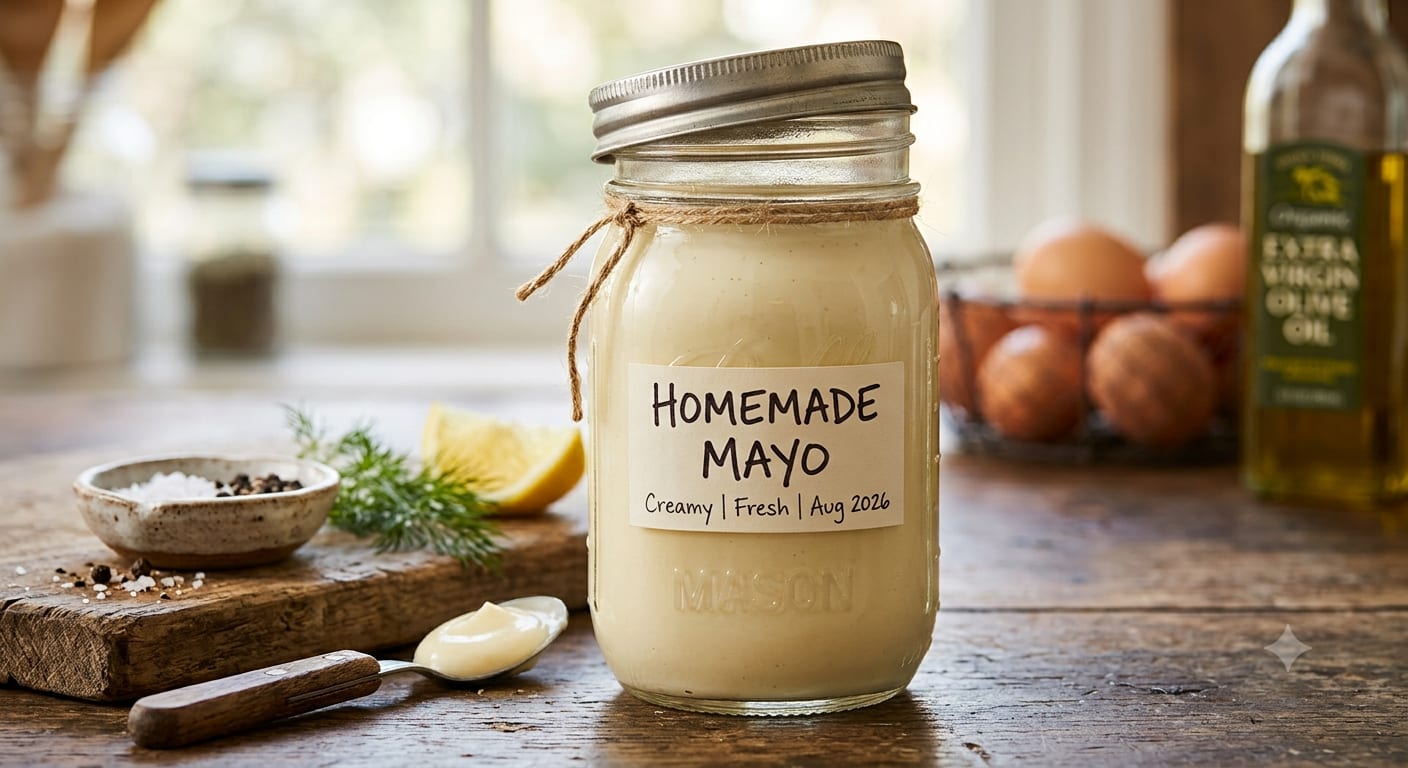
Instructions
1. Add Egg Yolks, Lemon Juice, Mustard, and Salt to the Jar
Crack 2 egg yolks into a wide-mouth jar (a pint mason jar is perfect — it should be just barely wider than the head of your immersion blender). Add the lemon juice, mustard, and salt. Do not stir or mix yet.
2. Pour the Oil on Top
Slowly pour the avocado oil into the jar on top of the yolks. Let it settle for a few seconds — the yolks will stay at the bottom and the oil will float on top. Don't stir.
3. Sink the Blender All the Way to the Bottom
Place the immersion blender head all the way down into the jar so it's resting at the very bottom, fully covering the egg yolks. This is the most important step — if the blender isn't all the way down and touching the yolks when you start it, the mixture won't emulsify.
4. Blend Without Moving (About 20 Seconds)
Turn the blender on to its highest speed and hold it completely still at the bottom of the jar. Don't move it yet. You'll see the mixture start to turn thick and pale right at the blender head — that's the emulsion forming.
5. Very Slowly Raise the Blender (About 40 Seconds)
Once the bottom has turned into a thick, opaque emulsion, begin tilting and lifting the blender extremely slowly — just a millimeter or two at a time — while pulsing it up and down gently. This slowly pulls the remaining oil down into the emulsified mixture. Go too fast here and the mayo can break, so take your time.
6. Finish and Taste
Once all the oil is incorporated and the mayo is thick and creamy, give it one more full blend top to bottom to make sure everything is combined. Taste and add more salt or lemon juice if needed. Store in the fridge in the same jar, sealed.
7. Start a Small Fresh Batch with Egg Yolks and Lemon Juice
Get a new, clean jar. Crack two more egg yolks into it and add a little fresh lemon juice (about a teaspoon). Sink the blender all the way to the bottom, same as before, and blend without moving until this small yolk-and-lemon mixture starts to thicken and come together.
8. Slowly Pour in the Failed Batch (About 45 Seconds)
Once the new small batch is visibly thickened, start adding your failed mayo mixture in very slowly — a thin drizzle at a time — while continuously blending, just like you would add oil. The failed batch is essentially your oil supply now. Let each addition fully incorporate before adding more.
9. Keep Going Until It's All Incorporated
Continue slowly blending in the rest of the failed batch until everything is combined into one thick, creamy mayo. This rescues almost every broken batch, since the small fresh yolk emulsion acts as a base the rest of the oil can bind to.
Nutrition
Per Tbsp (makes about 1 1/4 cups)
- Calories102
- Total Fat11g
- Total Carbs0g
- Fiber0g
- Net Carbs0g
- Protein0g
The Science of Mayo
Mayonnaise is made by forcing oil and an acid, like lemon juice or vinegar, to mix together without separating. The secret ingredient that makes this possible is the egg yolk, which acts as a natural binder. When you rapidly whisk or blend the mixture, you break the oil into millions of tiny droplets. The egg yolk immediately coats each of these microscopic oil drops, clinging tightly to both the oil and the liquid. At the same time, the acid adds a tiny electrical charge to the egg yolk, causing the coated oil drops to naturally push away from one another like matching magnets. This prevents the oil droplets from crowding together and pooling back into a greasy layer, keeping them permanently trapped and suspended in the liquid so the mixture turns into a thick, stable cream.
Troubleshooting: If It Doesn't Emulsify
If your mixture stays thin and runny instead of thickening, it hasn't emulsified — but the batch isn't ruined. Steps 7-9 above walk through how to rescue it using a small fresh yolk emulsion as a base.
Tips
Room-temperature egg yolks emulsify more reliably than cold. The most common cause of failure is the blender not sitting flat at the bottom of the jar during the first 15-20 seconds — make sure it's fully covering the yolks before you turn it on. Mustard isn't just for flavor here — it also acts as a natural emulsifier and helps the mayo come together more reliably.
Storage
Homemade mayo is often fine for 3 to 4 weeks in the fridge — the common 2-week guideline is a cautious food-safety standard, not a hard cutoff. Toss it immediately if you notice any of these signs it's gone bad: - Smell — a sour, funky, or metallic odor instead of a bright, tangy scent. - Appearance — a dark, dull yellow color instead of creamy white, or visible mold. - Texture — the mixture has separated, leaving a thick puddle of oil sitting on top. - Taste — a stale or distinctly unpleasant flavor.
- Smell — a sour, funky, or metallic odor instead of a bright, tangy scent.
- Appearance — a dark, dull yellow color instead of creamy white, or visible mold.
- Texture — the mixture has separated, leaving a thick puddle of oil sitting on top.
- Taste — a stale or distinctly unpleasant flavor.