 Mind BodyFunctional Health

Courses & Tools
Explore the programs, resources, and support designed to help you move forward with clarity and confidence. Purchase what fits your journey, and return to your dashboard whenever you are ready to continue.
Your Progress — Lesson 1 of 18 Complete
How Your Body Burns
Lesson 1 of 18
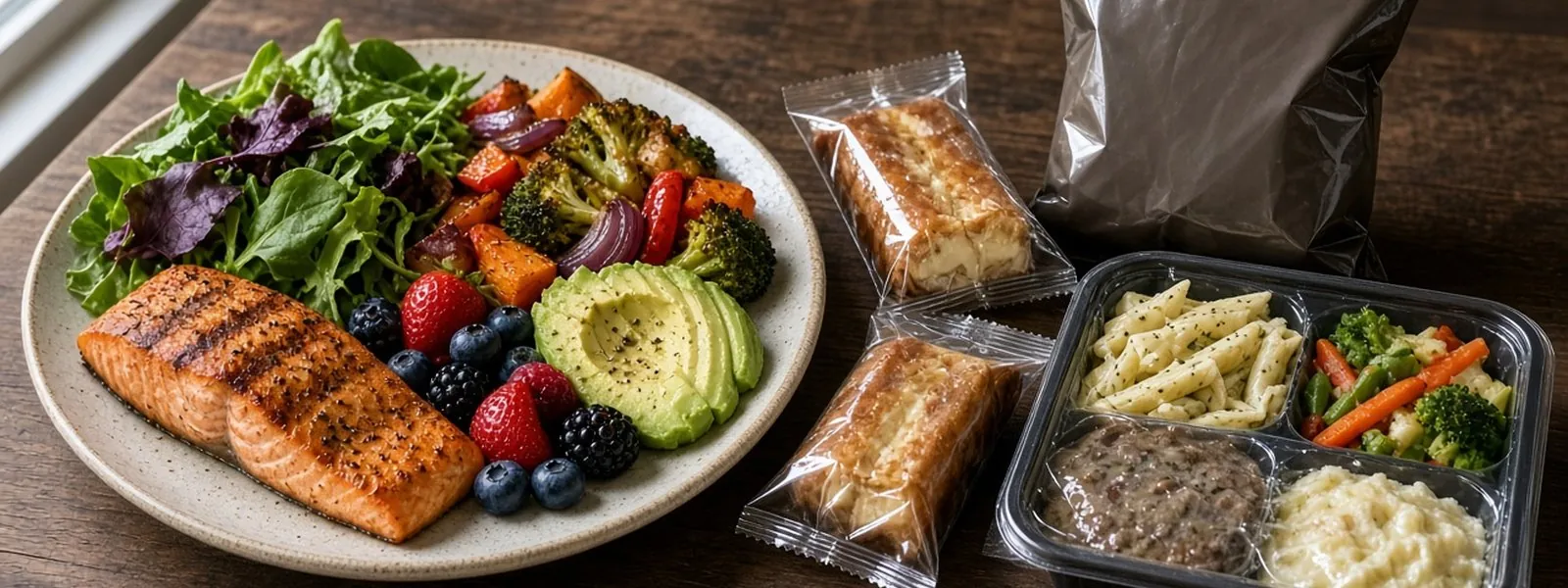
This guide is not about forcing your body into weight loss. It is about understanding how your body works so you can stop fighting it. We will walk through how metabolism actually functions at a deeper level — how insulin, mitochondria, thyroid function, digestion, hormones, and lifestyle all interact inside the same system. You will begin to see that weight loss is not controlled by a single factor, but by a network of processes that all influence each other. When you understand that system, you can start making decisions that support it instead of working against it. That is where real, sustainable change happens.
Lesson 1
The Flawed Calorie Model
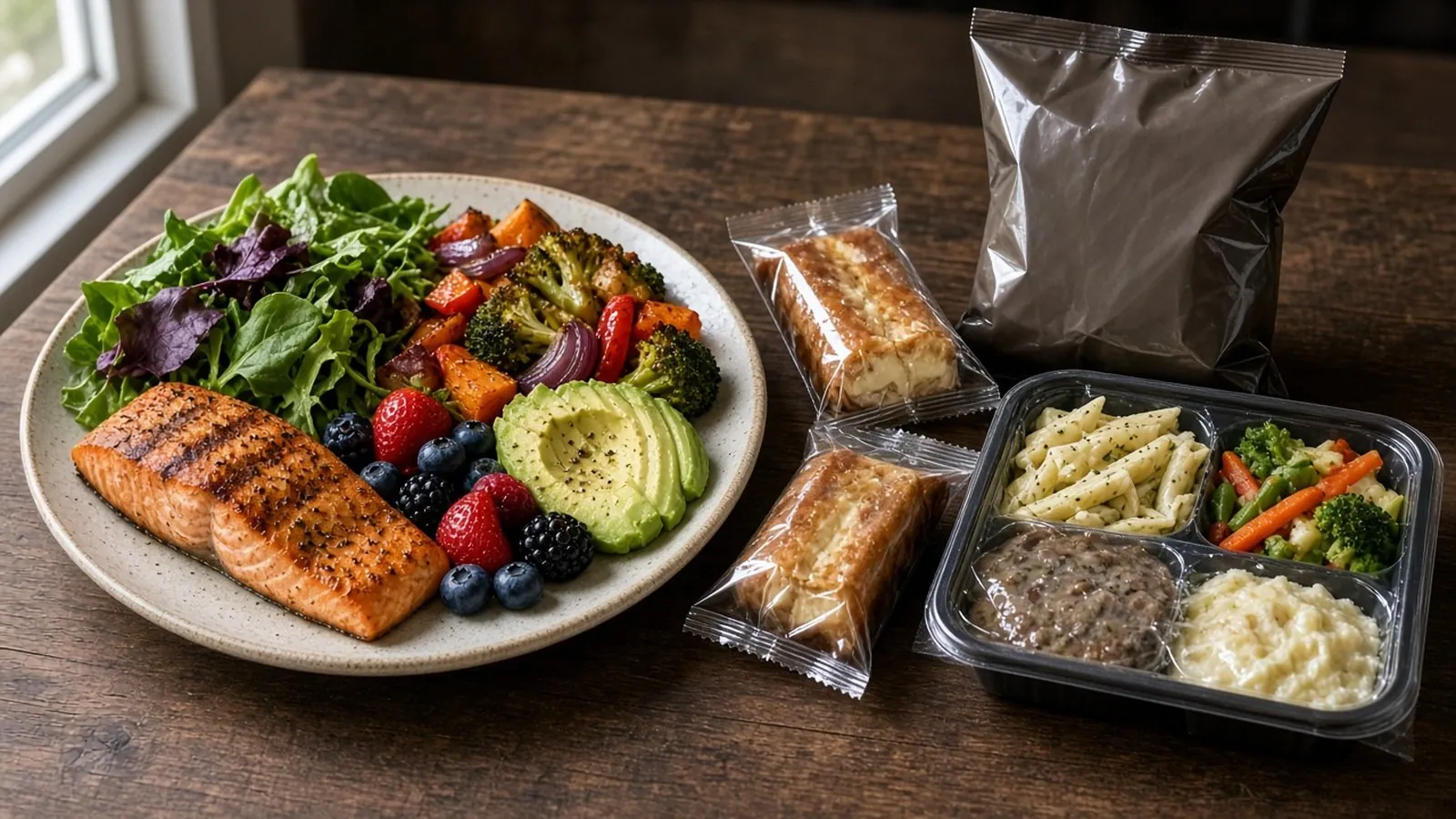
The concept of a calorie was born during the age of steam engines. In the 1800s, scientists measured a calorie using a "bomb calorimeter," where food is placed in a sealed chamber, burned in pure oxygen, and the heat released is captured by surrounding water. The rise in the water’s temperature tells scientists how much energy the food contained. By definition, a calorie is simply the amount of heat needed to raise one kilogram of water by one degree Celsius.
We Are Not a Chemistry Set
Last I checked, we don’t have a small flame in our stomach burning food to ash. The human body is not a closed combustion system. It does not simply burn food and release heat in a predictable, mathematical way. Instead, it relies on complex biochemical reactions that are heavily influenced by hormones, enzymes, nutrients, and internal signaling systems.
The Almond Test
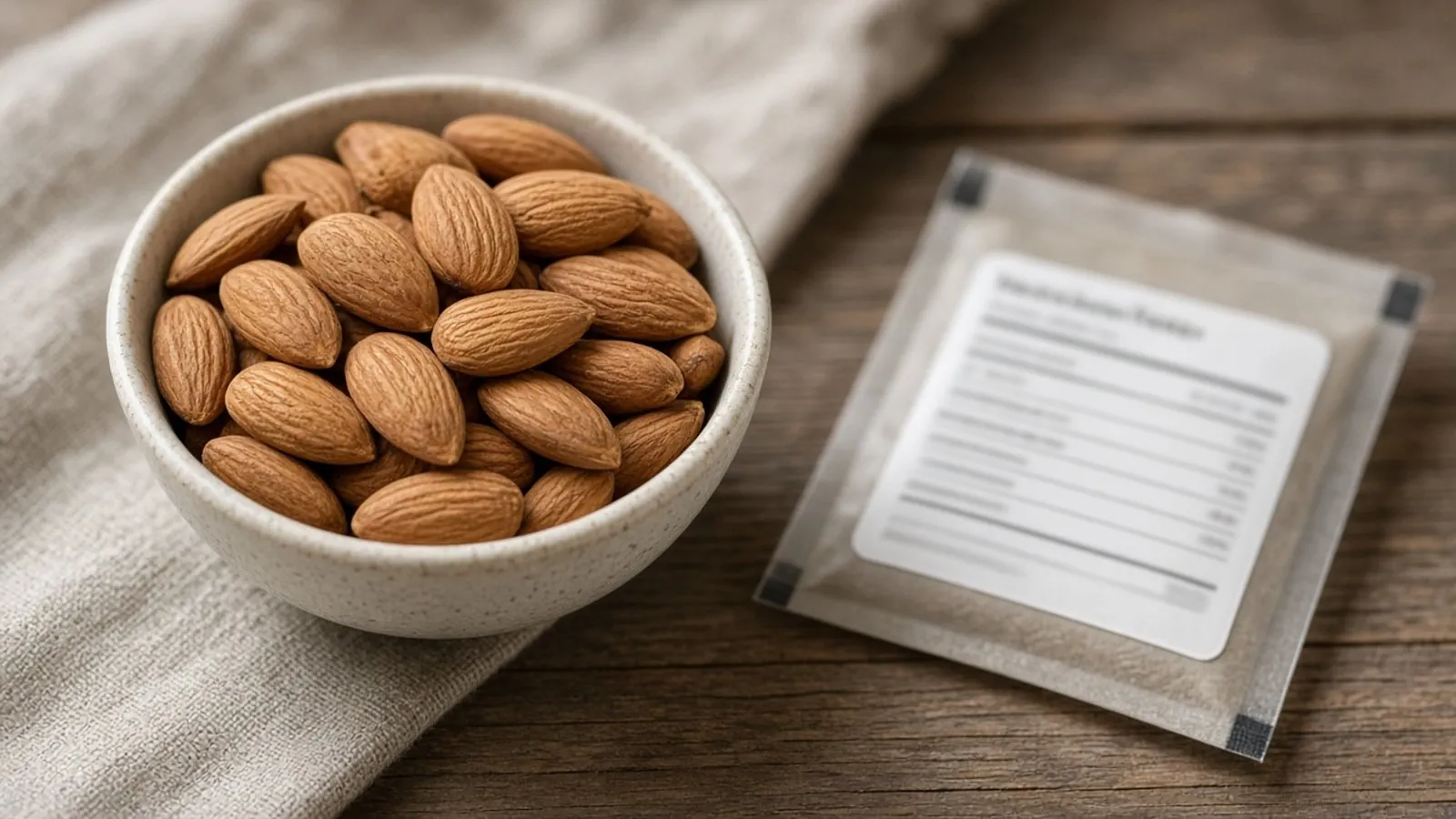
The calorie numbers on your food labels aren't measured. They're estimated, using a formula built in the 1890s. Four calories per gram of protein, four for carbohydrate, nine for fat. That formula is called the Atwater system, and it is still what's printed on every package in your pantry.
In 2012, USDA researchers decided to actually check one. They fed 18 adults carefully controlled diets with measured amounts of almonds, then measured the energy that passed through without being absorbed.
A 28-gram (1 ounce) serving of almonds is labeled at about 168 calories. The measured value was 129.
The old formula overestimated by 32%. Almond cell walls are tough, and a meaningful portion of the fat stays locked inside that structure and passes right through you. The label counts it. Your body never sees it.
The number was never a measurement of what your body gets. It was always an estimate of what a furnace would get.
They Gained More Weight
If calories were the whole story, the people who burn the fewest should be the ones who gain weight.
Researchers followed 775 men for about ten years. At the start they measured two things: how many calories each man burned at rest, and whether his body was running mostly on carbohydrate or mostly on fat.
Over those ten years, most of the men's weight stayed about the same. But 122 of them gained more than eleven pounds, and forty of those gained more than twenty-two pounds.
What separated the men who gained from the men who didn't wasn't how many calories they burned at rest. That measurement predicted nothing.
It was which fuel their bodies were running on. The men burning mostly carbohydrate were about two and a half times more likely to gain weight than the men burning mostly fat.
Energy still matters. But it isn't the thing that decides.
Two Diets, Two Very Different Results
A recent study done by University of Copenhagen compared two diets with the equivalent "calories" — one with high carb and low fat, the other low carb and high fat. The low carb group had improvements in fatty liver, weight loss, and other blood markers, while the low fat diet showed no improvements in any of these blood markers.
Same calories. One group got better. The other didn't.
And look at what actually improved, because this is the part most people skip past. Fatty liver. Blood markers. Those aren't cosmetic. A fatty liver is the first step toward insulin resistance and type 2 diabetes. Those blood markers — triglycerides, blood sugar, blood pressure — are the same numbers your doctor watches for heart disease and stroke.
So the two groups weren't just losing different amounts of weight. One group was getting healthier and the other wasn't, on identical calories.
This is why metabolism isn't a weight-loss topic. It's the system underneath almost everything that goes wrong in a modern body. Your metabolism is how every cell in you turns food into energy. When that process runs well, you have energy, stable blood sugar, a clear head, and a body that repairs itself. When it doesn't, the damage shows up as fatigue, inflammation, high blood pressure, fatty liver, diabetes and heart disease.
Many prominent doctors estimate that metabolic dysfunction underlies up to 80% to 90% of all chronic diseases.
And most people are already in trouble. When researchers looked at 8,721 American adults and checked five basic measures — blood pressure, blood sugar, cholesterol, waist size, and whether they were already on medication for any of them — only 12% passed all five. Nearly nine out of ten adults are already metabolically unhealthy.
Weight is just the symptom you can see in the mirror. It isn't the problem. The problem is the system that produced it.
The standard arguments defending the calorie system—“energy in, energy out” and “it's simple thermodynamics”—are fundamentally flawed. The calorie model fails because it leaves out the most critical factor: what actually dictates whether your body stores energy or uses it. Two foods with the exact same number of calories can have completely different effects on the body depending on how they influence hormones, blood sugar, and cellular energy production.
Carbohydrates, fats, and proteins are not interchangeable simply because they all contain energy. Claiming that they are is like claiming diesel and gasoline are interchangeable because both are energy sources for engines. Put the wrong fuel in the wrong engine, and the system breaks down. Each macronutrient moves through different metabolic pathways and triggers different hormonal responses. To truly understand metabolism, you have to completely abandon the idea of calories as a math equation and begin to understand food as signals that create a biological response. One of the most important of those responses is a hormone called Insulin.
✨
Your Metabolism Is Unique To You
Once you finish the Master Class your personal AI Metabolic Coach will ask you 3 questions and build a custom protocol designed specifically for your biology — not a generic plan.
Key Insight
A calorie is simply the amount of heat needed to raise one kilogram of water by one degree Celsius — a measure designed for a furnace, not a living cell.
How Your Body Burns
Lesson 2 of 18

Lesson 2
Understanding Insulin: The Master Switch

Refined carbohydrates send the strongest insulin signal
When carbohydrates are consumed and broken down into glucose, that glucose enters the bloodstream and signals the pancreas to release insulin. Insulin’s role is not just to lower blood sugar. It acts as the ultimate gatekeeper that determines where your energy goes. It allows glucose to enter the cell to be used for immediate energy, or, when energy needs have already been met, it directs that excess to be stored, primarily as fat.
Yes, if we consistently take in excess energy, it can be stored as fat, but ONLY if insulin is present. At the same time, insulin does something equally important that often gets overlooked: It blocks fat breakdown. When insulin is elevated, your body is physically incapable of burning fat. It is locked in a storage state.
Humans provide the most convincing evidence of all that you cannot store fat unless insulin is elevated. One of the more common eating disorders among young people with Type 1 diabetes (who do not naturally make insulin) is a tragic condition sometimes called "diabulimia." They learn that their syringe of insulin is the absolute gatekeeper of the fat cell. By deliberately underdosing their insulin, they can consume massive amounts of food and still rapidly lose weight, because without insulin, fat storage simply cannot occur.
The Clearest Proof We Have
The most convincing evidence that insulin is the gatekeeper comes from watching what happens when a body cannot make any.
Before insulin was discovered in 1921, type 1 diabetes was a death sentence, and it killed by wasting. Children were diagnosed and given months to live. Physicians described them eating ravenously and starving simultaneously — desperately hungry, eating everything in sight, and disappearing in front of their parents.
The food went in. Without insulin, the body could not put it away.
Four things happen at once when insulin is absent. Together they explain the wasting.
One: storage becomes impossible. Insulin is the signal that opens the fat cell. No signal, no storage. The energy arrives and has nowhere to go.
Two: fat burning becomes unrestrained. This is the part almost nobody mentions, and it's the most important.
Insulin isn't only the key that opens the door. It's also the brake on fat coming back out. When insulin is present, that brake is on and stored fat stays where it is. Remove insulin completely and there is no brake at all. The body breaks down fat continuously, around the clock, whether or not it needs the energy.
This is why they lost weight instead of simply failing to gain it. They weren't just unable to store. They couldn't stop burning.
Three: muscle breaks down too. Insulin is a building hormone — it tells your body to construct and maintain tissue, including muscle. Without it, that instruction disappears and the body begins dismantling its own protein. This is why it was called wasting rather than weight loss. They lost everything, not just fat.
Four: energy physically leaves the body. Without insulin, glucose can't get into cells. It builds up in the bloodstream until the kidneys start dumping it into the urine. The energy from the food is literally excreted.
This is why constant thirst and frequent urination are the classic warning signs, and why physicians centuries ago diagnosed diabetes by tasting urine for sweetness. The sugar was pouring straight through.
Now put those four together. Eating enormous amounts of food. Unable to store any of it. Burning fat continuously with no brake. Dismantling muscle for fuel. And losing sugar through the kidneys.
No calorie equation on earth predicts that outcome. One hormone was missing.
And Then the Mirror Image
Here's the other half of the proof, and it's just as convincing.
When insulin was first given to these patients in 1922, the results were immediate and astonishing. Children who had been skeletal gained weight within weeks. The before-and-after photographs from that first year are among the most famous images in medicine.
Same children. Similar food. One hormone added. Completely different body.
And this isn't just history. It's still true today: when people with type 1 diabetes intensify their insulin therapy to better control their blood sugar, they reliably gain weight — measurably more than those on less intensive treatment, eating comparable diets.
Insulin goes up, weight goes up. Insulin disappears, weight disappears. Nothing about the calories changed.
This is the whole argument of this book, demonstrated in the most extreme way biology allows. Your body is not a calculator adding up the energy you eat. It is a system responding to instructions. And insulin is the loudest instruction there is.
One essential note before anyone gets the wrong idea. The state I just described is not a weight-loss strategy — it is a medical emergency. With fat breakdown running completely unchecked, ketones accumulate to levels that turn the blood acidic. It is called diabetic ketoacidosis and it kills people.
Insulin is not the enemy. You need it. It builds your tissue, fuels your cells, and keeps you alive. The problem in the modern world is not insulin itself — it's insulin that is chronically elevated, all day, every day, for decades. The goal of everything in this book is to bring it back into the range your body was designed for.
When insulin is elevated, your body is physically incapable of burning fat. Fat burning is not a matter of willpower — it is a matter of hormonal chemistry.
The Cephalic Phase: Why Tasting Sweetness Matters
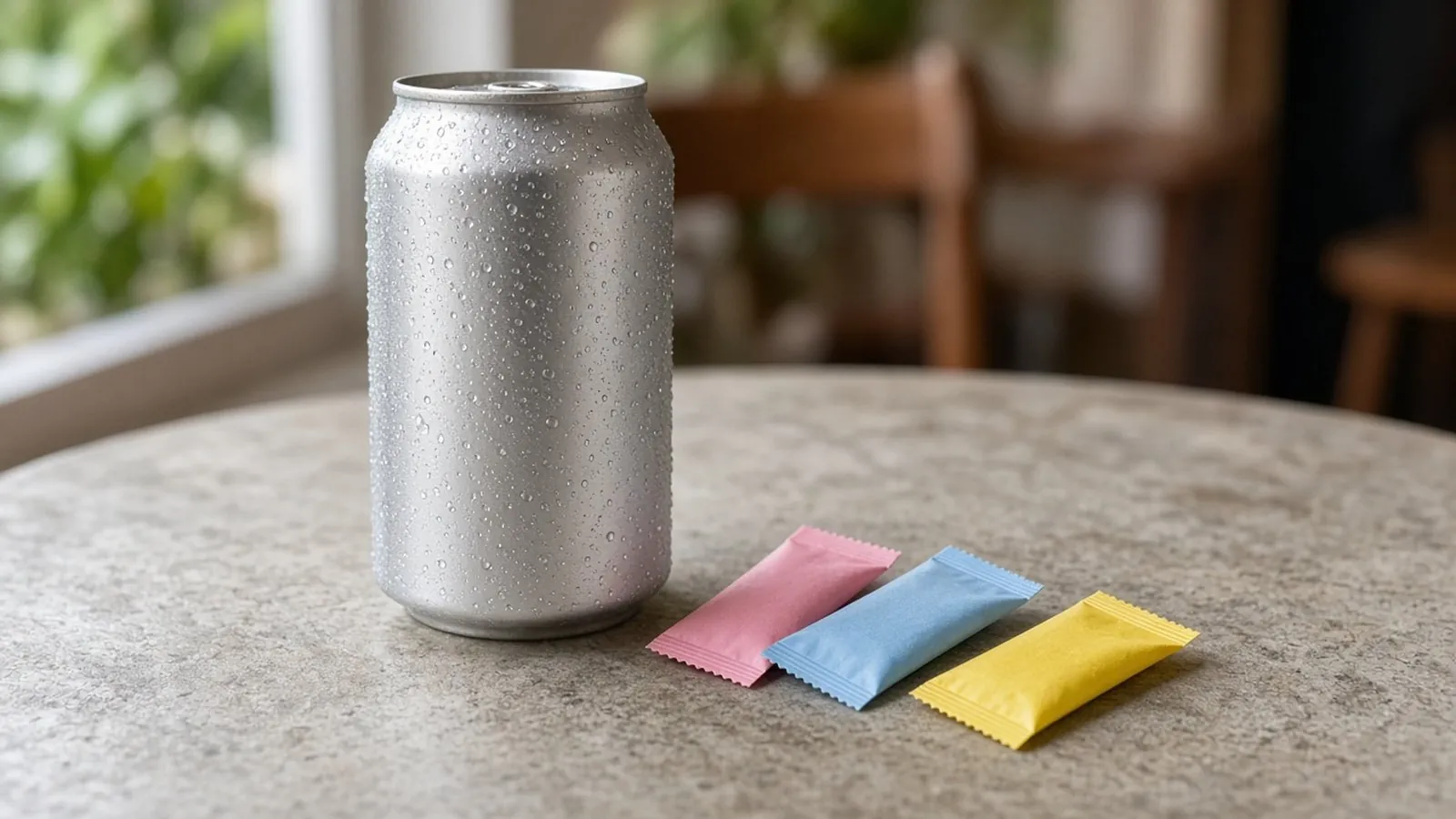
Sweet taste with no calories behind it
Because your body runs on signals, the response to food begins before food ever reaches your stomach. Your brain sees it, smells it, tastes it — and starts preparing. Scientists call this the cephalic phase, and it's well established. Studies where people chew food and spit it out without swallowing show measurable responses in the body.
It is also theorized that some artificial sweeteners may trigger an insulin response in some people, simply from the taste. The research here isn't settled — it appears to depend on which sweetener, what form it comes in, and the individual person. Some studies find a response, others don't. More research is needed, and it is absolutely worth keeping in mind, because a person who responds strongly would be quietly keeping her fat-burning gates shut with something she believed was free.
But there's a second effect that is much better documented, and it may matter more.
When you taste something sweet, your brain expects calories to follow. When they never arrive, the signal that should shut your appetite off never fires.
A 2025 study scanned the brains of 75 people after they drank sucralose, real sugar, or plain water:
Sucralose increased activity in the hypothalamus — the part of your brain that controls hunger — and increased their actual hunger by about 17% compared with sugar.
It produced no fullness hormones at all. As the lead researcher described it: there's a sweetness signal, but no hormone signal telling you you're full. Your brain gets the promise and never gets the payoff.
It changed how the hypothalamus talked to the decision-making parts of the brain — the regions that weigh whether something is worth it. Which may explain why a diet soda so often turns up right before the thing you weren't going to eat.
And two details matter for you specifically. The effects were strongest in people already carrying extra weight — meaning it hits hardest exactly the people using it to lose weight. And women showed greater changes in that brain region than men.
There Is No Cheat Code
Every artificial substitute for a healthy diet comes with a cost. Sometimes the cost is obvious. More often it's hidden, delayed, or somewhere nobody thought to look. The sweetener that spares you the sugar drives your hunger instead. The pill that suppresses your appetite takes your muscle. The processed food engineered to taste like the real thing arrives without anything your body actually needed.
There is no shortcut that lets you have the signal without the consequence. Your body has been reading these signals for a very long time, and it is not easily fooled — it just responds to the deception in a way you don't immediately notice.
Which points at the real answer, and it isn't a product.
The goal isn't finding a sweet thing that's safe. It's no longer needing the sweet thing.
That sounds harder than it is. Sweet cravings are largely learned and largely maintained by continued exposure — and they fade, often faster than people expect. The women who come out the other side of this consistently say the same thing: fruit tastes sweet again, the dessert they used to crave is now cloying, and the craving they thought was part of their personality turned out to be a habit with a hormone attached.
You are not going to white-knuckle your way past a sweet tooth forever. You're going to lose it. That's a different and much better outcome than managing it with a substitute.
The Source of the Signal
This is why the frequency of eating, the composition of meals, and overall insulin exposure throughout the day matter infinitely more than the simple volume of food being consumed.
- Fats, when eaten on their own, create very little insulin response.
- Protein creates a moderate response, largely to support tissue repair and muscle maintenance (insulin is an anabolic, building hormone).
- Carbohydrates create the most significant insulin response, particularly when they are refined or consumed frequently.
Key Insight
Insulin resistance is the common, foundational root cause for almost all modern chronic diseases — including type 2 diabetes, heart disease, PCOS, Alzheimer's, and certain cancers.
Insulin Resistance and the Chronic Disease Connection
Over time, repeated spikes in blood sugar and insulin can lead to a condition where the cells stop responding properly to insulin’s signal. This is known as insulin resistance. When insulin resistance develops, the body compensates by producing more insulin to achieve the same effect. In some cases, blood sugar may appear completely normal for years because the body is working frantically behind the scenes to manage it.
However, this state of chronically elevated insulin does far more than just drive stubborn fat storage. As current research unapologetically asserts, insulin resistance is the common, foundational root cause for almost all modern chronic diseases. Insulin is one of the few peptide hormones that literally affects every single cell in the human body. When the system is flooded with it for decades, the damage is systemic:
- The Brain: The brain becomes heavily insulin resistant, unable to process glucose properly for energy. This starvation of brain cells is why Alzheimer’s disease is now frequently referred to in the medical community as "Type 3 Diabetes."
- Hormones and Fertility: Infertility and Polycystic Ovary Syndrome (PCOS) are deeply tied to insulin. High insulin directly disrupts the delicate balance of estrogen and testosterone, halting normal ovulation.
- Cellular Growth and Cancer: Because insulin is a master "growth" hormone, chronically high levels can aggressively accelerate the growth of abnormal cells. Extensive studies point to a profound connection between severe insulin resistance and an increased risk of breast and prostate cancers.
High levels of glucose in the bloodstream can also be directly damaging. Excess sugar behaves almost like a form of internal abrasion, damaging blood vessels, nerves, and tissues over time. This contributes to a higher risk of heart disease, stroke, and nerve damage. Controlling insulin is not only about shrinking fat cells and losing weight—it is about protecting your entire biological system from the ground up.
Your AI Coach understands insulin resistance deeply — it will factor this into your personal protocol.
How Your Body Burns
Lesson 3 of 18

Lesson 3
Metabolism as a Signaling System
Your metabolism is not simply a function of how much food you eat; it is a reflection of how your body interprets its environment and internal state. Every system in your body is constantly communicating, sending signals that determine whether energy should be conserved or used. Insulin is one of those signals, but it operates within a much larger network. The thyroid influences how quickly energy is burned. The nervous system determines whether the body feels safe enough to use energy freely. The gut communicates with the brain about nutrient availability and stress. Even your daily movement patterns and exposure to light play a role in regulating metabolic output.
If the body perceives stress, lack of resources, or instability, it will prioritize survival. This often means slowing down energy expenditure, increasing hunger signals, and storing more energy as fat. This response is protective, not broken. Your body is simply doing what it was designed to do to keep you alive during perceived famine or danger.
Thirty-Six Men in Minnesota
In 1944, researchers at the University of Minnesota ran an experiment we would never be allowed to run today.
They took young men — healthy, screened for physical and psychological fitness, conscientious objectors who volunteered for the study instead of going to war — and cut their food roughly in half for six months. Then they measured everything.
What happened was not just weight loss.
Their metabolic rate dropped far more than their smaller bodies could account for. They were cold all the time. Their pulses slowed. They lost interest in sex, in their friends, in nearly everything they used to care about.
And they became consumed by food. Not hungry — consumed. They collected recipes. They read cookbooks for hours. They cut their food into tiny pieces to make meals last longer. Some developed rituals around eating that they couldn't explain and couldn't stop.
When the study ended and they were finally allowed to eat freely, many ate enormous amounts and still couldn't feel full. For months.
Now read that list again, slowly, and think about who you know.
Cold hands. No energy. No interest in sex. Not wanting to see anyone. Thinking about food constantly. Losing control around it at night.
That is not a description of a woman with a willpower problem. That is a description of a body being underfed. And it was produced deliberately, reliably, in healthy, motivated young men who had chosen to be there — using nothing but restriction.
Your body cannot tell the difference between a famine and a diet. It only knows how much food is arriving.
The Triage: What Gets Cut First

Cold hands are often an early sign of underfeeding
When your body decides resources are short, it doesn't cut spending evenly across the board. It triages. And the order tells you almost everything.
Funded no matter what:
Your brain. Your heart. Keeping your blood sugar from crashing. These get paid first, always.
Cut early, without hesitation:
Fertility and your menstrual cycle. Body temperature. Hair and nail growth. Digestion. The drive to move, to socialize, to be interested in things. Anything your body considers optional during a famine.
This is why the first signs of underfeeding look nothing like a nutrition problem.
Your cycle goes irregular and you blame stress. Your hands are always cold and you blame the weather. Your hair thins in the shower and you blame your age. You stop wanting to go out and you blame your personality.
None of it is any of those things. It's a budget decision your body made without consulting you, and it cut the things it thought it could survive without.
And it explains something that sounds impossible until you understand the triage: you can be eating too little and gaining weight at the same time.
Those aren't contradictory. A body that has concluded resources are scarce becomes extremely reluctant to spend them — and extremely eager to hold onto whatever arrives.
You Can Read Most of This Without a Blood Test

Your morning temperature is a free metabolic signal
Before we talk about lab work, understand this: your body is already telling you what state it's in. You just haven't been taught what to listen for.
These cost nothing and you can start tomorrow.
Your morning temperature. Take it with a basic thermometer before you get out of bed, same time each day. A body in conservation mode runs cool. If you're consistently below about 97.8°F, your body is spending less than it should.
Your resting heart rate. Check it first thing, before you sit up. Write it down for two weeks. The number itself matters less than the direction. A rate that's drifting down while you're eating less and training more is not fitness improving — it's your body slowing down to conserve.
Your hands and feet. Are they cold when nobody else's are? Do you need socks to bed? That's one of the earliest and most reliable signs on the list.
Your cycle. Length, regularity, and how heavy it is. Your body treats reproduction as optional in a famine, so this is often the first thing to change — and the last thing anyone connects to food.
Your hair. In the shower drain, on your pillow, in your brush. Important: hair shedding lags about three months behind whatever caused it. So if you're losing hair now, look at what you were doing in the spring. Almost nobody makes that connection.
Your sleep. Not how long, but whether you wake rested, and whether you wake at 3am for no reason. Waking in the small hours is frequently a blood sugar and cortisol signal, not a stress one.
Your energy pattern. Does it dip hard mid-afternoon? Do you need caffeine to function rather than to enjoy? Do workouts leave you energized or wrecked for the rest of the day?
Your appetite. How long can you go comfortably between meals? A body that's fueling well can go four or five hours without drama. A body in trouble gets shaky, irritable, or panicky by hour two.

Write down your eight signals today, then check again in eight weeks
Here's how to use this. Write down where you are on all eight today. Don't do anything with it yet. Come back in eight weeks and look again.
These are the signals that move first — before the scale, before your lab work, before your doctor notices anything. If your temperature is coming up, your hands are warming, your hair is settling, and you can go five hours without thinking about food, your metabolism is improving whether or not the scale has moved yet.
And if they're all going the other way while you're eating less and exercising more, that's your body telling you the plan is wrong. Not that you need to try harder.
On the other hand, when the body perceives safety, adequate nutrition, and stability, it becomes more willing to use energy, maintain lean tissue, and regulate appetite appropriately. This is why metabolism cannot be reduced to a single variable. It is the result of multiple systems working together. When those systems are aligned, the body becomes efficient. When they are not, the body becomes protective. You cannot force a protective body to let go of energy by simply starving it; you must first change the signals it is receiving.
You cannot force a protective body to let go of energy by simply starving it — you must first change the signals it is receiving.
Measuring the Signals: The A1C and Cholesterol Illusions
Because metabolism is a signaling system, we must look at the correct markers to know if our system is healthy. Unfortunately, standard medical advice often focuses on lagging indicators rather than the primary signals.
For example, doctors typically measure your A1C (a three-month average of your blood sugar) to check for diabetes. However, A1C is a lagging indicator. Because your body will aggressively overproduce insulin to keep your blood sugar normal, your A1C can appear perfectly healthy for years—or even decades—while your underlying insulin resistance is silently worsening. To truly measure your metabolic health, you must look at the signal itself: ask your doctor for a Fasting Insulin test. An optimal, healthy fasting insulin level should ideally be below 3 to 5 uIU/mL.
Similarly, standard medicine places a massive emphasis on lowering LDL cholesterol to prevent heart disease. However, advanced metabolic research highlights that total LDL is actually a poor predictor of cardiovascular risk. Instead, the ultimate metabolic lipid marker is your Triglyceride-to-HDL ratio. When you plot heart disease risk on a graph, if a patient's Triglyceride-to-HDL ratio is low (meaning low triglycerides and high healthy HDL), there is virtually no increased risk of heart disease, regardless of whether their LDL is high or low. Controlling insulin naturally lowers your triglycerides and raises your HDL, providing true cardiovascular protection.
If you want the most direct measure available, ask for an ApoB test. It counts the actual number of particles in your blood rather than estimating the cholesterol inside them, and it's the number that tells you the most for the least money. Most doctors will run it if you ask.
If you have both a fasting insulin and a fasting glucose from the same blood draw, those two numbers can be combined into a single score called HOMA-IR that estimates insulin resistance better than either one alone. Many practitioners will calculate it, and some labs report it automatically. If you've already had both tests, you already have the answer sitting in a drawer.
So What Are the Signals?
If your body is running a protection program, there are only two ways forward.
One is to fight it. Restrict harder, exercise more, push against a system built over millions of years specifically to resist being pushed. People do win this way sometimes. It costs enormously and it almost never holds.
The other is to change what your body is hearing. So let's be specific about what that means, because these are the levers for the rest of this book:
Enough food. This is the one nobody expects. A body convinced food is scarce will not let go of stored energy, and the fastest way to convince it otherwise is to feed it consistently.
Enough protein. The single clearest signal that you're building rather than surviving.
Sleep. One bad night measurably changes how your body handles food the next day. You cannot out-eat a nervous system running on four hours.
Regular meals rather than chaos. Your body learns your patterns and prepares for them. Erratic eating is itself a stress signal.
Morning light. It sets the clock that everything else runs on.
Movement that signals capacity, not crisis. Strength and walking, not punishment.
Lowering the insulin load. Which is where most of this book lives — and it's one lever among several, not the whole answer.
Notice what's missing from that list. There's no single trick, no product, no shortcut. You've been sold single levers before and they didn't work, and this is why.
Your metabolism isn't waiting to be forced. It's waiting to be convinced.
And it's why, when we reach the chapter on what stalls progress, some of the advice will be to eat more. If that sounds backwards, come back and read about the men in Minnesota.
🧠
Ready to Decode Your Signals?
Your AI Metabolic Coach is trained in the exact signaling science you are learning right now. After your final lesson it will analyze your personal patterns and tell you exactly what your metabolism needs.
Key Insight
An optimal fasting insulin level should ideally be below 3 to 5 uIU/mL — yet most labs consider anything under 25 uIU/mL "normal," masking years of silent metabolic damage.
How Your Body Burns
Lesson 4 of 18
Lesson 4
Mitochondria: The Engine Behind Your Metabolism

Movement tells your cells to build more mitochondria
If your energy is low, your body feels inflamed, and fat loss feels harder than it should, this isn’t just about eating less. It is fundamentally about your cellular energy. Inside nearly every cell of your body are tiny structures called mitochondria. They act as the engine room of your body, converting the food you eat and the oxygen you breathe into usable energy (ATP). This energy powers everything—your brain, your hormones, your muscles, your immune system, and your overall ability to efficiently burn fuel.
In many ways, your metabolism is only as strong as your ability to produce energy at the cellular level. When mitochondrial function is strong, energy production is highly efficient. You experience steadier energy, clearer thinking, better exercise recovery, and much more stable blood sugar. Most importantly, your body becomes more metabolically flexible, meaning it can seamlessly switch between using carbohydrates and stored fat as fuel depending on availability. Fat loss feels incredibly responsive because your cells have the fundamental energy they need to operate.
Your metabolism is only as strong as your ability to produce energy at the cellular level. Everything else — hormones, weight, mood, cognition — flows from there.
The Protective Shift
When mitochondrial function is impaired, the exact opposite occurs. Chronic stress, frequent blood sugar spikes and crashes, poor sleep, nutrient deficiencies, sedentary habits, or even overtraining can severely strain your cellular energy systems. Over time, your cells struggle to produce sufficient energy, so your body shifts into conservation mode to compensate.
You may begin to feel exhausted even after resting. You find yourself relying heavily on caffeine. Cravings increase because your brain is desperately signaling for quick fuel. Workouts feel draining instead of energizing. And fat loss completely stalls—not because you lack effort, but because your body is prioritizing survival. Again, your metabolism isn’t broken; it is protecting you. Your body will absolutely not prioritize fat burning if it is struggling to meet its basic daily energy needs. Energy production always comes first; fat loss follows.
Metabolic Gridlock
There's a specific way mitochondria get overwhelmed, and understanding it explains a great deal about the modern diet.
A healthy cell switches cleanly between fuels. Fasting, it burns fat. Fed, it burns sugar. It commits to one, runs it efficiently, and switches when things change.
The problem is losing the ability to commit.
Instead of switching, the cell tries to process a mixture of everything, continuously. And when more fuel arrives than the mitochondria can actually put through, the system congests. Half-finished byproducts accumulate. And the excess produces reactive molecules — cellular exhaust — because supply has outrun demand.
Those molecules then interfere with insulin's signal directly. The congestion itself contributes to insulin resistance.
A researcher at Duke described this as metabolic gridlock: persistently burning a mixture of fuels increases mitochondrial congestion and metabolic risk. It's one of the clearest explanations we have for how overfeeding damages the machinery rather than just filling the storage tanks.
And Here's the Important Part
This isn't about one bad meal.
It's a state — a cell that has lost the ability to choose a fuel and is trying to run everything at once, all day. Which is exactly what a diet of frequent mixed meals produces.
It also points directly at the fix. Not eating less of everything. Giving your cells clear signals about which fuel to use, and periods where they aren't processing anything at all.
Lesson 9 covers which food combinations do this most, and why they're almost always manufactured rather than grown.
Your Hormones Are Built Inside Your Mitochondria
Most people think of mitochondria as energy factories and stop there. There's a second job that matters enormously, especially for women over forty.
The first step in building your steroid hormones happens inside the mitochondria.
Cholesterol is transported in, and the initial conversion — the step everything downstream depends on — takes place there. Progesterone. Estrogen. Testosterone. Cortisol. DHEA. All of them start inside a mitochondrion.
Which means mitochondrial function isn't adjacent to your hormones. It's upstream of them.
This explains something that otherwise looks like a coincidence. Women in a state of cellular energy depletion — years of stress, years of restriction, poor sleep — often have hormonal symptoms that don't respond well to hormonal interventions alone.
The hormones are low partly because the factory that starts them is running on empty.
It also explains why cortisol tends to get priority. When resources are short, your body funds the stress response and lets the rest wait. That's the same triage from Lesson 3, happening one level deeper.
Practically: if you're working on hormones, you're working on mitochondria whether you intended to or not. And the order matters — cellular energy first, hormonal fine-tuning second. Lesson 13 covers what to do when this is the bottleneck.
Giving Your Cells What They Need
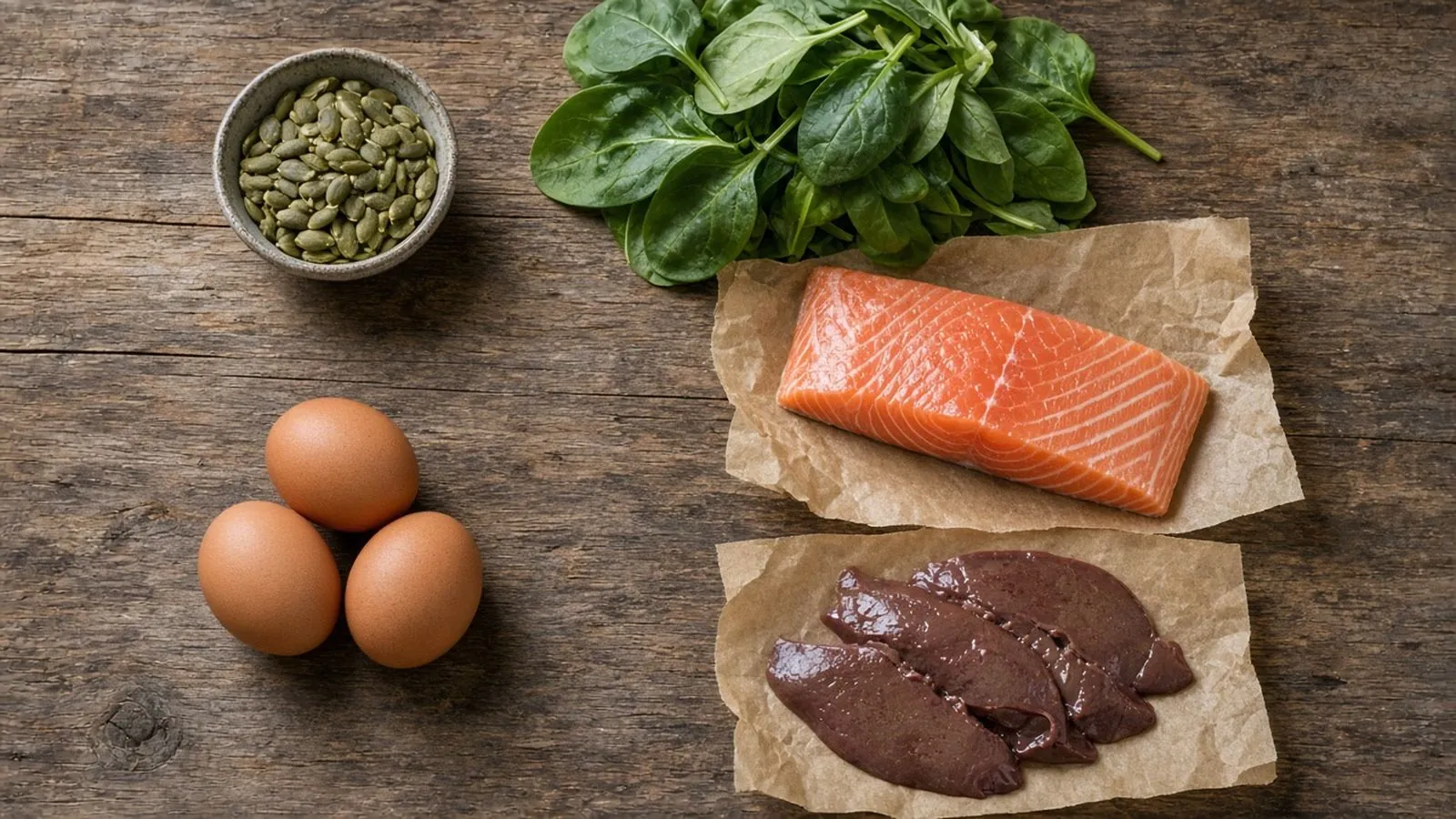
The raw materials for cellular energy
You Are Not Stuck With the Mitochondria You Have
Here's what makes this chapter different from a list of supplements.
Your cells can manufacture new mitochondria. And the signal that tells them to is demand.
When you make your muscles work harder than they're used to, your cells register that the current energy supply isn't sufficient. They don't respond by working the existing mitochondria harder. They build more of them. A trained person has visibly more mitochondrial machinery in her muscle than an untrained one.
This reframes everything in this chapter. Strength training, walking, cold exposure — these aren't maintenance on an engine you were issued at birth. They're construction.
And it's why a twenty-minute walk you actually do beats a heroic workout you do twice. Building responds to a repeated signal, not a single dramatic one.
It also explains the timeline you'll experience, and this is worth knowing in advance. The first two weeks of a new routine often feel harder, not easier — because you haven't built anything yet. The change people describe around week six isn't motivation finally arriving. It's capacity arriving.
If you've ever quit at week three because it wasn't working, you quit exactly one round before the construction finished.
They Also Need Clearing Out
Making new mitochondria is half the job. The other half is removing the worn-out ones.
Your cells have a process for identifying damaged mitochondria and recycling them for parts. A mitochondrion producing more exhaust than energy gets tagged, dismantled, and its components reused. This is quality control — the difference between having a lot of mitochondria and having a lot of good ones.
Here's what matters for you: this process runs during the periods when you're not eating. Scarcity turns it up. Incoming food turns it down.
That's one of the more compelling reasons not to eat continuously from waking to bedtime — and it isn't primarily about insulin. Your cells need stretches where they're doing maintenance instead of processing.
One caution, because this gets badly oversold. You'll see confident claims that this cleanup "switches on" at sixteen hours of fasting, or eighteen, or twenty-four. Those numbers weren't measured in humans. There's no routine test for it, and the figures circulating online came from animal studies or indirect markers.
The process is real. The precise threshold is invented.
So: regular breaks from eating, yes. Pushing into longer and longer fasts chasing a number nobody can measure, no — especially given what Lesson 13 says about restriction and stress hormones.
The good news is that mitochondria are highly adaptable. They respond quickly to the right signals. As we will explore in later lessons, lifestyle factors such as strength training, post-meal walking, morning sunlight, cold exposure — which we'll cover carefully in Lesson 5, because the dose matters more than people think — and deep sleep are all profound mitochondrial stimulators.
These Aren't Vitamins. They're Parts.
Before the list, understand what these actually do — because it isn't vague "support." Each one occupies a specific position in the machinery, and without it the machine physically cannot run.
Magnesium. Start here, because it's the most striking. ATP is your body's energy currency — the molecule every cell spends to do anything at all. ATP is biologically useless unless it's bound to magnesium. Not helped by magnesium. Requires it. Every unit of energy your body spends, all day, is a magnesium-ATP pair. Magnesium also participates in more than three hundred enzyme reactions, and low magnesium is consistently associated with insulin resistance — your insulin receptors need it to do their job.
B vitamins — and not as a group. Each one handles a different step. Riboflavin (B2) becomes part of the molecule your cells use to break fat apart. The fat-burning enzymes are built around it. Short on riboflavin and fat oxidation slows at the enzyme level, no matter how low your insulin is. Niacin (B3) becomes the carrier that shuttles electrons down your energy chain. This is the NAD you may have seen advertised — more on that shortly. Thiamine (B1) is required to get carbohydrate into the energy cycle at all. Pantothenic acid (B5) becomes the carrier that brings fat into the process. B1 and B5 are the two that matter most during a switch to fat burning — which is why they come up again in Lesson 8.
Iron. You know it carries oxygen in your blood. Less well known: iron is built structurally into your energy chain itself — physically part of the machinery producing ATP. Without enough, that chain cannot run at full speed. Iron is also required to make thyroid hormone. This is why iron deficiency causes bone-deep fatigue and brain fog before it ever shows up as anemia — and why a normal blood count doesn't rule it out. The marker to ask for is ferritin, which measures your stored iron rather than what's circulating. Lesson 13.
Vitamin C — and here's a connection almost nobody makes. Your body needs vitamin C to manufacture carnitine. Carnitine is the carrier that shuttles fat through the doorway into your mitochondria — the gate you'll learn about properly in Lesson 8. No carnitine, no fat through the door. Vitamin C is how you build the key.
And the rest. CoQ10 is an electron carrier — a specific rung on the ladder producing your energy. Worth knowing: statins reduce your body's ability to make it, because the pathway that produces cholesterol also produces CoQ10. If you're on a statin and fatigued, that's a legitimate question for your doctor. Selenium builds the machinery that converts thyroid hormone into its active form. Short on selenium and conversion suffers no matter how well your thyroid gland is working. Zinc. Your pancreas stores insulin in a form that requires zinc, and it's needed for thyroid function too.
Now read that list again. Fat burning. Thyroid conversion. Insulin signalling. Energy production. Every single mechanism this book has explained depends on a vitamin or mineral to physically function. You can have perfect hormones and a perfect diet and still run slow — because the machinery is missing parts.
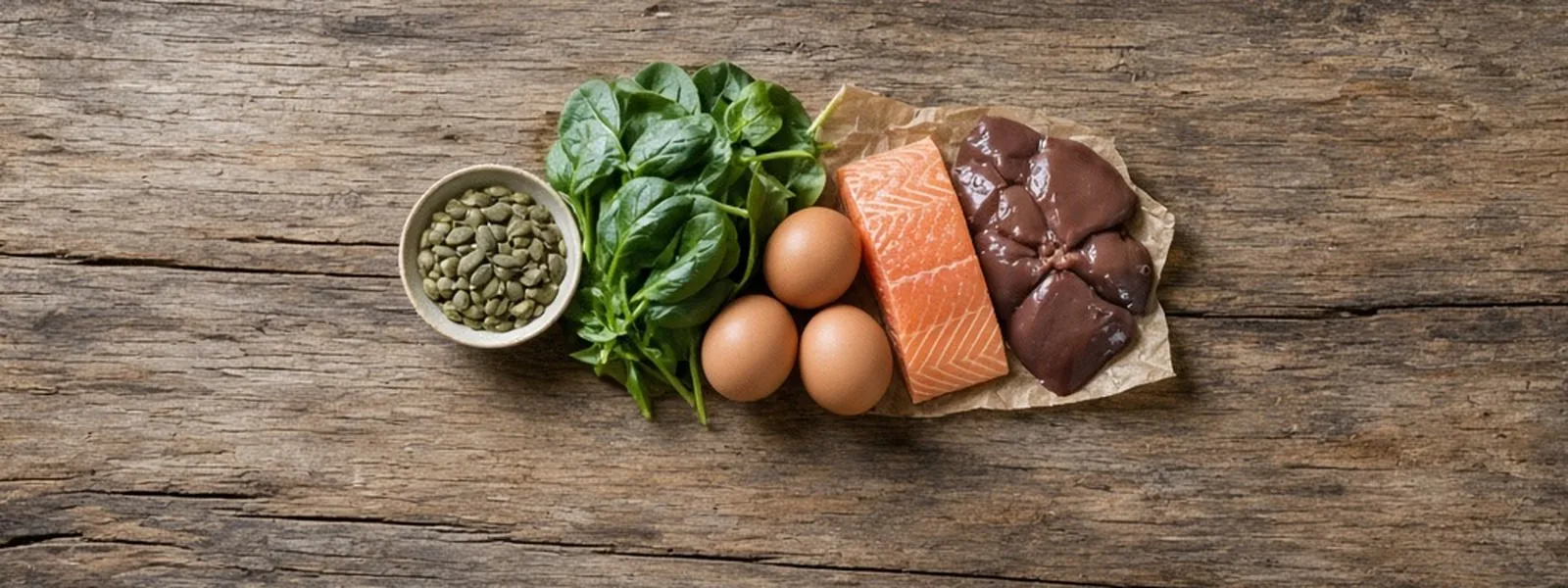
In addition to movement and environment, your cells need specific raw nutritional materials to produce energy efficiently. These include B vitamins (found in eggs, leafy greens, salmon, and red meat), Magnesium (critical for ATP production, found in pumpkin seeds and spinach), Coenzyme Q10 (found in fatty fish and organ meats), Iron (required for oxygen transport), Omega-3 fatty acids (to improve mitochondrial membrane function), and Antioxidants to protect from oxidative stress.
What About NAD+?
If you've spent any time in this world you've seen supplements promising to restore NAD+ — sold as mitochondrial rejuvenation, sometimes as anti-aging.
The underlying biology is real. NAD is an essential carrier in the chain that produces your energy — it's what niacin becomes. Your cells genuinely cannot make ATP without it, and levels do appear to decline with age.
Where the marketing runs ahead of the evidence: the precursor supplements do reliably raise NAD levels in your blood. What hasn't been convincingly shown is that this produces the outcomes people are buying them for. Human trials so far are small, short, and mixed, and a lot of the exciting findings are from mice.
What raises NAD reliably and for free: exercise, periods without eating, and enough niacin from food — meat, fish, poultry, mushrooms.
I'm not telling you not to take it. I'm telling you the free version has better evidence behind it than the expensive one — which turns out to be true more often than the supplement industry would like.
Quantity and Quality Are Different Problems
Two people can have the same number of mitochondria and completely different metabolic health.
What matters is the combination: how many you have, and how well each one runs. You can have plenty of mitochondria producing energy inefficiently and leaking exhaust — which is roughly what metabolic dysfunction looks like at the cellular level. And you can have fewer, cleaner ones performing beautifully.
Movement builds quantity. Clearing out the damaged ones maintains quality. Nutrients supply the parts for both.
That's why no single intervention in this chapter works alone. You need construction, maintenance, and materials.
The more you understand your mitochondria, the more powerful your AI protocol becomes.
Key Insight
When mitochondrial function is strong, your body becomes metabolically flexible — able to seamlessly switch between burning carbohydrates and stored fat without fatigue or cravings.
How Your Body Burns
Lesson 5 of 18

Lesson 5
Thyroid, Nervous System, and Energy Output
While your mitochondria determine how energy is produced, your thyroid and nervous system determine how much of that energy is actually used.
The Thyroid: Your Metabolic Accelerator
The thyroid acts as a kind of metabolic accelerator. It regulates the speed at which energy is burned and how much heat the body produces. When thyroid function is optimal, the body maintains a steady metabolic rate, supports normal body temperature, and uses energy efficiently. When thyroid function is reduced, the entire system slows down to conserve fuel. Body temperature may drop, and fat loss becomes incredibly difficult regardless of your diet or exercise routine.
Thyroid function is heavily influenced by nutrient availability, liver function, gut health, and overall stress levels. The body produces thyroid hormone in an inactive form (T4) that must be converted into its active form (T3) in the liver and gut. If this conversion process is impaired—often due to chronic stress, inflammation, or nutrient deficiencies—your metabolism can slow down even when your baseline thyroid levels appear "normal" on standard blood tests.
So What Should You Ask For?
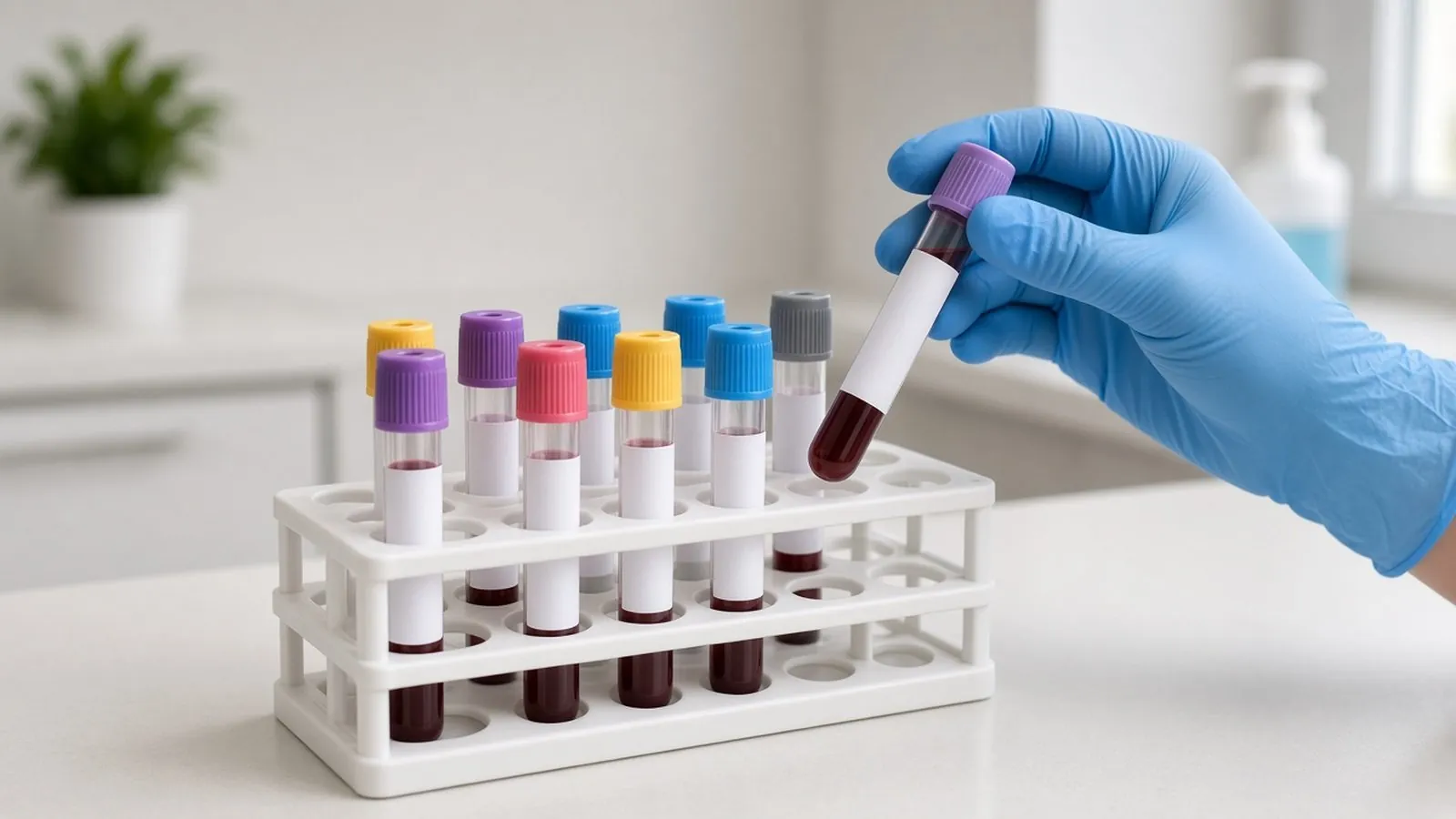
A full thyroid panel: TSH, free T4, free T3 and antibodies
If the problem can be in the conversion rather than the gland, then a test that only checks the gland won't find it.
Most doctors order TSH alone. TSH is your brain's signal to your thyroid — it tells you whether the gland is being asked to work harder. It tells you nothing about whether the hormone is being activated once it's made.
A full picture needs four things:
TSH — the signal from your brain to the gland.
Free T4 — the inactive hormone your thyroid actually produces.
Free T3 — the active hormone your cells can use. This is the one most often missing, and the one that determines how you feel.
Thyroid antibodies (TPO and thyroglobulin) — these show whether your immune system is attacking the gland, which is the most common cause of low thyroid function by a wide margin.
If you can only get one thing added: free T3.
You can have a perfect TSH, a normal free T4, and a low free T3. That combination is exactly what this chapter describes — a gland working fine and a conversion step that isn't. And on a TSH-only panel, it's invisible.
Expect some pushback, and know how to handle it. Many physicians consider TSH sufficient, and for detecting outright gland failure they're right. You're asking a different question. It helps enormously to ask it that way — "I'd like to know whether I'm converting properly, can we look at free T3 and antibodies" lands very differently than arriving with a printout from the internet.
And if your results come back and you're told they're normal while you still feel unwell — you're probably not imagining it. You may have had the wrong test, or you may be inside a reference range that isn't the same thing as optimal. That's a legitimate conversation to have with a practitioner who works in that gap.
The Thing Most People Get Wrong — Including a Lot of Doctors
Hashimoto's isn't really a thyroid disease. It's an immune system problem that happens to be attacking the thyroid.
That distinction changes everything about where you look.
Your thyroid isn't broken. It's under attack. So the question isn't how to fix the gland — it's why your immune system turned on it. And the answers are usually in your gut, your inflammatory load, and whatever chronic burden your body is fighting. Lessons 10, 11, and 13.
This also explains something that frustrates a great many women: why so many people on thyroid medication still don't feel well. The medication replaces the hormone. It does nothing about the attack.
And it's by far the most common cause. In countries with enough iodine in the food supply, most low thyroid function is autoimmune. It's far more common in women than men, and it often shows up in the forties and fifties — exactly when everything else in this book becomes relevant.
One more thing worth knowing: antibodies often appear years before your TSH moves. A woman with real symptoms, a normal TSH, and positive antibodies isn't imagining things. She's early.
One practical note on iodine. Your thyroid needs iodine. It's the raw material — you cannot make thyroid hormone without it, and deficiency is still a genuine problem in much of the world. But if your immune system is already attacking the gland, a large iodine supplement can add fuel to the fire rather than help. Iodine from food is not the concern. Seafood, seaweed in reasonable amounts, iodized salt — eat them. Before taking a high-dose iodine supplement, just get a thyroid antibody test. One blood draw. It tells you whether you're feeding a gland or feeding a fire. This applies to the iodine recommendation in Lesson 15 as well.
What Happens to Your Thyroid on Low-Carb
This book spends a lot of time on lowering carbohydrates. So you should get this part from me rather than finding it somewhere else.
When people cut carbohydrates, T3 reliably goes down. This has been known since the 1970s. And here's the striking part: it's specifically about carbohydrate, not about eating less.
Researchers in 1976 showed it clearly. Total fasting dropped T3 by about half. A no-carbohydrate diet at the same calories dropped it almost as much. But the same people eating the same calories with at least 50 grams of carbohydrate showed no significant change at all.
Same calories. Different carbohydrate. Different thyroid.
Now Here's What Changes the Interpretation
In genuine low thyroid function, your brain notices the shortage and shouts louder at the gland. That shout is what TSH measures.
On low-carb, TSH usually stays completely normal. Your brain isn't sounding an alarm. Free T4 often stays normal too — sometimes it even rises.
So one reasonable reading is this: your body isn't struggling to make thyroid hormone. It's choosing to activate less of it — because running on fat is a different arrangement and may genuinely require less.
And I want to be honest that this is an interpretation, not a settled fact. The same pattern — low T3 with normal TSH — shows up in chronic illness, where it is definitely not harmless. What separates the two isn't the number on the page.
The Rule: Symptoms Decide
If your T3 comes back low and you feel well — good energy, warm hands, hair staying put, normal cycle — this is very likely adaptation. Don't chase a number.
If your T3 is low and you feel worse — that needs addressing, not tolerating.
And the timing tells you which one you're in.
The first two weeks of low-carb feel rough for almost everyone. That's the transition, and it resolves. If you still feel bad at week six, or you only started feeling bad at week six, that isn't adaptation.
Don't wait to notice. Some of these show up late or get blamed on something else:
- Cold hands and feet, or feeling cold when nobody else does
- Hair shedding — which lags about three months behind the cause, so almost nobody connects it
- Your cycle changing in length or regularity
- Fatigue that isn't improving
If those appear, the answer is usually not more restriction. It's adding safe starches back — the ones from Lesson 9 — and eating more overall.
Which brings us to the reason most women miss this entirely.
Accidentally Eating Too Little
Low-carb eating suppresses appetite. That's one of its best features — it's why people stop thinking about food constantly.
It's also the trap.
When you're genuinely not hungry, you don't eat. Not restricting. Not white-knuckling anything. Just... not hungry, so lunch gets skipped, and the day ends with two meals that didn't have much in them.
Do that for a few weeks and your body concludes food is scarce. Thyroid output drops. Your cycle changes. Your hands get cold. Hair starts thinning. Progress stalls — and then stalls harder, because the natural response is to cut further.
There's also a sex difference here that matters. In one study of a single day of fasting, the women's stress hormone rhythm shifted measurably — running higher and peaking earlier. In the men, nothing moved at all.
That's one study and it needs replicating. But it points the same direction as everything else in this chapter: women appear more responsive to the stress of restriction, and most low-carb and fasting protocols were built on research in men.
What to Do About It
For your first month, don't trust your appetite as a guide to how much to eat. Eat your protein on a schedule whether you want it or not.
And if you feel worse rather than better after the first couple of weeks — eat more. That is almost always the correction, and it is almost always the last thing anyone tries.
You'll see this called "adrenal fatigue" in a lot of places. The underlying stress physiology is real, but that particular label doesn't hold up to scrutiny, and I'd rather give you the version that does: chronic stress and under-eating both suppress thyroid output, and both respond to being addressed directly.
When the body shifts into a parasympathetic state, digestion improves, nutrient absorption increases, hormones find their natural balance, and the body becomes willing to burn energy rather than hoarding it.
The Nervous System: The Safety Switch
At the same time, the nervous system acts as the ultimate safety switch, determining whether the body feels secure enough to use energy freely.
When the body is in a sympathetic state (often described as fight-or-flight), it prepares for immediate survival. Blood sugar is elevated to provide quick fuel, digestion is dramatically slowed, and the body becomes focused entirely on conserving long-term resources. If you live in a state of chronic stress, you are constantly sending these sympathetic signals. This leads to consistently elevated cortisol levels, increased fat storage, disrupted sleep, and severely reduced metabolic efficiency.
When the body shifts into a parasympathetic state (often referred to as rest-and-digest), the opposite occurs. Digestion improves, nutrient absorption increases, hormones find their natural balance, and the body becomes willing to burn energy rather than hoarding it. This shift is physiological, not just psychological. The state of your nervous system directly influences how your body processes the food on your plate.
Energy Demand and Heat Production

Everyday movement in the cold: a gentle metabolic signal
Another critical factor that ties the thyroid and nervous system together is energy demand. Muscle tissue increases your baseline energy demand because it requires constant maintenance. Furthermore, daily movement—even outside of structured gym workouts—significantly contributes to your total energy expenditure. Small, consistent movements like walking, standing, and general daily activity can collectively have a greater impact on your metabolism than a single, short period of intense exercise.
This has a name — non-exercise activity thermogenesis, or NEAT. It covers everything you do that isn't deliberate exercise: walking, standing, carrying things, fidgeting, gesturing when you talk.
For most people it's a considerably larger share of daily energy use than their workouts. And here's the part that matters:
It's the first thing your body cuts when it decides resources are short.
You don't decide to move less. You just find yourself sitting more, taking the elevator, driving instead of walking the four blocks — and you don't notice, because the decision was never conscious.
This is one of the main ways restriction backfires without showing up anywhere you'd think to look. You cut your food, your body cut your movement, and the deficit you thought you created never actually existed.
The reverse is also available to you. Building more movement into ordinary life reaches a much larger pool of energy than adding another gym session — which is why Lesson 17 is about more than workouts.
Key Insight
Cold exposure activates brown fat, which contains UCP1 — a protein that forces cells to generate pure heat instead of ATP, progressively raising resting metabolic rate without traditional exercise.
Brown Fat, Cold Exposure, and Thermogenesis

A cold plunge is a strong stimulus. For women, less is often more
The body also has a unique ability to increase energy expenditure through heat production, a process known as thermogenesis. You possess certain types of fat tissue, referred to as "brown fat," which are specialized entirely for this purpose. Unlike regular white fat, which simply stores excess energy, brown fat actively burns energy to generate heat.
Brown fat is packed with mitochondria—the cellular engines we discussed earlier. These mitochondria contain a unique protein called UCP1 (Uncoupling Protein 1), which literally "uncouples" the calorie-burning process from creating usable energy (ATP) and instead forces the cell to just generate pure heat. When your brown fat is activated, your metabolic rate increases significantly without you having to move a muscle.
The most potent natural stimulator of brown fat is cold exposure. When the skin senses a drop in temperature, the brain sends a signal via the sympathetic nervous system to activate brown fat to keep your core temperature stable. Over time, regular cold exposure can actually increase the amount of brown fat your body has, progressively raising your resting metabolic rate.
Practical Methods
- The Cold Shower Finish: The simplest way to start is by turning the water to cold at the very end of your normal shower. Start with 15 to 30 seconds and gradually work your way up to 1 to 2 minutes as you build resilience.
- Cold Plunges: For a more intense stimulus, full-body immersion in cold water (typically between 50°F and 60°F) for 2 to 5 minutes is highly effective.
- Winter Walks: Going for a brisk 10-to-15-minute walk outside in colder weather wearing only a t-shirt (ensuring you are safe, of course) provides a strong, natural environmental stimulus.
A Note for Women
While cold exposure is a powerful metabolic tool, it must be applied with nuance. Because the female body is uniquely designed to protect reproduction and hormonal balance, it is often more sensitive to physical stressors than the male body.
Intense, prolonged cold exposure (like daily, extended ice baths) acts as a significant acute stressor. If your nervous system is already heavily burdened by a busy lifestyle, poor sleep, or intense exercise, extreme cold can drive cortisol too high and potentially disrupt thyroid function or the menstrual cycle.
The key is "minimum effective dose." You often only need a brief, mild cold stimulus. Pay close attention: cold exposure should leave you feeling energized and warm within a few minutes. If it leaves you feeling exhausted, deeply chilled for hours, or overly stressed, you are doing too much.
How Your Body Burns
Lesson 6 of 18

Lesson 6
GLP-1 and Appetite Regulation

GLP-1 medications mimic a hormone your gut already makes
In recent years, the conversation around weight loss has been dominated by a specific hormone: GLP-1 (Glucagon-Like Peptide-1). You have likely heard of it in the context of wildly popular weight-loss medications. However, GLP-1 is actually a naturally occurring hormone that your body produces on its own. Understanding how it naturally works—and the severe consequences of artificially overriding it—is crucial to understanding your metabolism.
GLP-1 is an incretin hormone, meaning it is secreted by the cells in your intestines in response to eating food. When food enters your digestive tract, natural GLP-1 is released and performs a few highly important tasks: it tells your pancreas to release an appropriate amount of insulin, it slows down gastric emptying (meaning food stays in your stomach longer), and it sends a powerful satiety signal to your brain, telling you that you are full.
When your natural GLP-1 is functioning correctly, it acts as a perfectly calibrated built-in brake pedal for your appetite.
When your natural GLP-1 is functioning correctly, it acts as a perfectly calibrated built-in brake pedal for your appetite — no prescription required.
The Drug Dilemma and Statistical Risks
The pharmaceutical industry has capitalized on this biological process by creating GLP-1 agonists—synthetic drugs that mimic the hormone but stay in your system much longer and at concentrations exponentially higher than your body would ever naturally produce.
While there is no denying that these drugs suppress appetite and cause rapid weight loss, the pharmacological doses of GLP-1 we are using now are, as clinical experts point out, "a little too much of a good thing." By forcefully suppressing the digestive system to extreme levels, these drugs carry severe, statistically significant medical risks.
The Data: JAMA 2023 Study
According to a pivotal 2023 study published in the Journal of the American Medical Association (JAMA), patients using GLP-1 receptor agonists for weight loss experienced drastically higher risks of severe gastrointestinal adverse events compared to those using other weight-loss medications:
- Pancreatitis (Severe inflammation of the pancreas): A staggering 9.09 times higher risk.
- Bowel Obstruction (Blockages in the intestines): A 4.22 times higher risk.
- Gastroparesis (Stomach paralysis): A 3.67 times higher risk.
These are not just minor digestive complaints; they are severe, sometimes irreversible conditions caused by chemically paralyzing the body's natural digestive motility.
The Catastrophic Loss of Muscle Mass
Beyond the severe gastrointestinal risks, the most alarming consequence of artificially suppressing your appetite to the point of starvation is what happens to your body's tissue. When you severely undereat, you don't just lose fat—you aggressively lose muscle.
Clinical data on these GLP-1 medications shows that an astonishing up to 40% of the total weight lost is lean muscle mass. To put this into perspective, muscle is the primary engine of your metabolism. It is the tissue that dictates your resting metabolic rate and houses your energy-burning mitochondria. When you lose that much muscle, your resting metabolic rate severely drops. If a patient ever stops taking the medication, their metabolism is now significantly slower and more damaged than it was before they started the drug, making rapid and dramatic weight regain almost inevitable.
Comparison to Other Diets
This extreme muscle loss is not a normal or necessary part of weight loss. When we compare the tissue loss achieved through GLP-1 drugs to other dietary interventions, the contrast is staggering:
- Standard Caloric Restriction: Even on a typical "eat less, move more" calorie-restricted diet, muscle loss usually accounts for about 25% to 30% of the total weight lost.
- Low-Carbohydrate / Ketogenic Diets: When individuals lose weight by managing insulin through low-carbohydrate diets, the percentage of muscle lost is vastly reduced, often down to just 10% to 15%—and in many cases, lean mass is completely preserved or even increased if paired with adequate protein and resistance training.
What's Happening Outside the Trials
The studies you read about are carefully run. Patients are selected, monitored, and supported. Real-world prescribing looks nothing like that.
A recent analysis looked at 670,422 patients starting these medications in routine clinical care — not a trial, just people getting prescriptions.
Among those who had their body composition actually measured before and after, researchers identified what they called a depletive pattern: heavy weight loss combined with substantial lean tissue loss.
It occurred in roughly one in ten patients on tirzepatide, and one in fifteen on semaglutide. Lean tissue loss exceeding 15% happened in about eight to nine percent of patients.
Three things about that finding matter enormously.
It's dose-dependent. Higher doses and longer use produced progressively more lean tissue loss, in both drugs. That's not a footnote — that's something a patient can actually act on in a conversation with her doctor.
The two drugs are not the same. Tirzepatide showed consistently more lean tissue loss than semaglutide at every point measured — three months, six, nine, and twelve.
And now the part that should genuinely bother you. Of those 670,000 patients, only about 8,000 had their body composition measured at all.
Read that again. These medications are being prescribed at enormous scale, and in the overwhelming majority of cases nobody is checking what tissue is being lost. No body composition. No strength testing. No protein target. No resistance training prescribed alongside.
That's the real problem here. Not that these drugs cause muscle loss — rapid weight loss of any kind does that. It's that a meaningful fraction of patients are being genuinely depleted, it's happening in a predictable and dose-related way, and almost nobody is looking.
One more thing worth knowing: researchers are openly arguing about this. It was formally debated at a major diabetes conference in 2026, with serious scientists on both sides. Anyone who tells you this question is settled — in either direction — isn't being straight with you.
Why the difference? Diets that lower insulin and increase ketones naturally signal the body to preserve muscle tissue while exclusively burning stored fat. Ketones act as a muscle-sparing fuel. The synthetic GLP-1 drugs do not possess this muscle-sparing mechanism; they simply force starvation, causing the body to frantically cannibalize its own lean tissue for survival.
If You're on One of These Right Now
A lot of women reading this are taking one of these medications today. If that's you, I want to speak to you directly.
I'm not telling you to stop. That's a decision between you and your physician, and stopping a medication because of something you read in a course — including this one — isn't the way to make it.
What I am telling you is that you can change what you lose.
The muscle loss that comes with rapid weight loss is substantially preventable, and almost nobody is telling patients how. Three things:
Protein, deliberately and on a schedule. This is the big one, and the appetite suppression is exactly what makes it hard. When you're not hungry, protein is the easiest thing to skip and the most important thing to keep. You will probably need to eat it whether you want it or not. Lesson 9 has the amount.
Lift something heavy, twice a week minimum. This is the intervention with the strongest evidence for protecting lean tissue during weight loss — by any method. Cardio does not do this job. Lesson 17. If you do one thing from this book while you're on the medication, do this.
Watch your total intake. The appetite suppression is strong enough that people routinely eat far less than they intend. Under-eating is what drives tissue loss — the drug just makes it effortless. If you've been eating noticeably less without deciding to, that's worth correcting.
And Here's Where This Book Earns Its Place
The research is clear that the vulnerable moment is when you come off.
Everything in these eighteen lessons — insulin, meal composition, appetite signalling, sleep, movement, muscle — is what you need in place before that happens.
And here's the thing: it is far easier to build these habits while you're still on the medication than after. Right now you have appetite suppression working for you. That's the best window you will ever get to establish how you eat. Starting from scratch after you stop, while you're hungry, is a much harder project.
Think of this course as what the medication can't do for you — not as an argument against it.
Full and Not Hungry Are Not the Same Thing
Something worth understanding before we go further, because it explains a frustration almost everyone has had.
Your stomach has stretch sensors that fire when it's physically full. They don't care what you ate — you get the same signal from a glass of water. And they fade within about an hour as your stomach empties.
Real appetite shutdown is a completely separate system. It comes from your intestines detecting protein, fat, and fiber arriving — that's GLP-1 and its partners — and it lasts for hours.
So a large meal that's light on those three gives you plenty of stretch and very little actual satiety. You feel stuffed at the table and you're back in the kitchen ninety minutes later.
That isn't a discipline failure. It's two signals doing two different jobs, and only one of them got triggered.
It also explains why the standard advice underdelivers. Fill up on salad. Drink a big glass of water before you eat. Those activate the signal that fades, and skip the one that lasts.
Stimulating GLP-1 Naturally
Rather than relying on synthetic, high-dose injections that carry a 9x higher risk of pancreatitis and destroy your metabolic engine, you can naturally optimize your body's own GLP-1 production through the way you eat.
Protein and healthy fats are the most potent natural stimulators of GLP-1. By prioritizing high-quality protein and natural fats at every meal, you trigger a robust, natural GLP-1 response. You utilize your body's own appetite-regulating pharmacy, feeling comfortably full for hours while preserving the lean muscle mass your metabolism desperately needs.
Why Whole Food Does This Better

Hours of fullness signalling vs. a brief pulse
Here's a subtlety worth getting right, because you'll see it stated backwards.
Carbohydrate does trigger GLP-1. The issue isn't that refined carbohydrate bypasses the system. It's where, and for how long.
The cells that produce most of your GLP-1 are concentrated far down your digestive tract — the lower small intestine and colon. Refined carbohydrate is absorbed almost immediately, high up. So relatively little of it ever reaches those cells. You get a brief signal and it's over.
Protein, fat, and fermentable fiber travel further and linger longer, producing a sustained response. Fermentable fiber does it twice — once passing through, and again hours later when your gut bacteria ferment it into compounds that trigger another round.
This is why eggs and vegetables hold you for five hours and a bowl of cereal holds you for ninety minutes — even matched for calories. It isn't that one triggered the hormone and the other didn't. One produced a brief pulse; the other produced hours of signalling.
Lifestyle Habits That Boost Your Natural GLP-1
Beyond what you eat, several daily habits have been shown to meaningfully increase your body's own GLP-1 production:
- Regular Exercise: Both moderate- and high-intensity exercise, as well as resistance training, have been shown to enhance GLP-1 secretion directly.
- Stress Management: High stress actively reduces GLP-1 production. Practices like meditation, deep breathing, or yoga help keep your natural appetite regulation working properly.
- Quality Sleep: Poor sleep disrupts GLP-1 release. Prioritizing consistent, restorative sleep is one of the simplest ways to keep your appetite hormones functioning correctly.
- Mindful, Slow Eating: Paying attention to your food and eating slowly enhances the GLP-1 response to each meal. Your gut needs time to register what you are eating and send the fullness signal to your brain.
Key Insight
GLP-1 agonist medications carry up to 9.09 times higher risk of pancreatitis and cause up to 40% of total weight loss to come from lean muscle mass rather than fat.
Foods That Naturally Boost GLP-1
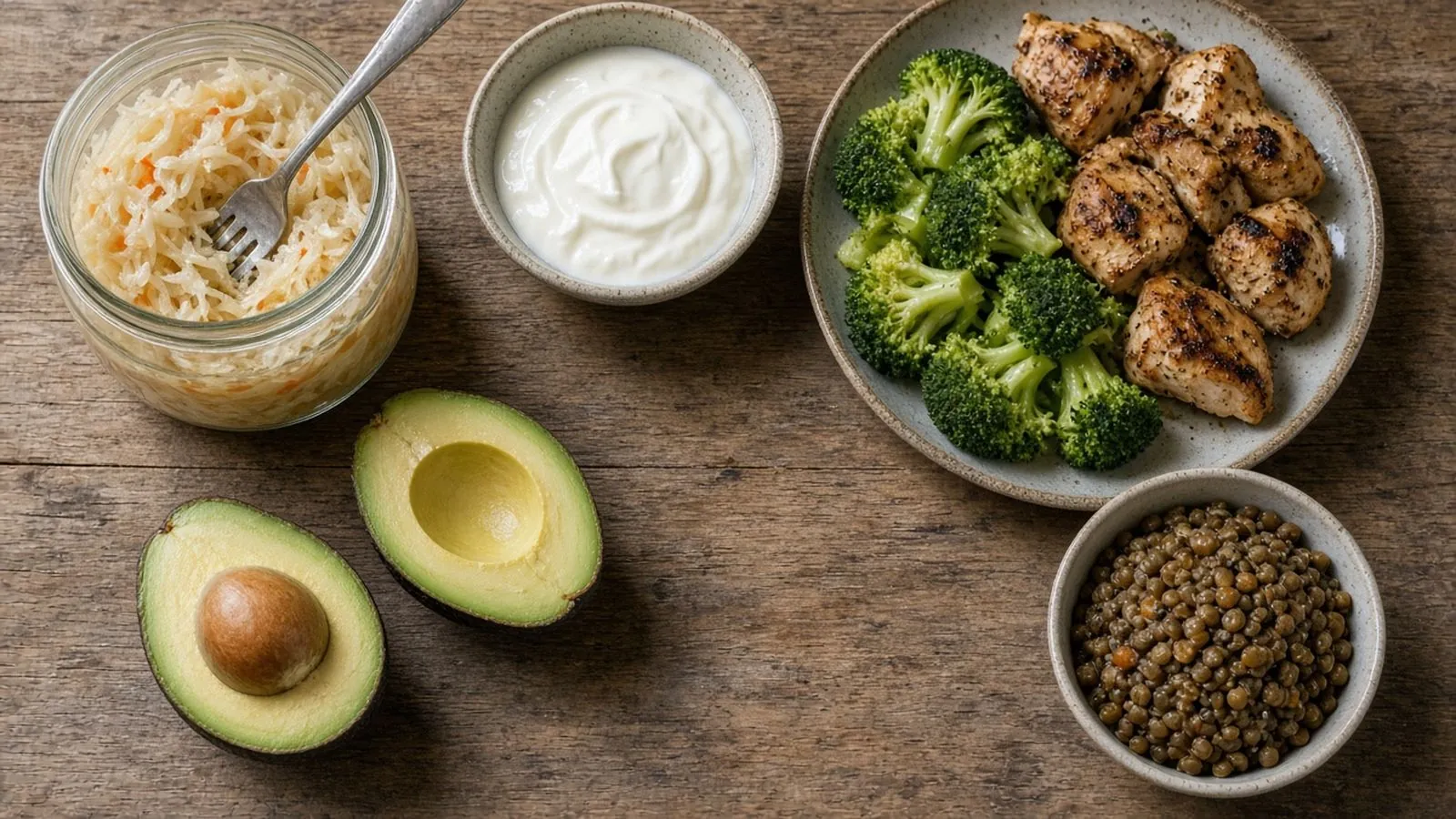
Fermented foods, protein and healthy fats boost your own GLP-1
Certain foods are particularly powerful at stimulating your body's own GLP-1 production. Incorporating these regularly creates a compounding effect on your natural appetite regulation:
- Chicory root and Jerusalem artichoke
- Pectin-rich fruits: apples, pears, citrus
- Fermented foods: sauerkraut, kimchi, kefir, yogurt, miso, natto
- Berries of all kinds
- Green tea (EGCG)
- Dark chocolate (70%+ cacao)
- Turmeric (curcumin)
- Eggs, fish, and quality meats
- Healthy fats from whole food sources including animal fats, consumed without refined carbohydrates present
- Nuts and seeds, especially walnuts and flaxseed
The common thread: whole, unprocessed foods eaten slowly and mindfully, without constant snacking, give your gut the best environment to produce GLP-1 naturally and keep appetite perfectly regulated.
Your appetite patterns are part of what your AI Coach will assess in your personal intake.
How Your Body Burns
Lesson 7 of 18

Lesson 7
Other Key Metabolic Hormones: Leptin, Ghrelin, and Adiponectin
While GLP-1 manages the immediate feeling of fullness after a meal, your long-term energy balance and daily hunger cues are controlled by a constant dialogue between two other major hormones: Leptin and Ghrelin. If you constantly feel like you are battling your appetite, it is rarely a failure of willpower. It is almost always a miscommunication between these hormones.
Because the brain cannot sense the leptin, it assumes the body is starving — and responds by dramatically increasing appetite and slowing the metabolic rate to conserve every calorie.
Leptin: The Energy Gauge
Leptin is the hormone of satiety, but unlike GLP-1 (which comes from your gut), Leptin is produced directly by your fat cells. Its primary job is to act as a fuel gauge for your brain. As you store energy in your fat cells, they release leptin into the bloodstream. This leptin travels to the hypothalamus in your brain, delivering a simple message: "We have plenty of stored energy. We don't need to eat right now, and it is safe to maintain a high metabolic rate."
In a healthy system, this works perfectly. If you overeat for a few days, your fat cells release more leptin, your appetite naturally drops, your desire to move increases, and your body weight auto-regulates.
However, if you are struggling with weight, this system is likely disrupted by a condition called Leptin Resistance. When insulin is chronically elevated (from frequent eating and high carbohydrate consumption), it actively blocks the leptin signal from reaching the brain. You may have plenty of stored energy in your fat cells, and those fat cells may be shouting at your brain to stop eating, but the high insulin acts like static on the radio. The brain never hears the message.
Because the brain cannot sense the leptin, it assumes the body is starving. It responds exactly how a starving body should: it drastically increases your appetite and slows down your metabolic rate to conserve energy. This is why people with insulin resistance are often intensely hungry despite having excess stored body fat. To fix leptin resistance and restore your body’s natural energy gauge, you must first lower insulin.
It's the Same Thing That Happened With Insulin
There's another layer to this, and once you see it the whole picture clicks.
In Lesson 2 you learned that insulin resistance isn't your cells breaking. It's your cells turning down the volume on a signal that never stops shouting.
Leptin does exactly the same thing.
The more fat you store, the more leptin you produce. And when leptin stays high month after month, year after year, the receptors in your brain stop responding fully to it.
Your fat cells are shouting we have plenty of energy here — and your brain has stopped listening, for the same protective reason it stopped listening to insulin. A cell that kept responding fully to a hormone flooding it all day, every day, for twenty years would be in far worse shape.
So it's one disease wearing two costumes. Too much signal, for too long, and the receiver turns down the volume. Insulin and leptin resistance travel together, worsen each other, and respond to the same things.
Which is also why the fix isn't a leptin supplement or a leptin drug. You can't shout louder at a system that stopped listening because of the shouting. You have to let it go quiet.
Key Insight
Chronically elevated insulin physically blocks the leptin signal from reaching the brain — creating a state where the brain perceives starvation despite having abundant stored energy.
So How Do You Get the Signal Working Again?
Lowering insulin is the main lever and it's where most of this book lives. But leptin resistance has several inputs — and if your food is already sorted and nothing has changed, the answer is probably here.
Reduce inflammation. Inflammation in your brain's appetite center directly interferes with leptin's signal. This is why Lessons 10, 11, and 14 — ceramides, gut health, and processed food — are leptin chapters even though they never use the word.
Lower your triglycerides. There's research suggesting triglycerides can cross into the brain and directly impair both leptin and insulin signalling there. That's animal research, so hold it loosely — but it connects the triglyceride-to-HDL ratio from Lesson 3 straight to this chapter. One number, two systems.
Sleep. One bad night raises ghrelin and lowers leptin. Chronic short sleep keeps both pointed the wrong way, every single day. This is not a small lever.
Build and keep muscle. Muscle changes where energy goes and how much insulin is needed to put it there. Lesson 17.
Cut liquid fructose specifically. Sugary drinks appear to worsen leptin signalling, and fructose goes straight to the liver. Lesson 11.
And give it time. Leptin resistance took years to develop. It doesn't reverse in a week, and the early stages of improvement often feel like nothing is happening at all. That's not failure — that's the timeline.
Adiponectin: The One That Falls
Your fat tissue isn't a storage unit. It's an endocrine organ — it manufactures hormones and sends messages — and leptin isn't the only one.
Adiponectin is the useful counterpart, and it behaves in the opposite direction.
Where leptin rises as you store more fat, adiponectin falls. And adiponectin is the helpful one: it improves insulin sensitivity, reduces inflammation, and encourages your cells to burn fat rather than store it.
So metabolic dysfunction has a signature at the hormonal level: leptin high and ineffective, adiponectin low. The signal you've stopped hearing is loud, and the signal that would actually help has gone quiet.
It also tells you something about which fat matters. Deep abdominal fat produces less adiponectin and more inflammatory signals than fat stored under the skin. Which is part of why your waist measurement tells you more about your metabolic health than your weight does — something worth remembering when the scale won't move.
The good news: adiponectin responds to the same things everything else in this book responds to. Losing visceral fat, reducing inflammation, and exercise.
Ghrelin: The Hunger Hormone

One bad night raises ghrelin and lowers leptin
Ghrelin is the hormone that makes your stomach growl. It is produced primarily in the stomach and acts as a direct signal to the brain that it is time to seek out food. Ghrelin levels naturally rise before your typical meal times and plummet immediately after you eat.
Interestingly, ghrelin is highly trainable and heavily influenced by your habits. If you consistently eat a snack at 2:00 PM every day, your body will begin surging ghrelin at 1:45 PM in anticipation. If you stop eating that snack, the ghrelin surge will be uncomfortable for a few days, but it will eventually adapt and disappear. Ghrelin is also deeply connected to your sleep cycle. Just one night of poor sleep significantly elevates ghrelin levels the following day while simultaneously lowering leptin. This means your brain is aggressively telling you to eat more while simultaneously ignoring the signals that tell you to stop. This is why cravings for high-sugar, high-energy foods are so intense when you are exhausted. Managing ghrelin is not about fighting hunger; it is about providing your body with nutrient-dense meals, adequate sleep, and stable eating windows so the hormone stops working against you.
Dessert Stomach Is Real

Full of savory, still interested in sweet
One more quirk worth knowing, because it explains something everybody has experienced and nobody can explain.
Fullness is partly specific to the food you just ate.
Your brain gets tired of the flavor in front of it while staying fully interested in a different one. That's measurable — the brain's response to a food declines as you eat it, while its response to a different taste stays completely intact.
So after a large savory meal, you are genuinely full of savory and not remotely full of sweet. That's why the dessert menu still works, and it has nothing to do with how much room is left in your stomach.
This is useful to know, because it means a craving that appears right after a meal usually isn't hunger at all. It's a different channel opening up. Which is a very different problem, and it responds to different things — walking away from the table, brushing your teeth, or simply knowing what it is.
Why Your Body Fights Back — And Why It Isn't Your Fault
There's a study I need to tell you about.
Researchers took 50 overweight adults through a ten-week weight loss program. Average loss: about 30 pounds. Then they measured their appetite hormones three times — at the start, at the end of the program, and a full year later.
What they found at ten weeks was expected. Leptin had dropped sharply. So had several other fullness hormones. And ghrelin — the hunger hormone — had gone up.
That makes sense. Less fat means less leptin. The body notices and starts pushing for food.
Here's the finding that matters.
A year later, those hormone changes had not gone back to normal. Leptin was still suppressed. Ghrelin was still elevated. And the participants still reported being hungrier than they were before they ever started.
The researchers' conclusion was blunt: one year after weight loss, the hormones that drive weight regain do not return to pre-weight-loss levels.
Read That Again and Think About Your Own History
If you have lost weight and then, months later, found yourself fighting hunger in a way you never had to before — that was measurable. It was happening in your bloodstream. It was not motivation running out, or old habits creeping back, or a failure of commitment.
Your body quietly changed the terms. Less of the hormone that says we have enough. More of the hormone that says go find food. And it held those settings for at least a year.
Every time you were told you just needed to want it more, this was what was actually happening.
One Detail That Points at Something Important
In research comparing methods, diet-induced weight loss raised ghrelin substantially. People who lost the same weight through gastric bypass surgery didn't see the same rise — because the surgery removes part of the tissue that produces it.
Same weight lost. Different hormonal aftermath.
How you lose weight changes what your body does afterward. Which is the entire argument of this book.
And Here's What It Changes
If regain were about willpower, the answer would be to try harder.
Since it's about a hormonal environment that shifted underneath you, the answer is completely different: you have to keep sending the signals that tell your body it isn't in a famine.
Enough food. Enough protein. Enough sleep. Muscle you're actively maintaining. Not white-knuckling through hunger — because that's the approach that produced this in the first place.
This is not a reason to stop. It's the reason the method matters more than the number of pounds. A body that was fed properly while losing weight ends up in a different hormonal place than one that was starved into it.
You were never fighting your own weakness. You were fighting a headwind nobody told you about. Now you know it's there, and you know what actually works against it.
How Your Body Burns
Lesson 8 of 18

Lesson 8
Ketones and Metabolic Flexibility
When we talk about shifting the body from a state of storing energy to a state of burning energy, we have to talk about ketones. Ketones are often misunderstood as just a fad diet trend, but they are actually a fundamental part of human biology and a sign of true metabolic flexibility.
When insulin levels are low—either through fasting, exercise, or restricting dietary carbohydrates—the body realizes it cannot rely on glucose for fuel. The liver then steps in and begins breaking down your stored body fat into fatty acids. However, the brain cannot use typical fatty acids for fuel. To solve this, the liver converts those fats into small, highly efficient energy molecules called ketones (specifically beta-hydroxybutyrate).
Worth being clear about why ketones exist.
It's your brain. Fatty acids can't get into your brain easily, so your liver converts them into ketones, which can.
Your other tissues don't need that step. Your muscles burn fat directly. So does your heart — in fact your heart runs mostly on fat all day long, and always has.
So ketones aren't how your body burns fat. They're the workaround for the one organ that can't. Everything else was already burning fat as it is.
When your body is fueled by its own stored fat via ketones, the blood sugar rollercoaster stops entirely — and energy levels remain stable throughout the entire day.
The Ultimate Clean Fuel
Ketones are often described as a "cleaner" burning fuel than glucose. When your mitochondria burn ketones for energy, they produce significantly fewer free radicals (oxidative stress) than they do when burning sugar. This reduces systemic inflammation at the cellular level.
Furthermore, ketones do more than just provide energy. They act as powerful signaling molecules. Research shows that elevated ketones can actually protect muscle tissue from breaking down, enhance brain function and focus, and directly suppress appetite. When your body is fueled by its own stored fat via ketones, the blood sugar rollercoaster stops. Energy levels remain stable throughout the day because you are tapping into a massive, nearly unlimited internal fuel tank rather than relying on the next meal.
Ketones Don't Just Feed Your Cells — They Instruct Them
Here's something about ketones that goes beyond energy.
Beta-hydroxybutyrate acts as a signalling molecule that switches on your cells' own antioxidant defenses.
In a study published in Science, researchers found that BHB directly changes which genes your cells express — turning up the specific proteins that protect against oxidative damage. Mice given BHB in advance were dramatically protected against a poison that kills by generating exactly that kind of damage.
BHB also shuts down one of the main inflammatory switches in the body.
So ketones aren't only a fuel. They're an instruction to clean up. Which is the whole point of this book — the molecule isn't just energy, it's a message. And this one tells your cells to raise their defenses.
It's also why ketones do things that have nothing to do with weight. The research on brain protection and inflammation is about signalling, not calories.
The Breath Test That Predicted Weight Gain
You can tell what fuel your body is burning from your breath. Burning fat and burning sugar use different amounts of oxygen and release different amounts of carbon dioxide, and the ratio between the two shows which fuel is doing the work.
In the Baltimore Longitudinal Study of Aging, researchers took that measurement in 775 men after an overnight fast, then followed them for about ten years.
The men whose bodies were running mostly on sugar at rest were about two and a half times more likely to gain 11 pounds or more than the men running mostly on fat.
Another study, in the Pima people of Arizona, found the same: those who burned the most sugar and the least fat over 24 hours were about two and a half times as likely to gain significant weight.
A body that can't easily reach for fat at rest is more likely to keep storing it. A body that runs comfortably on fat is more protected.
A Distinction That Will Save You Months

Added fats help during the transition, then can quietly stall progress
Ketosis means your body is running on fat. It does not automatically mean it's running on your fat.
If you eat enough dietary fat, your body will happily burn that instead — staying in ketosis, ticking every box, and never reaching far into your own stores. You can be genuinely fat-adapted and genuinely not losing fat.
Every marker looks right. The strips are positive. Energy is good. Cravings are gone. And nothing changes.
And Here's the Mechanism, Because It Explains Everything
Your fat cells aren't a warehouse. They're a revolving door.
Fat is being released and repackaged constantly — right now, and while you sleep. And in fasting people, researchers have measured as much as 60% of the fatty acids released from fat cells being put straight back into storage rather than burned.
Released. Not burned. Repackaged. Your body even spends energy doing it — it costs six units of cellular energy currency to reattach three fatty acids.
So being in ketosis means the door is open. It doesn't tell you which direction the traffic is going.
And what determines the direction is simple: does your body actually need the energy? If you've eaten enough fat to cover your requirements, there's no reason to burn what you released. So it pays the cost and puts it back.
Which Means the Lever Is Usually Your Added Fats
If you're fully adapted, feeling well, and your body composition isn't moving, look at the added fats — the ones not attached to a protein. Butter in coffee, extra oil, fat bombs.
Those were genuinely useful during the transition. They quietly become the reason nothing is changing.
Lesson 9 has the full picture of how this cycle works.
One Thing That Surprises People
A meaningful minority of people — often the leanest and most metabolically healthy, which is the odd part — see their LDL cholesterol rise substantially on a low-carbohydrate diet. Sometimes a lot.
What to do if it happens:
Get an ApoB test. It counts the actual number of particles in your blood rather than the cholesterol inside them, and it's the number that tells you the most.
Look at the whole picture. Triglycerides down and HDL up alongside a higher LDL is a different situation from everything moving the wrong way.
And take it to your doctor rather than to the internet. There are loud voices on both sides of this and neither of them knows your history. This is genuinely unresolved, and anyone telling you it's simple — in either direction — is overselling.
What "Opening the Gates" Actually Means
I've used that phrase. Let me show you the real thing — because there is an actual gate.
Fat cannot burn itself. To be used for energy, a fat molecule has to be physically carried through a specific doorway into the part of your cell that burns fuel. It can't drift in.
That doorway is an enzyme called CPT-1.
And here's what matters. When you eat carbohydrate and insulin rises, your body produces a molecule whose entire job is building fat for storage. That molecule blocks the doorway.
So when insulin is up, the door is shut. Fat can be sitting right there inside the cell — plenty of it, right outside the furnace — completely unable to get in.
Not because you don't have fat to burn. Because the door is locked.
Lower insulin and the door opens. That's what carbohydrate restriction is actually doing, and it's why the amount of carbohydrate matters more than the calories attached to it.
And There's a Carrier
The door needs more than to be unlocked. Something has to carry the fat through it — a molecule called carnitine.
Your body builds carnitine from two amino acids, using vitamin C to assemble it.
Which is worth pausing on: your ability to burn fat depends on getting enough protein and enough vitamin C. The door can be wide open and still have nothing to carry fat through it.
This is also why medium-chain fats — the ones concentrated in coconut oil and MCT oil — behave differently. They don't need the door. They get in regardless of whether insulin has locked it, which is why they help during the transition.
Two Things That Take Two Different Amounts of Time
The door unlocking takes hours. It happens every night while you sleep.
Building more doors — and more furnaces to feed — takes weeks.
That's the difference between being allowed to burn fat and being good at it. And it's why week six feels nothing like week one.
And One More Thing
Muscle contraction unlocks the same door, from the other side.
Moving your body hits the exact same lock that insulin controls. Not indirectly — the same lock.
That's why a ten-minute walk after dinner does more than it looks like it should. Lesson 17.
Transitioning into Fat-Burning: The Keto Flu
To actually reach a state of ketosis and produce these molecules, you must consistently keep your insulin levels low. For most people, this means restricting dietary carbohydrates to ideally under 40 grams per day. Some individuals, especially those with severe insulin resistance, may need to drop even lower (under 20 grams) to fully open the fat-burning gates.
However, if your body has relied on a constant stream of sugar for decades, it takes time to adjust. Your cellular machinery has to literally build new enzymes to remember how to burn fat for fuel. During this adaptation phase—which can last anywhere from a few days to a couple of weeks—you might experience fatigue, headaches, brain fog, or irritability. This is often referred to as the "keto flu."
The keto flu is not an actual sickness; rather, it is a temporary energy crisis combined with a sudden electrolyte and nutrient shift. As your insulin plummets, your kidneys naturally stop hoarding water and rapidly flush out excess sodium. At the same time, your mitochondria are working overtime to transition their fuel source.
Combating the Keto Flu
The best way to combat the keto flu is twofold:
You must purposefully replenish what is being flushed out. Do not fear salt. Liberally salt your food and drink plenty of water (even adding a pinch of high-quality sea salt to your glass) to prevent dehydration and muscle cramps.
B vitamins, particularly Vitamin B1 (Thiamine) and Vitamin B5 (Pantothenic Acid), are absolutely critical co-enzymes required by your mitochondria to process fat into usable energy. When you suddenly shift from burning carbs to burning fat, your cellular demand for B vitamins skyrockets. If you don't have enough, your energy production stalls, causing deep fatigue. Incorporating high-quality sources of B vitamins—like nutritional yeast, liver, or a high-quality B-complex supplement—can help your cells rapidly build their new fat-burning engines and eliminate the fatigue.
Testing, and Why Your Strips Stop Working
Strips fade as you adapt. A blood meter is more accurate
Urine strips are cheap and useful for about the first two weeks. After that they become misleading.
Here's why, and it catches people out constantly: as you adapt, your body stops wasting ketones in your urine. It's getting better at using them. So the strips fade exactly when you're doing well — and a lot of people quit at that point thinking they fell out of ketosis.
A blood meter is the accurate option if you like data.
Or measure nothing. Once you're adapted, how you feel is a better guide than a number: stable energy, cravings gone, comfortable going five or six hours without food. If you have those, you have what you came for.
And Ketone Supplements?
You can buy ketones in a bottle. They do raise your blood ketone level.
What they don't do is make you burn your own fat. If anything they do the opposite in the moment — when ketones arrive from outside, your liver makes fewer of its own, because the signal to produce them has been satisfied. You're in ketosis without being in fat-burning.
They may help during the transition. They are not a shortcut, and a positive reading from a supplement tells you nothing about fat loss.
Why Keto Can Fail the Chronically Ill
While ketosis is a powerful tool for reversing insulin resistance, it is not for everyone. If your body is in a state of cellular energy failure—due to severe chronic illness (like Epstein-Barr Virus), extreme stress, or years of chronic dieting—a strict low-carb diet can act as a dangerous physiological stressor that keeps the body trapped in survival mode.
When the body is deeply stressed, it cannot efficiently "switch" to producing ketones. Instead, it perceives the sudden lack of carbohydrates as a famine. This triggers two protective, but damaging, responses:
- Muscle Breakdown (Gluconeogenesis): The body perceives the lack of carbs as a severe threat and aggressively breaks down its own muscle and organ tissue to create sugar. This process keeps cortisol and systemic inflammation chronically high.
- Thyroid Down-Regulation: Strict low-carb diets can decrease the liver's ability to convert inactive thyroid hormone (T4) into the active form (T3). The metabolism essentially drops into "low power mode" to hold onto every ounce of stored energy.
For these highly stressed individuals, aggressively pushing for ketosis backfires. They must focus on signaling metabolic safety first.
The Trap Nobody Warns You About
The section above is about people who are already depleted. But there's a way this goes wrong in perfectly healthy women, and I see it more than anything else.
Low-carb eating suppresses appetite. That's one of its best features — and it's the trap.
When you're genuinely not hungry, you don't eat. Not restricting. Not white-knuckling. Just... not hungry, so lunch gets skipped, and the day ends with two meals that didn't have much in them.
Do that for a few weeks and your body concludes food is scarce. Thyroid output drops. Your cycle changes. Your hands get cold. Hair starts thinning. Progress stalls — and then stalls harder, because the instinct is to cut further.
There's also a sex difference worth knowing. In one study of a single day of fasting, the women's stress hormone rhythm shifted measurably — running higher and peaking earlier. In the men, nothing moved at all.
One study, and it needs replicating. But it points the same way as everything else in this chapter: women appear more sensitive to the stress of restriction, and most low-carb and fasting protocols were built on research in men.
What to Do
For your first month, don't trust your appetite as a guide to how much to eat. Eat your protein on a schedule whether you want it or not.
And if you feel worse rather than better after the first couple of weeks — eat more.
That is almost always the correction, and it is almost always the last thing anyone tries.
Who Should Do This With Medical Supervision

Tell your prescriber before you make a big change to your diet
One Important Warning About Diabetes Medication
If you take medication for diabetes, talk to your doctor before you start this. Not because low-carb eating is wrong for you — it may be exactly right. But some medications need adjusting, and one needs real care.
There's a class of diabetes drug you need to know about. The generic names all end in "-flozin" — Jardiance, Farxiga, Invokana, and others. Check your bottle.
These are now also prescribed for heart failure and kidney disease, sometimes in people who don't have diabetes at all. So check regardless.
These drugs work by making your kidneys flush extra sugar out through your urine. That's how they lower blood sugar.
Here's the problem when you combine them with very low carbohydrate.
Ketones are safe at the levels this chapter is about. If they climb much higher, they can turn your blood acidic — a real emergency called ketoacidosis.
Normally there's a warning sign: your blood sugar goes high at the same time, and that's the flag that tells everyone something is wrong.
These medications remove the warning sign. They keep flushing sugar out, so your blood sugar stays normal — or even low — while your ketones keep climbing.
So you can be in real trouble with a blood sugar reading that looks completely fine. Doctors miss it for exactly this reason, and so do patients.
What to do: don't start cutting carbohydrates until you've talked to whoever prescribes it. It's a five-minute conversation. Say: "I'm planning to significantly reduce my carbohydrates. I know that can raise ketoacidosis risk on this medication. How do you want to handle it?"
And know the warning signs regardless — nausea, vomiting, stomach pain, deep or rapid breathing, unusual fatigue or confusion, fruity-smelling breath. If those show up, get seen the same day and tell them you're on this medication and you've changed your diet. Don't wait for your blood sugar to go high, because it may not.
And Four More
Insulin, or the older diabetes pills (glipizide, glyburide, glimepiride). These lower your blood sugar regardless of what you eat. Cut carbohydrates without adjusting the dose and it can drop too far. Your prescriber needs to know first.
Blood pressure medication. Eating this way lowers blood pressure — that's good, and it means your dose may become too strong. If you get lightheaded standing up, that's usually not a reason to abandon the diet. It's a reason to get your dose reviewed.
If you're pregnant or trying to conceive, this isn't the time.
If you've had your gallbladder removed or don't tolerate fat well, a very high-fat diet may be genuinely difficult. Don't conclude low-carb isn't for you before addressing digestion — Lesson 11 covers what helps.
And if food is a source of real fear for you, or you have a history of an eating disorder, please talk to someone who knows you before adopting any restrictive framework. This book is written for women whose relationship with food is broadly intact. If that isn't where you are, this isn't the right tool — and that's not a failing.
None of this is a warning against low-carb eating. It's a warning against doing it without telling your doctor you've changed something significant. She can't adjust for what she doesn't know about.
Key Insight
Ketones produce significantly fewer free radicals than glucose and act as powerful signaling molecules that protect muscle tissue, enhance cognitive function, and suppress appetite naturally.
The Menopause Connection: Why This Matters More After 45

Ketones support the systems estrogen used to carry
If you're in perimenopause or past it, this may be the most important chapter in the book.
Estradiol is your brain's fuel manager. That isn't a metaphor. Estrogen controls how your brain takes up and uses glucose — it regulates the transporters that bring sugar into your neurons and the machinery that burns it.
As estradiol declines, that system comes apart. Research from the University of Arizona, published in Nature Reviews Endocrinology, describes it directly: during the perimenopausal transition, the estrogen system becomes uncoupled from your brain's energy machinery. The glucose transporters in your neurons decline. And brain hypometabolism — your brain literally producing less energy — appears alongside it.
Brain imaging in postmenopausal women confirms it. There's a measurable decline in how much glucose the brain uses, most pronounced in the same region affected earliest in Alzheimer's disease.
This is why the brain fog is real. It isn't stress, or age, or your imagination. Your brain's primary fuel system is being dismantled, and nobody told you that was part of this.
And Here's What Your Brain Does About It
It doesn't give up. It switches fuels. It starts using ketones.
In the research, the aging female brain increases the transporters that bring ketones in and the enzymes needed to use them. The shift happens automatically — it's the brain's own adaptation to losing access to glucose.
So your brain is already reaching for ketones. The only question is where it gets them.
And this is the part that changes everything. If you're not producing ketones from your diet, your brain will make them from whatever it can find — including breaking down its own white matter. The insulation around your own neurons becomes fuel. Animal research suggests prolonged reliance on that source damages tissue.
Your brain, short of fuel, will consume itself to keep running.
When you eat in a way that produces ketones, you aren't forcing your brain onto an unnatural fuel. You're supplying the fuel it's already asking for, so it doesn't have to take it from your own tissue.
The Rest of What Estradiol Was Doing
Your brain isn't the only system affected. Estradiol was also:
Protecting your muscle. Without it, muscle loss accelerates — which matters enormously, because muscle is where your blood sugar goes. Lesson 17.
Supporting your mitochondria. Lesson 4.
Keeping inflammation down. Lessons 10 and 11.
Influencing where you store fat — the shift toward the middle that most women notice first, without changing anything they eat. Lesson 9.
Ketones touch every one of those. Alternative brain fuel. Mitochondrial support. Reduced inflammatory signalling. And lower insulin, which changes where fat goes.
This is what Dr. Ben Bikman means when he says that as estradiol begins to wane, there's real justification for allowing your ketones to wax.
They aren't a replacement for estrogen. They're support for the systems estrogen used to carry.
Two Honest Notes
This is not an argument against hormone therapy. Hormone therapy addresses the decline directly, it's a legitimate medical option, and the risk picture has been substantially revised since the reporting that frightened a generation of women and their doctors. That's a conversation for you and a practitioner who's current on the research — and it isn't one I'm qualified to have for you. The two approaches address different parts of the same problem.
And this is active research rather than settled fact. The brain's shift toward ketones in menopause is well documented. Whether dietary ketones improve long-term outcomes in women is still being studied — the researchers proposing it call perimenopause a "window of opportunity," which is the language of a promising hypothesis, not a proven treatment. I think the reasoning is strong. You should know it's reasoning.
Do You Have to Do This Forever?

Metabolic flexibility: enjoying a sweet potato without a crash
No. And for most people, no is the better answer.
The point of the deep phase is to restore an ability you'd lost — running on fat without falling apart. Once you have it, the goal shifts from being in ketosis to being able to get there easily.
A metabolically flexible body handles a bowl of rice without a crash and slides into fat-burning overnight without drama. That's the destination. Strict ketosis is usually the road, not the address.
How long the strict phase takes varies — a few months is common, longer if insulin resistance has been building for decades. And some people genuinely do best staying low long-term.
What matters is that you're choosing it rather than trapped in it.
If the thought of adding back a sweet potato feels frightening, that's worth paying attention to — and Lesson 18 is about exactly that.
True Metabolic Flexibility
You do not need to be in a state of deep ketosis 100% of the time to be healthy. The ultimate goal is metabolic flexibility. This is the body’s ability to seamlessly transition back and forth. When you eat carbohydrates, your body should be able to burn that glucose efficiently. When you stop eating, your insulin should drop quickly, and your body should effortlessly switch to burning stored fat and producing ketones without experiencing crashes, shakes, or intense cravings. A metabolically flexible body is resilient, energetic, and highly efficient at managing its energy.
Metabolic flexibility is at the core of how your AI Coach builds your custom plan.
How Your Body Burns
Lesson 9 of 18
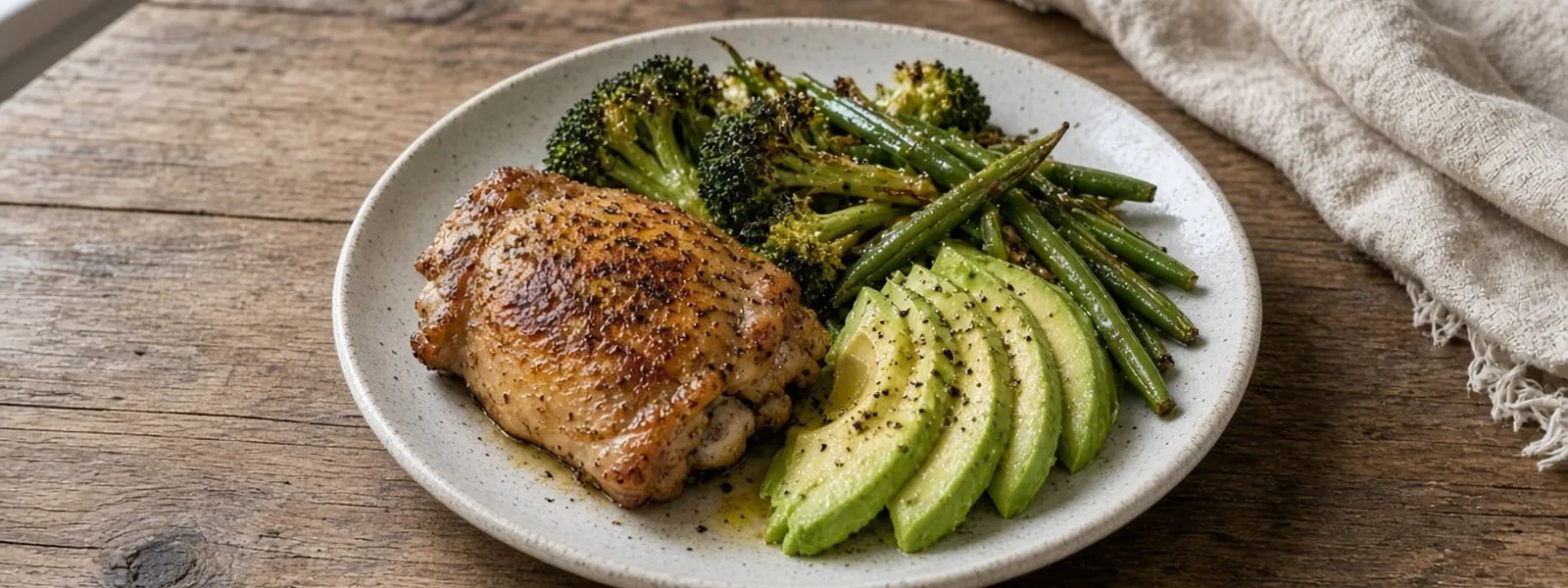
Lesson 9
Balancing Your Plate
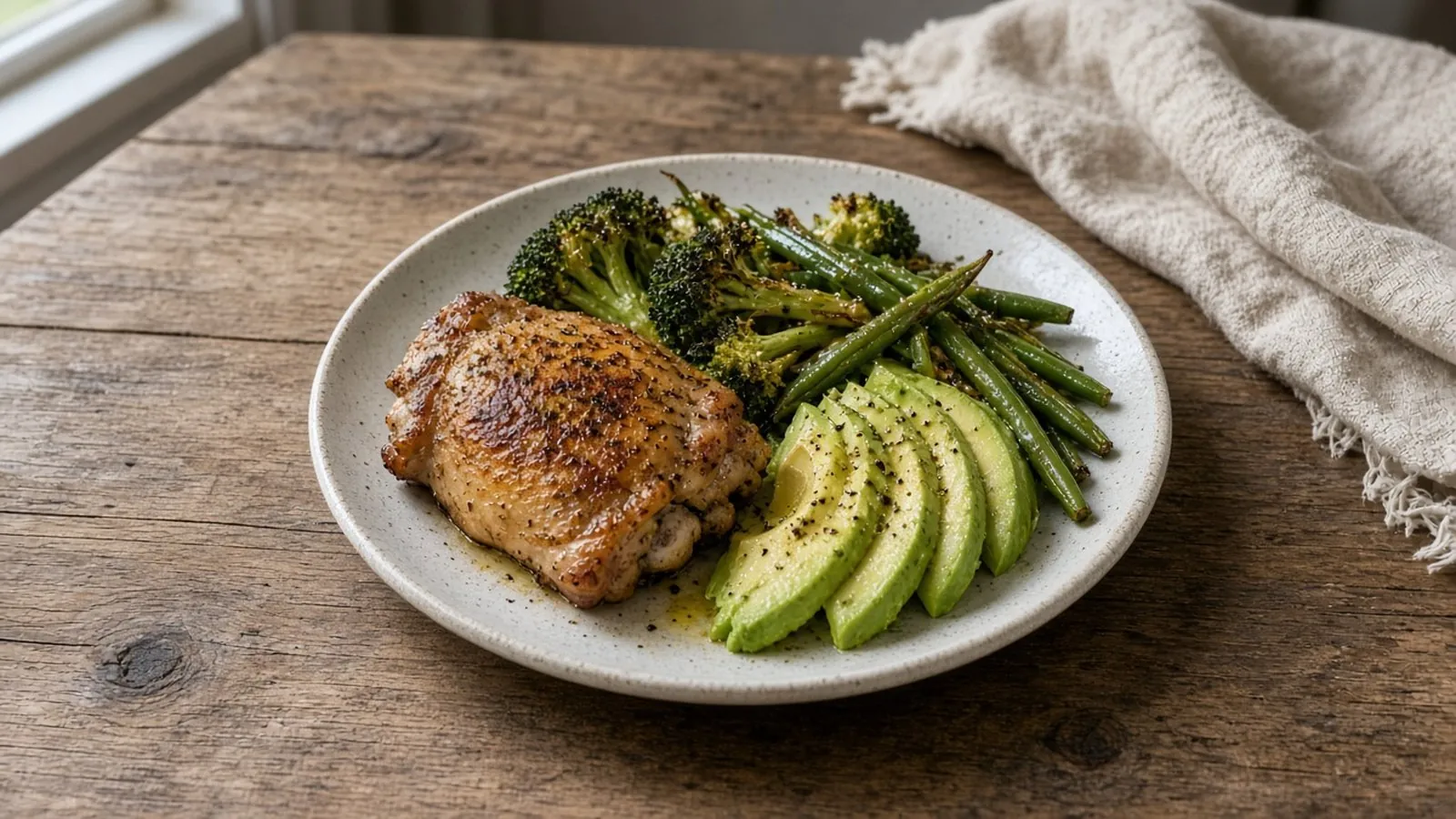
Protein first, plus vegetables and a natural fat
When you understand that your body operates on hormonal signals rather than just mathematical equations of energy, the way you look at a plate of food fundamentally changes. You are no longer asking, "How much energy does this contain?" You are asking, "What signal is this sending to my body?"
To create an environment where your metabolism thrives, your blood sugar remains stable, and your body can effortlessly burn stored energy, you must structure your meals strategically.
The Foundation: Protein
Protein should be the undisputed foundation of every meal you eat. It is the most essential macronutrient for human survival and metabolic health. When you consume high-quality protein (like beef, eggs, poultry, and fish), it provides the amino acids necessary to maintain and build muscle tissue. Because muscle is the primary engine of your metabolism, protecting it is your highest priority.
Furthermore, protein is highly satiating. It triggers the release of fullness hormones (like GLP-1 and PYY) while simultaneously requiring a significant amount of internal energy just to digest and process it. This is known as the thermic effect of food.
How Much Protein? Let's Be Specific

Chicken, eggs and salmon: building a real protein serving
I've told you protein is the foundation of every meal. That's useless without a number.
The number
1.2 to 1.6 grams per kilogram per day. For most women, toward the upper end.
And here's something that will surprise you: that's the current federal recommendation.
In January 2026, the Dietary Guidelines for Americans were updated — raising protein from the 0.8 grams per kilogram that had stood for eighty-four years to 1.2–1.6. For a 150-pound woman that's roughly 82 to 109 grams a day. Roughly double.
Where the old number came from
The 0.8 figure was never meant to be a target.
The researcher whose work produced it wrote, plainly, what it was: "intended as a minimum value... the lowest level that will maintain nitrogen balance in nearly all healthy individuals."
The floor below which you start visibly breaking down. Not the amount to build muscle, or support a working thyroid, or keep a metabolism running for another fifty years.
And it sat there for eighty-four years. Three generations of women were handed the floor and told it was the goal.
What makes that stranger: in the 1890s the USDA recommended over 110 grams a day. Atwater — the same man whose calorie formula is still on your food labels — set his standard at 125. It took until 2026 to get back to a number we already had in 1900.
Calculate it from your goal weight
This matters and almost nobody gets it right.
If you're carrying extra weight, your protein need is set by the tissue that's metabolically active — the muscle and organs you have and want to keep. Fat tissue barely uses protein. So using your current weight gives you a number that's too high.
Use the weight you're aiming for. If you're already at a healthy weight with decent muscle, use your actual weight. If you lift seriously, go higher.
Per meal, not just per day
Muscle building isn't triggered by protein trickling in across the day. It needs a large enough dose in one sitting to flip the switch.
Spread 60 grams thinly across three meals and you may miss the threshold at all three. Concentrate 90 grams into three real servings and you hit it three times.
And the number goes up with age
This is the most important thing in this section and the least known.
As you get older, your muscles become less responsive to the same amount of protein. A portion that built muscle at 30 may not maintain it at 60.
Your protein requirement rises at exactly the age most women start eating less of it. Appetite drops. Cooking for fewer people. Meat feels heavy. And the requirement goes the other way.
If you take one number from this entire book, take this one.
Can you eat too much?
Yes, but it takes more than you'd think — and I'm raising it because I'm watching a lot of people overshoot.
Above roughly 2 grams per kilogram, more protein stops doing much for anyone who isn't a competitive athlete. Beyond that you're just eating more protein.
Some people eating all-meat diets are at triple the target. Two things happen. Protein crowds out fat, so total energy can quietly fall short. And fasting blood sugar can rise — very high protein with essentially no carbohydrate raises the hormone that tells your liver to release glucose. Readings of 100–110 are common in long-term carnivore eaters.
That's usually adaptive rather than diabetic — your muscles are deliberately sparing glucose for your brain. But read it alongside fasting insulin and HbA1c, never alone. Lesson 3.
So what does "moderate protein" mean? You'll hear keto described that way, and most people hear it as not much. It means 1.2 to 1.6 grams per kilogram of your goal weight — considerably more than you're eating now, and nowhere near 300 grams.
One note: if you have reduced kidney function, protein intake is a genuine medical question. Higher protein hasn't been shown to harm healthy kidneys — but don't raise it substantially without talking to your doctor.
Protein Was Never About Muscle
Now here's why protein matters far more than muscle.
When you eat protein, your body takes it apart into amino acids — about twenty building blocks. Nine of them your body cannot make. They have to come from food, every day, or you start taking them out of yourself.
Your thyroid hormone is made from protein
Thyroid hormone — the thing that sets your metabolic rate, the subject of an entire chapter of this book — is built from an amino acid called tyrosine, with iodine attached.
Not supported by protein. Made of it.
So is the molecule that carries fat into your cells
Remember the doorway from Lesson 8 — the one fat has to be carried through to be burned?
The carrier is called carnitine, and your body builds it from two amino acids — using vitamin C to assemble it.
No carnitine, no fat through the door. Your ability to burn fat depends on a molecule made from protein.
And your master antioxidant
Your cells' most important protective compound, glutathione, is built from three amino acids.
This one matters more than it sounds. In Lesson 5 you learned that inflammation blocks your body from activating thyroid hormone. The way it does that is by depleting glutathione. So the raw materials for glutathione are also raw materials for a working thyroid.
The short version
Amino acids also build your neurotransmitters — tryptophan becomes serotonin, tyrosine becomes dopamine. They build every enzyme in your body, your immune cells, your collagen, and the protein part of every hormone you have.
Protein isn't the muscle macronutrient. It's the raw material for the machinery.
Which is why eating too little doesn't just cost you muscle. It quietly limits your thyroid, your fat burning, your antioxidant defenses, and your ability to repair anything.
Not All Protein Contains the Same Things
Different foods contain different amino acids, in different amounts. Twenty grams of protein from two sources is not the same twenty grams.
Animal proteins — meat, fish, eggs, dairy — contain all nine essential amino acids in roughly the proportions your body needs. That's why they're called complete.
Plant proteins are usually short on at least one. Grains tend to be low in lysine; beans tend to be low in methionine. Not a problem if you eat a variety — that's the reasoning behind rice and beans, and behind every traditional cuisine that pairs a grain with a legume. But it means you need more total plant protein to get the same usable amount.
And one amino acid does the triggering
Of the nine, one is the signal that tells your muscle to start building: leucine.
This is why the per meal amount matters. You need enough leucine in one sitting to flip the switch — and leucine is concentrated in animal protein, whey, and eggs.
Another reason 30 grams at each of three meals beats 90 at dinner.
The One Almost Everyone Is Short On
This is the part I most want you to know, because the fix is simple.
Glycine.
It's technically non-essential — your body can make it. The problem is that it can't make enough.
In 2009, biochemists did the arithmetic on how much glycine the human body requires versus how much it can produce. They found a shortfall of roughly 10 grams a day — and showed it's structural. Not about eating badly or having a slow metabolism. The pathway itself has a ceiling, and our needs exceed it.
They called it "a weak link in metabolism" and argued glycine should be reclassified as essential.
Why you need so much
Glycine is the main ingredient in collagen — it occupies every third position in the collagen molecule. And collagen is the most abundant protein in your body: roughly eight pounds of it, in your bones, cartilage, tendons, skin, and the framework holding every organ together.
It's also required for glutathione (your master antioxidant — glycine appears to be the rate-limiting ingredient), creatine, heme (the iron-carrying part of your blood and the iron built into your energy chain from Lesson 4), your liver's detoxification pathways, and sleep and temperature regulation.
And why modern diets run short
We stopped eating the parts of the animal that contain it.
Glycine is concentrated in skin, connective tissue, cartilage, tendon, and bone — the gelatinous parts. Muscle meat, which is nearly all we eat now, is comparatively low in it.
Your great-grandmother made stock from bones. She ate the skin, the tougher cuts, the parts that turn gelatinous when they cook. We eat chicken breast.
So we get plenty of the amino acids concentrated in muscle and very little of the one concentrated in everything else.
There's also a balance problem
Muscle meat is high in methionine, another essential amino acid. You need it.
But in animal research, a high-methionine, low-glycine pattern accelerates aging, while glycine appears to counterbalance it.
Modern eating produces exactly the wrong ratio: plenty of methionine from muscle meat and eggs, very little glycine because we skip the rest.
The answer isn't less meat. It's the rest of the animal.
What to do
One of the easiest fixes in this book:
Bone broth or stock. Real stock that gels when it cools — that gelling is the collagen.
Eat the gelatinous cuts. Oxtail, shanks, short ribs, chuck, chicken thighs with the skin, anything slow-cooked with the bone in. These cost less than the lean cuts — a rare case where the better choice is cheaper.
Eat the skin. On chicken, on fish.
Collagen or gelatin powder if the cooking isn't realistic. It isn't a magic supplement — it's the part of the animal you stopped eating, in a jar.
A note on the research: the 10-gram shortfall is calculated rather than measured directly, and supplementation trials in healthy people are limited. But the calculation is sound, the biochemistry behind the ceiling is well understood, and the fix is food your ancestors ate routinely.
Putting Protein Together
Eat enough — the amount from earlier in this chapter.
Mostly from animal sources, because they contain all nine essentials in usable proportions and the most leucine.
Spread across meals, so you hit the trigger more than once a day.
And eat more of the animal than the muscle. Bones, skin, connective tissue, the slow-cooked cuts. Whole animal, not just the lean parts — same principle as whole food. The parts we discarded turned out to matter.
The Fuel: Healthy Fats and the Fat Cell Dilemma

Industrial seed oils vs. stable fats: butter, tallow and olive oil
For decades, we were falsely taught that eating fat makes you fat. Biologically, this makes no sense. Fat is the only macronutrient that has essentially zero impact on insulin. When you eat fat, your body receives a signal of abundant fuel without the storage-triggering spike of insulin.
However, the type of fat you eat dictates how your fat cells behave. To understand this, you must understand why some heavy people are metabolically healthy, while some thin people develop type 2 diabetes. It all comes down to how your body stores energy:
Hyperplasia (Healthy Storage)
When energy is abundant, some bodies naturally multiply their fat cells, creating brand new, small, healthy fat cells to store the energy. This keeps the person highly insulin sensitive, even if they carry a lot of extra weight.
Hypertrophy (Sick Storage)
Other people have a genetic limit on the number of fat cells they can make. Instead of multiplying, their existing fat cells simply inflate like balloons. When a single fat cell gets too big (hypertrophied), it becomes sick, heavily inflamed, and highly insulin resistant. It begins leaking fatty acids into the bloodstream. This is why a physically thin person can suddenly develop severe metabolic disease—their limited fat cells reached maximum capacity and became sick.
The Hormone That Goes the Other Way
There's a second thing that happens when fat cells inflate, and it's easy to miss.
Healthy fat tissue produces a hormone called adiponectin — one of the genuinely helpful ones. It improves insulin sensitivity, lowers inflammation, and encourages your cells to burn fat rather than store it.
Hypertrophied fat cells make less of it. As they inflate, they produce less adiponectin and more inflammatory signals — and more leptin, the one your brain has already stopped hearing.
So sick fat storage isn't passive. The unhelpful signal goes up and the helpful one goes down, at the same time.
Deep abdominal fat produces even less adiponectin than fat under the skin — which is part of why your waist measurement tells you more than the scale. Worth remembering when the number won't move: a tape measure can see progress a scale can't, because the scale can't tell the difference between losing fat and losing muscle.
Advanced metabolic research highlights a massive problem in the modern diet: the overconsumption of industrial seed oils (like soybean, canola, corn, and sunflower oils). These oils are highly unstable and packed with linoleic acid. When consumed in excess, linoleic acid forces your body into hypertrophy. Instead of allowing your fat cells to multiply safely, seed oils force your existing fat cells to rapidly inflate, become inflamed, and drive systemic insulin resistance.
To support your metabolism, completely remove industrial seed oils from your diet. Replace them with ancestral, stable fats: butter, ghee, tallow, coconut oil, olive oil, and the natural fats found in whole cuts of meat and eggs. These fats support hormone production, keep your brain healthy, and provide deep, long-lasting energy.
How Exactly Does This Happen?
Two ways, and the second is the one operating in you right now.
Linoleic acid converts in your body to arachidonic acid, which directly drives fat tissue development through a specific signalling pathway. Researchers demonstrated it cleanly: mice whose mothers ate a linoleic-acid-rich diet were 40% heavier shortly after weaning — and the effect disappeared completely in mice bred without the receptor that pathway uses.
Same calories. Different fat. Different bodies.
The second route is the one that matters for you now. Omega-6 excess drives inflammation, and inflammation blocks the healthy kind of fat storage.
When researchers examined insulin-resistant people, their fat tissue had lost much of its ability to make new fat cells — with the specific genetic switches for that process turned down. The culprit was an inflammatory signal produced by their own fat tissue.
So the sequence is: seed oils feed inflammation. Inflammation shuts down your ability to make new small fat cells. And the energy has nowhere to go except into the cells you already have. They inflate, become inflamed themselves, and the cycle tightens.
Remember this in Lesson 10. The same inflammation doing this is what instructs your body to build insulin-blocking ceramides. One problem wearing two costumes.
And the Encouraging Half
Omega-3 fats appear to do the reverse. Studies show fish oil reducing fat cell size while increasing the formation of new small ones.
This axis moves in both directions depending on what you eat.
It's Not the Fat. It's What They Do to It.
Let me be precise about what I'm asking you to avoid.
Your body needs omega-6. You'd get sick without it. A handful of walnuts, some sunflower seeds, an avocado — that's omega-6 in the form nature made it: wrapped inside the food, protected from air and light by the vitamin E that came with it.
What happens in an industrial refinery is a different thing entirely.
The oil gets extracted. It's heated past 400 degrees to strip out the smell — which also strips out the vitamin E protecting it. Then it sits on a shelf under fluorescent lights for months. Then it goes into a restaurant fryer and is heated over and over for days.
Fragile fat, stripped of its protection, heated repeatedly. What comes out is not what went in. It's full of broken-down fragments your body has to deal with — and those fragments drive exactly the inflammation we've been discussing.
So the rule isn't "avoid omega-6." It's this:
Eat fat in the form it came in. Avoid fat that's been refined, bottled, and reheated.
Olive oil, butter, avocado, coconut, tallow, whole nuts and seeds — fine.
Canola, soybean, corn, cottonseed, safflower, sunflower in a clear plastic bottle — and especially anything fried in a restaurant — not fine.
By applying the Fiber First rule — eating your fibrous vegetables and high-quality protein before your carbohydrates — you completely change the biological response to that exact same meal.
The Lever: Carbohydrates and "Metabolic Safety"
If protein is the foundation and fat is the primary fuel, carbohydrates should be viewed as a lever that you pull based on your activity level and metabolic health. For a healthy individual looking to burn fat, pulling the carbohydrate lever low is highly effective.
However, for individuals with stressed adrenals, chronic illness, or those who feel constantly "wired but tired," dropping carbohydrates too low sends a massive famine signal to the brain, spiking adrenaline and cortisol. In these cases, we must use the Carbohydrate Safety Principle.
Instead of strict elimination, the goal is to incorporate "safe starches"—like sweet potatoes, plantains, winter squash, and whole fruits. These easy-to-digest carbohydrates provide a steady supply of glucose, which actively inhibits the breakdown of muscle tissue, lowers stress hormones like adrenaline, and supports healthy thyroid function.
If you struggle with high stress and poor sleep, strategic carbohydrate timing is vital. Cortisol should naturally be highest in the morning and lowest at night. Eating a high-protein, low-carb breakfast supports this natural morning energy. However, incorporating a moderate portion of safe starches with your dinner helps actively lower evening cortisol and supports the production of serotonin and melatonin, easing the nervous system into deep, restorative sleep.
This isn't just theory. In a controlled study, people who ate a carbohydrate meal four hours before bed fell asleep measurably faster than those eating a lower-glycemic version. A later review found carbohydrate quantity and quality significantly affected how fast people fell asleep, how efficiently they slept, and how much deep and REM sleep they got.
Two details make the difference:
Timing. Four hours before bed worked. One hour before bed did not. So this means dinner — a real dinner, finished with time to spare. Not a bedtime snack.
Quality. Use your safe starches: sweet potato, winter squash, plantain. Not dessert. High-sugar food late at night suppresses melatonin and fragments sleep, which is the opposite of what you're after.
You'll sometimes see this explained as carbohydrate boosting serotonin. That mechanism barely works once there's protein in the meal — and your dinner will have protein. The effect is real; that explanation isn't the reason.
What About Artificial Sweeteners?
It is theorized that some sweeteners may trigger an insulin response in some people, just from the taste. The research isn't settled — it seems to depend on the sweetener, the form, and the individual. Worth keeping in mind, because someone who responds strongly would be quietly keeping her fat-burning gates shut with something she believed was free.
But there's a second effect that's better documented and may matter more.
A 2025 study scanned the brains of 75 people after they drank sucralose, real sugar, or water. Sucralose increased activity in the hunger center of the brain and increased their actual hunger by about 17%. And it produced no fullness hormones at all. As the lead researcher put it: there's a sweetness signal, but no hormone signal telling you you're full.
Effects were strongest in people already carrying extra weight. And women showed bigger changes in that brain region than men.
So the real problem isn't insulin. It's that you get the promise without the payoff, and your body responds by asking for more.
Which points at the actual answer, and it isn't a product. The goal isn't finding a sweet thing that's safe. It's no longer needing the sweet thing. Sweet cravings are largely learned and maintained by exposure — and they fade faster than most people expect. Try two weeks without and watch.
Alcohol: The One Nobody Wants to Talk About
This deserves its own section, because for a lot of women it's the single biggest obstacle and they have no idea why.
Your body treats alcohol as something to get rid of, not something to use. It goes to the front of the queue — and while your liver is clearing it, fat burning essentially stops. Not slows. Pauses.
So the problem isn't mainly the calories in the drink. It's that two glasses of wine can shut down fat burning for hours — during a window when everything else you did that day had you well positioned.
Three more things stack on top:
It fragments your sleep even when it helps you fall asleep — which feeds into the hunger hormones from Lesson 7 and the stress hormones in Lesson 13.
It reliably lowers restraint around food, usually at night, when the pull is already strongest.
And the liver clearing it is the same liver doing everything in Lesson 11 — including converting your thyroid hormone into its active form.
You don't have to quit. But if your progress has stalled and there's a nightly drink in the picture, that's the first thing I'd test — and the test is two weeks without, not one. One week is mostly water weight.
Key Supplements
Berberine is a natural compound found in plants like goldenseal, barberry, and Oregon grape, and it has become well-known for its powerful effects on blood sugar and metabolism. Berberine works by activating an enzyme called AMPK, often called the “metabolic master switch,” which helps improve insulin sensitivity, increases glucose uptake by cells, and promotes fat burning. Studies show that berberine can lower fasting and post-meal blood sugar levels, sometimes as effectively as some prescription medications for type 2 diabetes. Beyond blood sugar, it may support weight loss, improve lipid profiles (lowering LDL cholesterol and triglycerides), reduce inflammation, and support cardiovascular health.
Other natural supplements can complement blood sugar and weight management:
Cinnamon – can improve insulin sensitivity and slow the absorption of glucose, helping to stabilize blood sugar and reduce cravings.
Alpha-lipoic acid (ALA) – a potent antioxidant that improves insulin sensitivity and supports mitochondrial health.
Chromium picolinate – helps enhance insulin action and regulate blood sugar levels by repairing insulin receptors.
Magnesium – essential for hundreds of enzymatic reactions, including those that regulate glucose metabolism; deficiency can worsen insulin resistance.
Green tea – can modestly improve insulin sensitivity by activating AMPK, reducing inflammation, and enhancing glucose uptake in cells. Drinking 2–4 unsweetened cups daily (or using matcha) supports better blood sugar balance and fat metabolism over time.
Together, these supplements can help the body better process carbohydrates, support stable insulin levels, and promote fat metabolism, making weight loss and blood sugar control easier when combined with a healthy diet and lifestyle.
Apple Cider Vinegar
Drinking apple cider vinegar (ACV) before meals can help reduce insulin spikes and support better blood sugar control. ACV contains acetic acid, which slows the digestion of starches and sugars, meaning glucose enters the bloodstream more gradually. This helps blunt the post-meal insulin response, keeping insulin lower and reducing fat storage. For people trying to lose weight or manage blood sugar, this can be a simple tool to improve metabolic health.
To use it safely, mix 1–2 tablespoons of raw, unfiltered apple cider vinegar in a large glass of water and drink it 10–20 minutes before meals. Drinking it undiluted can irritate the esophagus or damage tooth enamel, so always dilute it. Some people also add a little lemon juice or a teaspoon of honey for taste.
Beyond blood sugar control, ACV may offer other benefits: it can support digestion by increasing stomach acid, improve satiety to help reduce overeating, support gut health with its mild antimicrobial properties, and even promote healthy lipid levels. While it’s not a magic weight-loss solution on its own, when combined with a healthy diet and lifestyle, ACV can be a helpful addition to your metabolic toolkit.
The "Fiber First" Rule: Food Sequencing
It is not just what you eat that determines your metabolic response; the order in which you eat your food plays a massive role in how your body handles blood sugar. This is known as food sequencing.
If you eat carbohydrates on an empty stomach, they are rapidly broken down and absorbed into the bloodstream, causing a sharp spike in glucose and a massive surge of insulin. However, if you apply the "Fiber First" rule—eating your fibrous vegetables and high-quality protein before you eat your carbohydrates—you completely change the biological response.
The fiber and protein create a physical matrix in your digestive tract, naturally slowing down gastric emptying. When the carbohydrates finally arrive, their absorption is drastically delayed. This simple shift in sequencing can significantly blunt your blood sugar and insulin spike, keeping your body in a stable, fat-burning state for much longer after a meal—without changing a single ingredient on your plate.
Key Insight
Industrial seed oils force your fat cells into hypertrophy — sick, inflamed, oversized storage — rather than allowing them to multiply safely, directly driving systemic insulin resistance.
Why Pizza Is Different
There's a reason certain combinations feel impossible to stop eating, and it isn't a character weakness.
When both fuels arrive at once, in quantity, your cells congest. Not because they can't use either one — because they can't commit to one while the other keeps arriving. The result is half-finished byproducts and cellular exhaust, and that exhaust interferes with insulin's signal directly. Lesson 4 covers what's happening inside the cell.
And nature almost never packages the two together. Nothing that grows is both high in fat and high in refined starch at high density. Bread and butter. Cheese and crackers. Pastries. Chips. Ice cream. That combination has to be manufactured.
There's a second reason those foods are hard to stop eating, and it has nothing to do with your cells. When researchers put people in a scanner, foods combining fat and refined carbohydrate were valued more than the sum of their parts — people worked harder and paid more for them, and it wasn't explained by calories or even by how much they said they liked the food.
So it's engineered on two levels. The combination overwhelms your cells, and it also overrides the signal that tells you to stop.
Why Your Body Might Burn Fuel Differently Than Your Friend's
The Randle Cycle explains more than just what happens inside a single meal. It also explains why the exact same diet can produce wildly different results in two different people. When you eat fat, your body has a choice: burn that fat you just ate for immediate energy, or reach into your own stored body fat instead. Research shows your body actually prioritizes the fat sitting in your bloodstream from your last meal before it will touch what's stored on your hips, waist, or thighs.
This is why some people can eat generously on a ketogenic diet—plenty of fat, plenty of food—and still lose weight steadily. Their bodies are efficient at reaching past the dietary fat and pulling from stored reserves. Other people can eat the exact same way, stay in ketosis, avoid gaining weight, and still find their stored fat barely budges. Their bodies are simply better at burning what's freshly eaten than what's already stored.1
Your Fat Cells Are Not a Storage Unit
You probably picture fat storage like a warehouse. Energy comes in, gets locked away, stays there until you burn it off. That isn't how it works at all.
Your fat cells are breaking down and rebuilding fat constantly — right now, and while you sleep.
How stored fat is built
Stored fat is called a triglyceride, and the name describes it: three fatty acids on one glycerol backbone. Think of the glycerol as a rack holding three items.
To store fat, your body needs both the fatty acids and the rack.
And here's the surprising part: when a fat cell breaks a triglyceride apart, it cannot reuse its own rack. Fat cells lack the enzyme needed to recycle glycerol. The rack gets released into your bloodstream and floats away.
So every time a fat cell stores fat again, it has to build a brand new rack from scratch.
Where the rack comes from
When you eat carbohydrate, your fat cells build racks easily — glucose is the raw material and it's right there. Carbohydrate makes storage easy.
When you don't, your fat cells build racks anyway — from lactate, from amino acids, from other available materials. The pathway was discovered in 1967.
And here's what should catch your attention: your body turns that pathway UP during fasting. The gene for the key enzyme is actively switched on when food is scarce.
Your body has a dedicated system for rebuilding fat, and it runs hardest when you're not eating.
Which explains the most frustrating thing about fat loss
In fasting humans, researchers have measured as much as 60% of the fatty acids released from fat cells being put straight back into storage.
Released. Not burned. Repackaged.
Scientists call this a futile cycle, and it literally is — it costs your body six units of energy currency to reattach three fatty acids. Your body spends energy to store fat it just released.
This is what's actually happening when people say they're in fat-burning mode and not losing fat.
You are releasing fat. Most of it is going back in. Whether your fat stores shrink depends on whether, across days and weeks, more comes out than goes back — not on whether the door is open.
So what determines the direction?
Two things, and they're both familiar.
How much fat is released — mostly insulin. Lower insulin, more release. Lessons 2 and 8.
How much gets burned versus repackaged — whether your tissues actually need the energy. If you've eaten enough fat to meet your needs, your body has no reason to burn what it just released. So it pays the cost and puts it back.
Which is the honest answer to a question that confuses a lot of people. If low-carb means low insulin, and low insulin means fat release, why am I not losing fat?
Because release isn't loss. You've opened the door, and your body is walking the fat right back through it — because you gave it enough dietary fat that it doesn't need yours.
So once you're fat-adapted, the lever is usually the added fats. The butter in the coffee, the extra oil, the fat bombs. Useful during the transition. Frequently the reason nothing moves afterward.
And one genuinely beautiful thing
Remember the rack has to leave the fat cell because it can't be reused there?
It goes to your liver — and your liver turns it into glucose.
So there's a complete loop running in your body right now:
Stored fat breaks apart → fatty acids and glycerol
Fatty acids → burned for energy, or converted to ketones for your brain
Glycerol → to the liver → becomes the small amount of glucose your body still needs
That's how you maintain normal blood sugar on almost no dietary carbohydrate. Part of it is being made from the backbone of your own fat.
One correction worth making
You may have heard that you can't store fat without carbohydrate. Partly right mechanically, wrong as an absolute.
Carbohydrate makes building the rack much easier, so storage is easier when it's around. But your body can build the rack without it, and it will.
I'm telling you because I'd rather you hear it from me. There are no loopholes in your metabolism — only conditions that make one direction easier than the other. Lowering insulin makes release easier. That's real and valuable. It isn't a door that locks behind you.
Fat Isn't All Stored in One Place
When we say "body fat," most people picture one thing. Your body keeps it in four places, and they behave completely differently.
In your fat cells — what you see in the mirror.
Inside your muscle cells — small droplets stored right next to the machinery that burns them. This one is a fuel tank, not a storage unit.
In your liver — where it causes problems if it piles up. Lesson 11.
In your blood — travelling to where it's needed. This is what a blood test measures.
Four separate compartments. More in one doesn't mean more in another. And one of them is actually a sign of fitness.
The Finding That Surprised Everyone
Fat inside muscle was assumed to be bad. In sedentary people it tracks reliably with insulin resistance.
Then researchers measured endurance athletes.
Athletes have as much fat inside their muscles as people with type 2 diabetes. And they're among the most insulin-sensitive people you can find.
Same fat. Same place. Opposite health. Scientists called it the athlete's paradox, and it took ten years to solve.
And the Answer Changes How You Should Think About This
Stored fat inside a muscle cell is harmless. It's a fuel tank.
The damage happens when fatty acids get turned into other compounds instead — and trained muscle has far fewer of those. Lesson 10.
Then researchers found something that flips the intuition. The faster someone was packaging fat into storage inside her muscle, the healthier her blood sugar was.
Storing fat safely is how your muscle protects itself. A fatty acid parked as storage can't be turned into something harmful.
So the Goal Was Never "Less Fat"
Stored fat isn't your enemy. It's your energy system. What you want isn't less of it — it's fat that moves. In and out, stored where it belongs, used when needed.
A trained woman has more fat inside her muscles than an untrained one and is metabolically healthier. Because hers is cycling through instead of sitting there.
It isn't how much you store. It's whether it moves.
One thing so this doesn't confuse you: your blood triglycerides are a different pool, and lower really is better there. Exercise lowers those, because trained muscle gets much better at pulling fat out of your bloodstream and using it. Two pools, opposite directions, both good.
Efficient Stored-Fat Burners
Some bodies are highly efficient at reaching past recently eaten fat to tap into stored reserves. These individuals often see steady fat loss on a well-formulated low-carb or ketogenic diet, even with generous fat intake.
Dietary-Fat Preferential Burners
Other bodies preferentially burn whatever fat was just eaten before ever reaching stored fat. These individuals may stay weight-stable on a high-fat diet without much fat loss, even without gaining weight.
This isn't a character flaw or a sign you're doing something wrong. Genuine genetic differences exist in the enzymes and transporters responsible for fat-burning capacity,2 and a history of past weight loss and regain can also reduce how efficiently your body burns fat, even at the very same body weight as someone who has never struggled with their weight. This is one of the many reasons a truly personalized approach matters more than a one-size-fits-all rule.
Fat burning and fat loss are not automatically the same thing. Your body can be actively burning fat all day and still not be touching your stored reserves, if it keeps reaching for what you just ate instead.
Exercise and the Randle Cycle
Exercise adds another layer to this same competition. When you exercise, especially with resistance training or higher-intensity movement, you deplete the glycogen (stored carbohydrate) in your muscles. This temporarily makes your muscles unusually receptive to absorbing carbohydrates without the same insulin spike they'd normally trigger. In practical terms, the day you exercise hard is often the day your body is best equipped to handle the carbohydrates in your meal.3
Beyond meal composition and exercise timing, several other factors can prevent your body from reaching a fat-burning state, even on a well-formulated low-carb plan. We cover these in depth in Lesson 13, including chronic stress and elevated cortisol, poor sleep, a history of chronic dieting, systemic inflammation, and certain medications.
✨
Build Your Perfect Metabolic Plate
Your AI Meal Coach can take any meal you are craving and instantly show you how to make it metabolically stable — without giving up the foods you love.
Sources
- PMC, "Increasing Dietary Fat Elicits Similar Changes in Fat Oxidation and Markers of Muscle Oxidative Capacity in Lean and Obese Humans"
- PMC, "Genetic Variation of Fatty Acid Oxidation and Obesity, A Literature Review"
- PMC, "Twenty-Four Hour Total and Dietary Fat Oxidation in Lean, Obese and Reduced-Obese Adults with and without a Bout of Exercise"
How Your Body Burns
Lesson 10 of 18

Lesson 10
The Truth About Ceramides: Hidden Drivers of Insulin Resistance
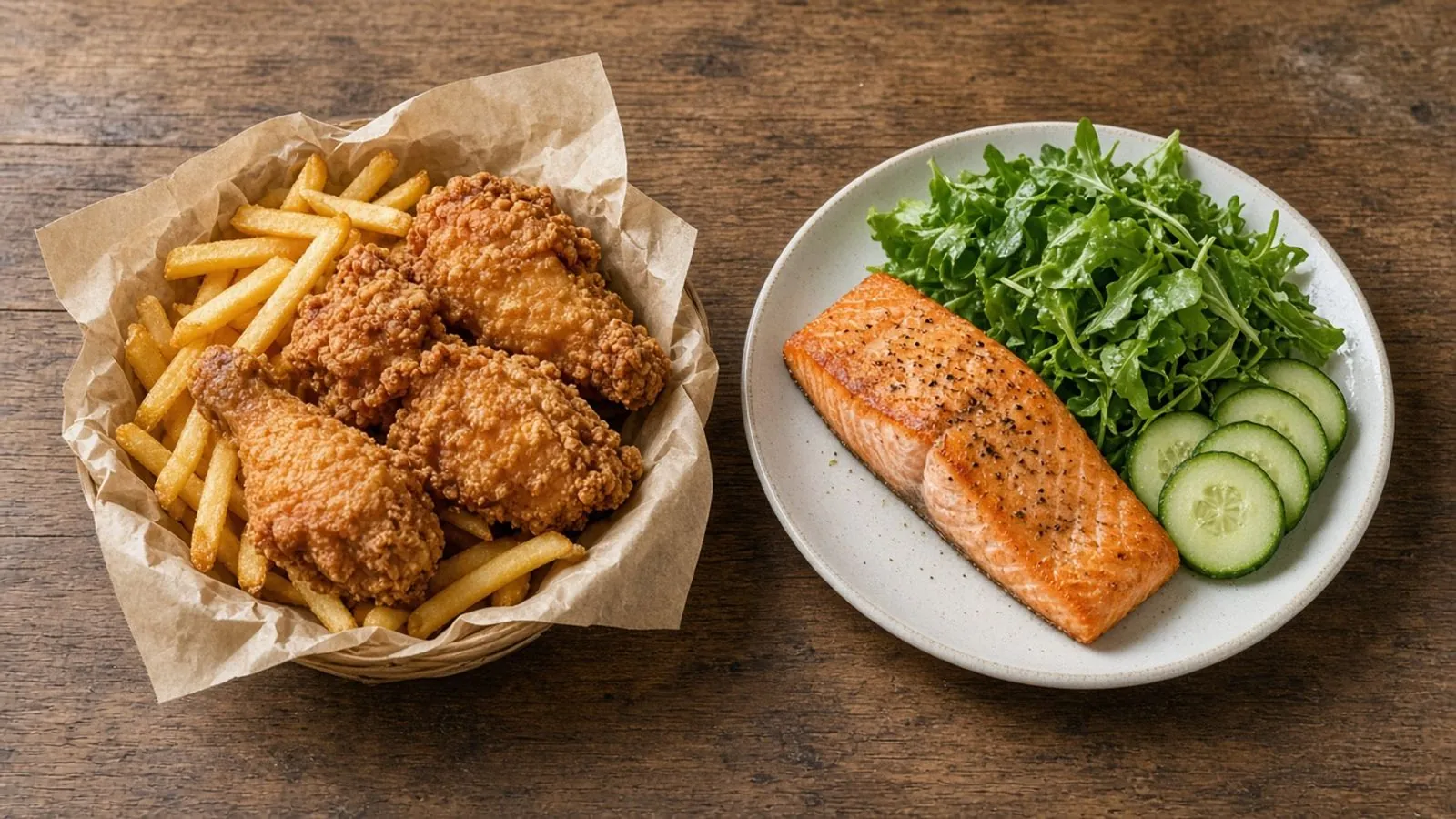
Inflammatory fried food vs. anti-inflammatory whole foods
If you dive deep into the science of insulin resistance—particularly the pioneering work of researchers like Dr. Ben Bikman—you will eventually encounter a word that most people have never heard of: ceramides.
The saturated fats are innocent bystanders. The actual drivers that force your body to build harmful ceramides are toxins and systemic inflammation — not the fats themselves.
What Are Ceramides?
Ceramides are waxy lipid (fat) molecules that naturally exist in your body. On the surface, they are beneficial and essential; for example, they help form the protective, waterproof barrier of your skin. However, when ceramides accumulate inside your metabolic cells (like your muscle and liver cells), they become highly destructive.
Inside the cell, ceramides act like biological roadblocks. They physically interfere with the cell's insulin receptors, effectively making your cells "deaf" to insulin's signal. Because the cell cannot hear the signal to let glucose in, your blood sugar stays high. This forces your pancreas to pump out even more insulin in a desperate attempt to force the blood sugar down, dramatically worsening your insulin resistance and locking your body further into fat storage.
How Are They Created?
Ceramides are constructed from specific saturated fats, particularly palmitic acid (which is naturally found in fatty meats, dairy, and palm oil). Because of this, mainstream nutritional advice has often demonized these animal fats, blaming them directly for causing insulin resistance.
But this is a severe misunderstanding of human biology. The saturated fats are simply the building blocks—they are innocent bystanders. The actual drivers that force your body to assemble those blocks into harmful ceramides are toxins and systemic inflammation.
When your body is exposed to environmental chemicals, highly processed foods, and the chronic stress of too many refined carbohydrates (which causes your fat cells to rapidly over-inflate and leak inflammatory signals), it creates rampant systemic inflammation. It is this inflammation that serves as the "foreman," aggressively instructing the body to take saturated fats and build them into insulin-blocking ceramides instead of using them for energy.
Key Insight
Ceramides act like biological roadblocks inside your muscle and liver cells, physically interfering with insulin receptors and making your cells completely deaf to insulin's signal.
The Experiment That Settled This
Everything I just told you — that saturated fat is the building block and inflammation is the foreman — sounds like an interpretation. It isn't. Researchers tested it directly, and the result is about as clean as biology gets.
Here's what they did.
They fed mice a diet high in saturated fat. As expected, the mice became insulin resistant and their ceramide levels climbed.
Then they ran it again — this time blocking the enzyme that assembles ceramides. Same saturated fat. Same amount. The only difference was that the assembly line was shut down.
The insulin resistance never developed. The ceramides never accumulated.
Same fat, no ceramides, no insulin resistance.
That's the whole argument, demonstrated. Saturated fat doesn't cause insulin resistance. Saturated fat plus the instruction to build ceramides causes insulin resistance. Remove the instruction and the fat is harmless — it goes back to being fuel, which is what it was always meant to be.
And the Foreman Has a Name
I've been calling inflammation the "foreman." It's more specific than that.
Your cells have a detector on their surface called TLR4. Its job is to sense danger — bacterial fragments, inflammatory signals, the kind of thing that means something is wrong. When TLR4 fires, it starts an inflammatory cascade, and part of that cascade is the instruction to start building ceramides.
So the sequence is:
Inflammatory signal → TLR4 detects it → cascade begins → your cells start converting saturated fat into ceramides → ceramides block insulin.
Every step in that chain has been mapped. And the experiment above shows that if you cut the chain at the ceramide step, the saturated fat at the front of it does no harm at all.
This is why the mainstream advice gets it backwards. They're blaming the brick instead of the person who told the crew to build the wall.
The Puzzle That Took Ten Years to Solve
Here's another piece of evidence, and this one came from researchers who weren't looking for it.
For years it was assumed that fat stored inside muscle cells caused insulin resistance. The correlation is strong and consistent: in sedentary people, more fat inside the muscle means worse blood sugar. It looked obvious.
Then somebody measured endurance athletes.
Athletes have as much fat stored inside their muscles as people with type 2 diabetes. And they are among the most insulin-sensitive people you can find, with very low diabetes risk.
Same fat. Same place. Same tissue. Opposite metabolic health. It became known as the athlete's paradox, and it broke the theory.
It took a decade to resolve. And when the answer came, it was ceramides.
When researchers finally measured them, trained muscle turned out to have fewer ceramides — despite holding more fat.
The stored fat was never the problem. It was never the problem in anyone. What separates a healthy muscle from a sick one isn't how much fat is in it. It's whether that fat is sitting there as fuel or being converted into ceramides.
And This Is Where It Gets Useful
There's a second finding that turns this into something you can act on.
Researchers measured how fast people were packaging fat into storage inside their muscle cells — literally how quickly they were parking it away as fuel.
The faster they did it, the more insulin-sensitive they were. And the fewer ceramides they had.
Safe storage and ceramide production are competing destinations for the same fatty acid. Every one that gets parked away as fuel is one that didn't become a ceramide.
So what decides which way a fatty acid goes? Whether your muscle is equipped to handle it — enough mitochondria to burn it, enough capacity to store it properly.
Both of which are built by training. Which brings us to something missing from most advice about this.
How to Get Rid of Them
You do not fix a ceramide problem by avoiding healthy, ancestral fats. You fix it by removing the inflammatory signals that force their creation. To lower your ceramide burden and restore insulin sensitivity:
- Lower Insulin & Manage Carbs: Eliminating refined sugars and excess carbohydrates removes the primary stressor on the cell and stops your fat cells from becoming sick and inflamed.
- Move Your Body — The Most Direct Lever You Have. This is the one most people leave off the list, and it may be the most effective. Exercise doesn't lower ceramides by burning fat off. It lowers them by giving fatty acids somewhere better to go. When researchers trained previously sedentary, overweight, insulin-resistant older adults — not athletes, people who looked like most of us — three things changed together: the fat stored inside their muscles went up, their muscles' ability to burn fat went up, and their insulin sensitivity went up. More fat in the muscle and better blood sugar. That isn't supposed to happen. It happens because trained muscle handles fat differently — it parks it as fuel, burns through it, and refills, instead of letting it accumulate and be converted into ceramides. Resistance training and walking after meals are the two highest-yield versions. Lesson 17 covers both. And you don't need to be an athlete to get this. The study that demonstrated it used people who had never trained before.
- Your Body Has a Ceramide Eraser — And Sick Fat Cells Stop Making It. So far we've talked about not building ceramides. Your body also has a way of breaking them down — and this is where everything in this book starts connecting. Remember adiponectin from Lesson 9? The helpful hormone your fat cells produce — the one that improves insulin sensitivity and falls as fat cells inflate? Adiponectin's main job appears to be destroying ceramides. Researchers found that when adiponectin binds to its receptor, it switches on an enzyme that breaks ceramides apart. That may be how adiponectin does most of what it does — not through some separate pathway, but by clearing out the roadblocks. Now put the two chapters together. In Lesson 9 you learned that when fat cells become hypertrophied — inflated and sick — they produce less adiponectin. Less adiponectin means less ceramide clearance. So sick fat cells don't just leak inflammatory signals that tell your body to build ceramides. They simultaneously stop making the hormone that clears them away. Production up, disposal down. That's the loop that makes insulin resistance so self-reinforcing. And it's why the answer is never one intervention — you're working on both halves of the same problem. The good news: everything that shrinks sick fat cells raises adiponectin. Lowering insulin, reducing inflammation, losing visceral fat, and exercise. Same list as always, now with one more reason.
- Eliminate Seed Oils. Industrial seed oils drive insulin resistance too — but through a different route. In that same experiment, blocking ceramide production protected the animals from saturated fat completely. It did nothing to protect them from soy oil. The seed oil damaged insulin signalling by another mechanism entirely. So seed oils aren't a ceramide problem. They're their own problem — and that means the two fats damage you through two separate doors. Which is worse news, not better. Removing one pathway doesn't protect you from the other. Seed oils also feed the general inflammation that turns the ceramide foreman on in the first place, and they drive the fat-cell inflammation from Lesson 9. So they hurt you in at least three ways. Remove them.
- Reduce Toxin Exposure: Filtering your drinking water, avoiding plastics, and removing synthetic fragrances lowers the chemical and endocrine burden on your liver, cooling inflammation at the source.
When you extinguish the inflammation, your body stops overproducing ceramides. Insulin sensitivity naturally returns, and those healthy saturated fats are once again used as clean, stable cellular energy rather than being twisted into metabolic roadblocks.
So Should I Eat Saturated Fat or Not?
Let me be direct, because this chapter could be misread in either direction.
Saturated fat is not the villain. It's a stable, ancestral fat your body has used for as long as there have been humans, and it's the raw material for your cell membranes and your hormones. In a body without rampant inflammation, it gets used as clean fuel.
And it isn't irrelevant either. It is the specific building block your cells reach for when the instruction to build ceramides arrives. So in a body that's already inflamed — full of processed food, seed oils, toxins, chronic stress — a large load of saturated fat has more material to work with.
Which is exactly why the order matters.
Remove the inflammatory drivers first. Then the saturated fat in your butter, your beef, and your eggs is what it was always supposed to be: fuel.
You don't fix a ceramide problem by fearing fat. You fix it by putting out the fire that's turning your fat into something else.
How Your Body Burns
Lesson 11 of 18

Lesson 11
Digestive Health: Liver, Bile, and Gut
You can eat the most nutrient-dense, perfectly balanced diet in the world, but if your digestive system is compromised, your metabolism will struggle. Metabolism isn't just about what you put into your mouth; it is about what your body can actually break down, absorb, and utilize.
The Liver: Your Metabolic Powerhouse

Liquid fructose goes straight to the liver
The liver is the unsung hero of your metabolism. It is responsible for over 500 vital functions, including filtering toxins, regulating blood sugar, processing hormones, and creating ketones when you are burning fat.
When you consume excessive amounts of sugar—specifically fructose, which is found in high-fructose corn syrup, agave, and large amounts of fruit juice—it goes straight to the liver. Unlike glucose, which can be used by any cell in the body, fructose can only be processed by the liver. When the liver is overwhelmed by liquid sugar, it has no choice but to convert that excess energy directly into fat. This leads to Non-Alcoholic Fatty Liver Disease (NAFLD).
A fatty liver is an insulin-resistant liver. When your liver becomes insulin resistant, it loses its ability to regulate blood sugar properly. It begins pumping glucose into the bloodstream even when you haven't eaten, creating a vicious cycle of elevated insulin and relentless weight gain. Healing the liver by removing processed fructose, alcohol, and seed oils is one of the most critical steps in restoring your metabolism.
Bile: The Fat Digesting Detergent

Bitter greens support healthy bile flow
Right beneath the liver sits the gallbladder, which stores a substance called bile. Bile is essentially the body's natural dish soap. When you eat healthy fats, your gallbladder releases bile into your digestive tract to emulsify and break down those fats so your body can absorb them.
Bile is absolutely essential for extracting fat-soluble vitamins (Vitamins A, D, E, and K) from your food. These vitamins are critical for thyroid function, immune health, and hormone production. If your bile is thick and sluggish—often a result of a low-fat diet, chronic stress, or high toxin exposure—you will not digest fat properly. You may experience bloating, nausea after eating a rich meal, or nutrient deficiencies despite eating well. Supporting bile flow through proper hydration, eating bitter greens, and consuming healthy fats is essential for turning the food you eat into usable cellular energy.
A Note on Gallbladder Removal
If your gallbladder has been removed, bile is still produced by your liver — but instead of being stored and released in powerful bursts in response to fat intake, it now drips continuously into your digestive tract. This steady drip is far less effective at breaking down fats, can shift the gut microbiome over time, and weakens the metabolic signaling that bile normally provides for blood sugar balance and thyroid activation.
Some people adapt well, while others experience ongoing fat intolerance, loose stools, or nutrient absorption issues. If this is you, supplementing with ox bile at the end of fatty meals can help restore proper fat digestion and nutrient absorption. Supporting bile flow becomes even more important in this context — focus on adequate protein and choline from egg yolks, bitter foods like dandelion greens and arugula, magnesium to relax bile ducts, and fiber to escort used bile out through stool so it does not recirculate.
When you consume a diet high in processed foods, artificial sweeteners, and seed oils, you feed the pathogenic bacteria and starve the beneficial ones — triggering leaky gut and systemic inflammation.
The Gut Microbiome

Bone broth helps support the gut lining
Your digestive tract is home to trillions of bacteria, collectively known as your microbiome. These bacteria play a profound role in your weight and metabolic health. In fact, research shows that the microbiome of an obese individual is vastly different from the microbiome of a lean individual. Certain strains of bacteria are incredibly efficient at extracting extra energy from the food you eat and passing it into your bloodstream, while other strains help regulate inflammation and produce short-chain fatty acids that heal the gut lining.
When you consume a diet high in processed foods, artificial sweeteners, and seed oils, you feed the pathogenic bacteria and starve the beneficial ones. This imbalance leads to a condition known as "leaky gut," where the lining of the intestines becomes highly permeable. Toxins and undigested food particles slip into the bloodstream, triggering a massive, systemic immune response.
This chronic, low-grade inflammation is a primary driver of insulin resistance. The body perceives the inflammation as a stressor and an infection, raising insulin and cortisol levels to protect itself. To heal the metabolism, you must heal the gut. This means eliminating inflammatory trigger foods, prioritizing rich sources of collagen (like bone broth or quality meats) to seal the gut lining, and eating a wide variety of fibrous plants to feed the good bacteria.
Gut Dysbiosis: When Your Microbiome Works Against You
When the balance of bacteria in your gut tilts too far toward harmful strains — a state known as gut dysbiosis — weight loss can become surprisingly difficult even when your diet seems solid. Certain pathogenic bacteria are remarkably efficient at extracting extra calories from the food you eat and delivering them into your bloodstream. They also trigger intense cravings for sugar and processed carbohydrates, and produce toxins called endotoxins that inflame the gut lining.
This gut-driven inflammation raises cortisol, insulin, and inflammatory cytokines — all of which signal the body to store fat, especially around the abdomen, and actively resist burning existing fat stores. Digestive issues that often accompany dysbiosis — such as low stomach acid, poor bile flow, or sluggish motility — compound the problem by reducing nutrient absorption and slowing metabolism further. When food is not broken down properly, it ferments in the gut and feeds the wrong microbes, worsening bloating, fluid retention, thyroid function, and mitochondrial energy production. The body shifts into stress physiology, prioritizing survival and conservation over fat loss. Fixing gut health often lifts these metabolic roadblocks and allows weight loss to happen far more naturally.
Key Insight
A fatty liver is an insulin-resistant liver. The primary driver is liquid fructose — found in high-fructose corn syrup and agave — which can only be processed by the liver and is directly converted to fat.
A Practical Note: Drinking Too Much With Meals
One simple, often overlooked habit that can quietly undermine all of this digestive work is drinking large amounts of liquid during meals. Flooding your stomach with water, juice, or other beverages while eating dilutes your stomach acid, digestive enzymes, and bile — the very tools your body needs to properly break down food. When these get watered down, digestion slows, food sits heavier in your stomach, and you absorb fewer of the nutrients you worked hard to eat.
Excess liquid during meals can also lead to bloating and feed unwanted bacteria in the gut, making the dysbiosis problem worse. The simple fix: keep fluids to small sips during meals and drink most of your water between meals. That way your stomach acid stays strong, your enzymes stay concentrated, digestion works efficiently, and your gut stays more balanced.
✨
Heal Your Gut With the Right Foods
After completing the Master Class your AI Chef can turn whatever ingredients you have in your fridge into a gut-healing, metabolically balanced meal in seconds.
How Your Body Burns
Lesson 12 of 18

Lesson 12
The Gut-Brain Axis and Metabolism

A slow breath before the first bite shifts you into rest-and-digest
The connection between your digestive system and your brain is so profound that scientists often refer to the gut as the "second brain." This connection is primarily managed by the Vagus Nerve, a massive informational highway that runs directly from your brainstem down into your digestive organs.
This axis is a two-way street, and it heavily influences your metabolism. The brain sends signals to the gut to prepare for digestion, release enzymes, and manage motility. In return, the gut sends continuous updates back to the brain regarding nutrient status, energy availability, and feelings of fullness or starvation.
"Second Brain" Isn't a Figure of Speech
When scientists call your gut a second brain, they mean it more literally than you'd expect.
Your digestive tract contains its own nervous system — hundreds of millions of neurons woven through the walls of your intestines. It's called the enteric nervous system, and it's the only part of your body outside your skull and spine that can operate independently. It coordinates motility, secretion, and blood flow largely on its own, without waiting for instructions.
Your gut also manufactures neurotransmitters. In fact, the overwhelming majority of your body's serotonin — roughly 90% — is made in your gut, not your brain.
One honest note on that, because it gets badly oversold: gut serotonin doesn't travel to your brain. It can't cross into it. So "fix your gut to fix your mood" is too simple. What gut serotonin does is regulate motility — and possibly send signals up those vagal fibers we just discussed.
And your bacteria are part of the conversation. When your gut bacteria ferment fiber, they produce compounds that your vagal nerve endings can detect. Those nerve endings don't touch your bacteria directly — they sit in the gut wall, reading the chemical messages that diffuse toward them.
Which is a genuinely remarkable idea. What you feed your bacteria changes what they say. And what they say gets reported to your brain.
It's a Two-Way Street — But Most of the Traffic Goes One Way
Your vagus nerve is a two-way road. But the traffic is not remotely balanced, and this surprises almost everyone.
About 80% of the fibers in your vagus nerve carry information from your gut up to your brain. Only 20% carry instructions down.
Read that again. Four out of every five messages on this line are your gut reporting to your brain, not the other way around.
Which means the "second brain" language isn't a cute analogy. Your gut spends most of its time telling your brain what's going on, and your brain spends most of its time listening.
And what is it reporting? How much food arrived. What kind. How stretched the stomach is. What your bacteria are producing. Whether there's inflammation. Whether you're safe.
This is the line your body uses to decide whether it's in a famine. Which makes it one of the most important signalling pathways in this entire book.
It also explains something about appetite. The satiety signals from Lesson 6 travel this route. Stretch, nutrient detection, GLP-1 — all of it reaches your brain through these fibers. So when digestion is impaired, the report doesn't get filed. Your brain never receives the message that you ate. You stay hungry after a full meal, and it isn't in your head — it's in your nerve.
If you sit down to eat a healthy meal while in a state of high stress, your body is physically incapable of digesting it properly — no matter how nutritious it is.
The Role of Stress in Digestion
When you are in a state of chronic psychological stress—worrying about work, finances, or family—your brain shifts into a sympathetic (fight-or-flight) state. When this happens, the brain sends a signal down the Vagus Nerve to immediately shut down the digestive system. Blood flow is routed away from the stomach and intestines and pushed toward the limbs. Stomach acid production halts. Digestive enzyme release drops.
If you sit down to eat a healthy meal while in a state of high stress, your body is physically incapable of digesting it properly. The food sits heavy in your stomach, ferments, and causes gas and bloating. Furthermore, because the food is not broken down properly, your brain never receives the nutrient signals it needs to turn off your appetite. You remain hungry, tired, and inflamed.
Your Vagus Nerve Puts Out Fires
Here's something about the vagus nerve that almost nobody knows, and it changes what this chapter is about.
Your vagus nerve actively suppresses inflammation.
Not indirectly, by helping you relax. Directly. Researchers mapped it in 2000 and named it the cholinergic anti-inflammatory pathway. When your vagus nerve is active, it releases a chemical messenger that lands on your immune cells and tells them to stop producing inflammatory signals.
They proved it cleanly. Stimulating the vagus nerve shut down production of a major inflammatory molecule in normal mice. In mice bred without the specific receptor that receives the message, stimulating the vagus did nothing at all. Remove the receiver and the effect vanishes entirely.
Now think about what that means alongside everything else in this book.
Lesson 10 told you that inflammation is what instructs your body to build insulin-blocking ceramides. Lesson 5 told you that inflammation blocks your ability to activate thyroid hormone. Lesson 11 told you that inflammation drives insulin resistance.
Your vagus nerve is the brake on all of it. And chronic stress takes your foot off that brake.
And It Seals Your Gut Lining
There's a second effect, and it closes a loop with the last chapter.
Vagus nerve activation tightens the junctions between the cells of your intestinal wall — the exact barrier that becomes permeable in what Lesson 11 called leaky gut.
So put the pieces together:
Stress suppresses your vagus nerve → your gut lining becomes more permeable → bacterial fragments enter your bloodstream → they trigger inflammation → and your vagus nerve, still suppressed, isn't there to put it out.
That's a loop that feeds itself. And it runs on your nervous system state, not on what you ate.
Which Is Why This Chapter Isn't Really About Digestion
Bloating and heavy meals are the symptoms you notice. They're not the reason this matters.
A suppressed vagus nerve means more inflammation, a leakier gut, poorer thyroid hormone activation, and more of the cellular roadblocks from Lesson 10. All of that happens quietly, without a single digestive symptom to warn you.
You cannot out-eat a nervous system stuck in survival mode. Not because willpower fails — because the machinery that puts out inflammation is switched off.
Key Insight
The Vagus Nerve is a massive informational highway running from your brainstem directly to your digestive organs — and it is the primary conduit through which stress shuts down your metabolism.
Shifting the State — And Why the Exhale Is the Lever
To digest properly, you have to shift out of survival mode before you eat. The good news is that you have direct access to the switch.
Here's the specific thing most people don't know: it's the exhale that does the work.
Your vagus nerve acts as a brake on your heart rate, and that brake engages most strongly when you breathe out. Which means a long, slow exhale isn't just relaxing — it's mechanically activating the exact nerve this chapter is about.
So don't just take deep breaths. Make the exhale longer than the inhale.
Before every meal — sixty seconds:
Breathe in through your nose for four counts. Breathe out slowly through your mouth for six to eight counts. Repeat five or six times.
That's it. Sixty seconds, and you have physically changed the state your body will digest that meal in.
Other Ways to Reach the Same Nerve
Chew thoroughly — aim for 20 to 30 chews per bite. It's a mechanical signal of safety, and it's the only one that also does part of the digesting for you.
There are other ways to reach this nerve. Humming, singing, and gargling work because your vagus nerve passes right by your vocal cords and vibration stimulates it. Cold water on your face triggers the same reflex. So do certain pressure points, particularly around the ear.
Find whichever appeals to you and use it. The point is that this nerve is accessible, and it responds to being used.
And Please Don't Eat Standing Up
I want to be direct about this because it's the most common version of the problem.
Eating in the car. Eating at your desk while answering email. Eating standing at the counter between tasks. All of it tells your nervous system that you are not safe enough to digest. And then you wonder why a perfectly good meal sat like a rock.
Sitting down, for ten minutes, without a screen, is not indulgence. It's the physiological condition your digestion requires. It's as much a part of the meal as the food is.
Can You Measure This?
Reasonably well, yes — and it's free if you have a fitness tracker.
Heart rate variability measures the tiny variations in timing between your heartbeats. Counterintuitively, more variation is better — it reflects a nervous system that's responsive and flexible rather than locked in one gear. It's the closest thing we have to a direct read on vagal tone.
Most smartwatches and fitness trackers estimate it now.
Don't get attached to the absolute number. It varies enormously between people and the consumer devices aren't precise. Your own trend is what's useful. A sustained drop usually means something is loading your system — poor sleep, illness coming on, too much training, or a genuinely hard stretch of life.
Simpler and free: your resting heart rate first thing in the morning. It drifts up when your nervous system is under load.
One caution, and I mean it. If you're already tracking your weight, your food, your glucose, your sleep score, and your steps — do not add another number. At some point more data becomes another source of stress, which is precisely the thing this chapter is trying to fix. If that's you, skip the tracker and just notice whether you can sit down and eat a meal without rushing.
Your gut-brain connection will be part of your personalized AI coaching protocol.
How Your Body Burns
Lesson 13 of 18

Lesson 13
Factors That Hinder Weight Loss
Even when you are eating perfectly balanced meals and moving your body, you may occasionally find that your progress stalls. When this happens, it is easy to become frustrated and assume that your metabolism is broken. However, a stalled metabolism is usually just a symptom of an underlying interference. Your body wants to reach a state of healthy balance, but certain hidden factors can act as emergency brakes on your energy-burning systems.
If you have lowered your insulin, managed your carbohydrates, and prioritized protein, but are still struggling to release stored energy, you must look beyond your plate.
Chronic Sleep Deprivation

Waking at 3am is often a blood sugar and cortisol signal
Sleep is not simply a time of rest; it is a highly active metabolic state. During deep sleep, your body clears cellular waste, balances hormones, repairs mitochondria, and consolidates memory. When you deprive your body of sleep, the metabolic consequences are immediate and severe.
Just one night of poor sleep can significantly increase your insulin resistance the following day. Your body, sensing the lack of restorative energy, pumps out excess cortisol to keep you awake and functioning. This elevated cortisol signals your liver to release glucose into the bloodstream, which then triggers a massive insulin response. Combined with the disruptive surge in ghrelin we discussed earlier, you wake up physiologically primed to store fat and chemically driven to crave high-sugar, fast-acting energy. Prioritizing seven to nine hours of quality sleep is not a luxury; it is a fundamental requirement for a functioning metabolism.
You cannot out-diet a nervous system that believes it is fighting for its life. No nutrition plan can override a body locked in chronic survival mode.
Chronic Stress and Cortisol
As we explored earlier, your nervous system acts as a master safety switch. In small, acute doses, cortisol is a highly beneficial hormone. When you encounter a physical threat, cortisol signals your body to immediately pump glucose into the bloodstream, providing your muscles with the quick fuel they need to react, fight, or run away. It also wakes you up in the morning and gives you the sharp focus to escape danger. However, the modern world places many of us in a state of chronic, low-grade stress. Whether it is financial pressure, work deadlines, or emotional strain, the primitive part of your brain interprets all of this modern stress as a literal survival threat.
When cortisol is chronically elevated, it signals the body that a famine or disaster is imminent. In response, the body aggressively breaks down lean muscle tissue to convert into glucose (a process called gluconeogenesis), spikes insulin to manage that glucose, and drives the resulting energy directly into the fat cells around your midsection.
"You cannot out-diet a nervous system that believes it is fighting for its life."
Managing stress through breathing techniques, walking, boundary setting, and nervous system regulation is an essential step in communicating safety to your metabolism.
And One Sleep Problem That Isn't About Duration
Everything above is about how much you sleep. There's a separate problem that has nothing to do with hours, and it may be the most commonly missed cause of a stalled metabolism in women over forty.
Sleep apnea.
It means your breathing repeatedly stops and restarts while you're asleep — sometimes dozens of times an hour. You don't wake up fully, so you have no idea it's happening. You just wake up unrefreshed after eight hours and assume you're tired because you're busy.
Here's why it belongs in this chapter. Every time your breathing stops, your oxygen drops and your body responds with a surge of stress hormones to restart it. All night, every night. The result is exactly what this chapter has been describing: chronically elevated cortisol, direct insulin resistance, disrupted hunger hormones, and a metabolism locked in survival mode.
It causes insulin resistance on its own — independent of weight, independent of diet. And it creates a loop, because insulin resistance and weight gain make apnea worse.
Why It Gets Missed in Women
The classic picture is an overweight man who snores loudly. Women present differently, and that's precisely why it's underdiagnosed.
Women are more likely to report fatigue, insomnia, morning headaches, anxiety, or depression than obvious snoring. And it rises sharply after menopause — losing progesterone and estradiol reduces the muscle tone that keeps your airway open.
So a woman in her fifties with fatigue and a stalled metabolism gets investigated for thyroid, or told it's stress, or handed an antidepressant. Nobody tests her breathing.
Signs Worth Taking Seriously
- Waking unrefreshed no matter how long you slept
- Snoring, or a partner who says you stop breathing
- Waking up needing to urinate more than once
- Morning headaches
- Dry mouth on waking
- Falling asleep easily during the day when you don't mean to
- High blood pressure, especially if it's hard to control
What to Do
Ask for a sleep study. They can be done at home now — you wear a small device for a night or two in your own bed. It's straightforward, it's often covered, and it's one of the highest-yield tests in this entire chapter.
I want to be direct about this one. If you have untreated sleep apnea, your metabolism will not respond well to anything in this book. You can eat perfectly and manage your stress beautifully, and your body will still be in a state of overnight emergency every single night.
It's also very treatable. Which makes it worth ruling out before you conclude that your metabolism is the problem.
A History of Chronic Dieting
If you have spent years cycling through restrictive diets, severely cutting calories, or over-exercising, your body is likely experiencing cellular energy failure. The metabolism is highly adaptive. When you chronically restrict energy, the body assumes it is living in an environment where food is scarce. To keep you alive, it intentionally downregulates your metabolic rate, reduces thyroid output, and decreases the amount of energy you naturally expend throughout the day (lowering your body temperature and subconscious movement).
For chronic dieters, further restriction is seen as a dangerous physiological stressor. You cannot starve a body that already believes it is starving. To heal, you must undergo a period of metabolic rehabilitation—providing the body with consistent, nutrient-dense, abundant calories (especially protein and stable fats) to convince the nervous system that the famine is finally over.
Chronic Inflammation
Inflammation is one of the most underappreciated obstacles to weight loss. When chronic low-grade inflammation takes hold — particularly in fat tissue and the hypothalamus, the brain's metabolic control center — it directly impairs insulin and leptin signaling. Your cells become less able to take in glucose efficiently, your appetite regulation breaks down, and your body's ability to burn stored fat is significantly reduced.
Inflammatory molecules called cytokines also increase cortisol levels, which further promotes fat storage around the abdomen. The most common dietary contributors are refined grains, excess sugar, trans fats, processed foods, and industrial seed oils. Beyond diet, lifestyle factors like chronic stress, poor sleep, sedentary behavior, leaky gut, and food sensitivities all add to the inflammatory burden.
- Emphasize whole, anti-inflammatory foods: leafy greens, colorful vegetables, berries, and fatty fish rich in omega-3s
- Avoid or minimize refined grains, alcohol, sugars, and inflammatory dairy products
- Consider an elimination diet to identify hidden food sensitivities — this is the most effective method for uncovering personal triggers
- Prioritize adequate sleep and regular physical activity
- Practice active stress management
- Stay well hydrated — proper hydration actively lowers inflammatory signals
- Support gut health through probiotic-rich or fermented foods
Hormone Imbalance
Sex hormone imbalances — such as low progesterone, low testosterone, high estrogen, or chronically elevated cortisol — can make weight loss significantly harder, regardless of how clean your diet is. These hormones directly regulate metabolism, appetite, and where the body preferentially stores fat. When they fall out of balance, the body tends to hold onto fat around the abdomen and becomes increasingly insulin-resistant, making weight easier to gain and harder to lose.
Hormone imbalances also slow thyroid function, reduce muscle mass, intensify cravings, and disrupt sleep — all of which further lower your metabolic rate and create a compounding cycle. This is especially relevant for women navigating perimenopause and menopause, but it affects men and younger individuals as well, particularly those with high chronic stress, poor sleep, or years of restrictive dieting behind them.
Targeted nutrition (prioritizing protein, ancestral fats, and reducing insulin load), nervous system regulation, resistance training, and in some cases specific supplementation can help restore hormonal balance and shift the body back out of protective fat-storage mode. If you suspect a hormonal imbalance is at the root of your struggle, working with a practitioner who will test and address the underlying hormonal picture is well worth pursuing.
Key Insight
Just one night of poor sleep can significantly increase insulin resistance the following day by disrupting leptin and ghrelin signaling — making willpower completely irrelevant.
The Study That Proves This
Everything above about chronic dieting is something I could just assert. I'd rather show you.
Researchers took 50 overweight adults through a ten-week weight loss program. Average loss: about 30 pounds. Then they measured their appetite hormones three times — at the start, at the end, and a full year later.
At ten weeks, what you'd expect. Leptin — the hormone that tells your brain you have enough stored energy — had dropped sharply. So had several other fullness hormones. And ghrelin, the hunger hormone, had gone up.
Here's the finding.
A year later, those changes had not gone back to normal. Leptin was still suppressed. Ghrelin was still elevated. And the participants still reported being hungrier than before they ever started.
The researchers' conclusion was blunt: a year after weight loss, the hormones that drive weight regain do not return to pre-weight-loss levels.
Think About What That Means for Your Own History
If you've lost weight and then, months later, found yourself fighting hunger in a way you never had to before — that was measurable. It was happening in your bloodstream.
It was not motivation running out. It was not old habits creeping back. Your body quietly changed the terms and held them for at least a year.
Every time someone told you that you just needed to want it more, this is what was actually happening.
And Here's the Detail That Matters Most
In research comparing methods, diet-induced weight loss raised ghrelin substantially. People who lost the same amount of weight through surgery didn't see the same rise — because the surgery removes part of the tissue that produces it.
Same weight lost. Different hormonal aftermath.
How you lose weight changes what your body does afterward. Which is the entire argument of this book, and the reason the method matters more than the number of pounds.
A body that was fed properly while losing weight ends up somewhere different from one that was starved into it.
Not Enough Protein
This one is simple and it's extremely common, and it belongs on this list because most women who are stalled are eating about half the protein they need.
Lesson 9 gives you the number. What matters here is what happens when you're under it while losing weight.
You lose muscle along with fat. And muscle is where your blood sugar goes — it's the largest place your body has to put glucose. So you finish lighter, with a smaller container for your blood sugar, needing more insulin to handle the same meal than you did before you started.
That's a stall built into the process. And it's why so many women find that each round of weight loss is harder than the last. They're not imagining that. Each cycle cost them some of the tissue that makes the next one possible.
The fix is the number in Lesson 9, and it's usually more than you'd guess. If you're stalled and you haven't counted your protein in a week, count it. Most people are startled.
And if you're eating low-carb, there's a specific trap here. Low-carb eating suppresses appetite — that's one of its best features. It also means you can quietly end up eating far less than you intended, protein included, without ever deciding to. When you're not hungry, protein is the easiest thing to skip and the most important thing to keep.
If that's you: eat your protein on a schedule rather than waiting to want it.
Hidden Nutrient Deficiencies

Nutrient gaps can stall progress even when you eat well
Your mitochondria and thyroid cannot produce and utilize energy out of thin air. They require specific raw materials. Even if you are consuming plenty of total energy, you may be starving at a cellular level due to nutrient deficiencies.
- Magnesium: Required for the production of ATP (cellular energy) and for insulin to bind properly to your cells. If you are deficient—which is common due to depleted soil quality—your cells will struggle to take in glucose, leading to higher insulin levels.
- Iodine, Zinc, and Selenium: Absolutely critical for the conversion of inactive thyroid hormone into active thyroid hormone.
- Vitamin D: Deficiencies can impair immune function and promote fat storage.
The Two Most Common Ones — And They're Not on Most Panels
Iron. This is the one I'd check first, and here's the catch that trips almost everyone up.
Iron deficiency causes bone-deep fatigue and brain fog long before it causes anemia. So your blood count can come back completely normal while you're running on empty.
The test you need is ferritin, which measures your stored iron rather than what's circulating. Most doctors don't order it unless you ask. And many will call a ferritin of 20 "normal" — it's within the lab's reference range, and plenty of women feel dreadful there.
And eating red meat doesn't rule it out if you're losing iron faster than you're absorbing it. Heavy periods are the most common cause in women and the most commonly overlooked.
Remember from Lesson 4 that iron isn't just for carrying oxygen — it's built structurally into the machinery that produces your cellular energy, and it's required to make thyroid hormone. Three jobs, all of them relevant here.
B12. Like iron, B12 deficiency shows up in how you think before it shows up in your blood count. Fatigue, fog, poor concentration, sometimes tingling in your hands or feet.
If your B12 comes back low-normal and you still feel unwell, ask about methylmalonic acid — it's a more sensitive test and it catches what a serum B12 misses.
Worth knowing: if you take an acid-blocking medication or metformin, your B12 absorption is reduced. Both are common and neither is usually flagged.
The Panel Worth Having
If your progress has stalled and you want to stop guessing, this is what to ask for:
Ferritin and iron saturation — stored iron, not just your blood count
B12 — with methylmalonic acid if it's borderline
A full thyroid panel — TSH, free T4, free T3, and antibodies. Lesson 5 covers why free T3 is the one that matters.
Fasting insulin, fasting glucose, and HbA1c — Lesson 3
Vitamin D
A basic metabolic panel including sodium
And ALT, AST, and GGT for your liver — Lesson 11
Get these drawn in parallel with whatever you're changing, not after. Results take days. A dietary experiment takes weeks. Running them one after the other wastes a month.
And if it all comes back clean, that's useful information too. You've ruled out the things that no amount of dietary work can fix.
If your progress has stalled, prioritizing nutrient-dense whole foods or considering high-quality supplementation can often provide the missing key your metabolism needs to unlock stored energy.
Medications and Metabolic Interference
It is a little-discussed fact that many common medications profoundly impact your metabolism. Certain classes of prescription drugs, such as beta-blockers, corticosteroids, and certain antidepressants or antipsychotics, can directly alter how your body partitions energy. Some slow down the resting metabolic rate, while others actively promote insulin resistance or increase appetite.
While you should never stop taking a prescribed medication without consulting your doctor, it is important to understand how they might be affecting your body. If you suspect a medication is hindering your progress, have an open conversation with your healthcare provider about your metabolic goals. There may be alternative treatments, or you may simply need to be more diligent with your lifestyle strategies to counteract the drug's metabolic effects.
Medications That Commonly Interfere
Many common prescriptions affect metabolism directly. This isn't a reason to stop anything — it's a reason to know, so you can have a specific conversation rather than assuming your body is failing.
Commonly associated with weight gain or insulin resistance:
- Corticosteroids — prednisone and similar. Among the most significant offenders.
- Beta-blockers — can reduce metabolic rate and blunt exercise response.
- Some antidepressants — particularly certain older ones and a few of the newer ones. They differ substantially from each other, which matters, because there may be an alternative.
- Antipsychotics — some carry significant metabolic effects.
- Insulin and older diabetes medications (glipizide, glyburide, glimepiride) — these are storage-promoting by mechanism.
- Certain antihistamines, particularly older sedating ones taken regularly.
- Some anti-seizure and nerve pain medications — gabapentin, pregabalin, valproate.
And two indirect ones worth knowing:
Acid blockers reduce absorption of B12, iron, and magnesium — three things this chapter just told you to check.
Statins reduce your body's production of CoQ10, which Lesson 4 explained is part of your cellular energy machinery. If you're on a statin and fatigued, that's a legitimate question to raise.
How to Have the Conversation
Never stop or reduce a prescribed medication on your own. Some of these are genuinely dangerous to stop abruptly, and most of them are being taken for a good reason.
What you can do is ask a specific question, which works much better than a general one:
"I'm working on my metabolic health. Is there an alternative to this medication with less metabolic impact, or is this the right one for me regardless?"
Sometimes there's a straightforward swap. Sometimes there isn't, and then at least you know what you're working with — and you can be more deliberate about everything else in this book.
What you should not do is conclude your metabolism is broken when it's actually being pharmacologically held back. Those are different problems and they call for different responses.
And alcohol deserves a mention here specifically. While your liver is clearing alcohol, fat burning essentially pauses — so a nightly drink can shut down hours of progress during exactly the window when everything else was working. If you're stalled and there's a regular drink in the picture, that's one of the first things I'd test. Lesson 9 covers the mechanism, and the test is two weeks without, not one.
If you're in perimenopause or past it, Lesson 8 covers what's actually happening — declining estradiol changes not just how much fat you store but where, and it affects your brain's fuel supply directly. That isn't a stall you can push through. It's a different metabolic situation, and it needs a different approach.
And hormone therapy is a legitimate option worth discussing. The risk picture has been substantially revised since the reporting that frightened a generation of women and their doctors. That's a conversation for you and a practitioner who's current on the research — it isn't something I can advise on, and it isn't a substitute for anything in this book. The two address different parts of the same problem.
One Honest Note Before You Go Further
This chapter has told you, more than once, that the answer to a stall is often more food rather than less. For most women reading this, that's exactly right, and it's the thing nobody ever told them.
But if food is a genuine source of fear for you — if the idea of eating more produces real distress, if you've struggled with restricting or with binge eating, if your relationship with food feels frightening rather than frustrating — then this chapter isn't the right tool for you, and that's not a failing.
That's a situation that deserves proper support from someone who can actually see you. Please talk to a practitioner who specializes in it. Everything in this book will still be here afterward.
I'd rather say that plainly than have you work through a metabolism chapter when what you need is something else entirely.
How Your Body Burns
Lesson 14 of 18

Lesson 14
Processed Foods, Toxins, and Cellular Stress
Read the label: seed oils hide in most packaged foods
To fully heal your metabolism, you must recognize that not everything sold in a grocery store is actual food. Over the past several decades, the human diet has been flooded with synthetic compounds, heavily processed ingredients, and environmental toxins that our biology has never encountered before. These substances do more than just provide empty energy; they actively damage the machinery of your metabolism at a cellular level.
When you consume high amounts of refined sugar, industrial seed oils, and processed foods, the production of free radicals skyrockets — creating oxidative stress that damages your cells at the genetic level.
Twenty People, One Month, Locked In
Everything in this chapter rests on one idea: that processing itself does something to you, separate from the calories and nutrients.
That's easy to say and hard to prove. So researchers at the National Institutes of Health proved it.
They took twenty healthy adults and moved them into a metabolic ward for twenty-eight days. No leaving. No outside food. Every bite weighed by staff.
For two weeks each person ate an ultra-processed diet. For the other two weeks, an unprocessed one. And here's the part that makes this study matter:
The two diets were matched for calories offered, fat, carbohydrate, protein, sugar, sodium, and fiber.
On paper, identical. The only difference was how processed the food was.
They could eat as much or as little as they wanted.
The Result
On the ultra-processed diet, the same people ate 508 more calories a day.
Every single week. And they gained weight on it, while losing weight on the unprocessed diet.
Now here's the detail that kills the obvious explanation.
When asked to rate the food, they scored both diets equally pleasant. Equally familiar. Nobody preferred the ultra-processed meals.
So it wasn't that the processed food tasted better and they wanted more of it. They didn't enjoy it more. They just ate more of it, without noticing, and gained weight.
And it wasn't protein. They ate more carbohydrate and more fat — protein intake was essentially identical between the two diets.
Why This Study Matters More Than Almost Any Other
This is one of the most tightly controlled experiments in all of nutrition science. Randomized. Every person served as their own control. Published in one of the field's top journals. And it's since been replicated in three separate countries.
Read what it means plainly: same calories offered, same nutrients, same enjoyment — and processing alone made people eat 500 calories a day more without knowing it.
If you have ever been told that a calorie is a calorie and processed food is fine in moderation, this is the study that settles it. The food is doing something to you that isn't on the label.
The Danger of Hyper-Palatable Foods
Modern processed foods are engineered in laboratories to be "hyper-palatable." Food scientists intentionally combine specific ratios of refined sugars, artificial flavors, industrial fats, and salt to create a product that bypasses your brain's natural satiety signals. When you eat whole foods—like an apple or a piece of chicken—your body knows exactly when to stop. When you eat a highly processed snack, the extreme dopamine hit in your brain overrides your fullness hormones.
The Combination Is the Trick
So what exactly is the processed food doing? Researchers found something specific, and once you see it you'll never look at a snack aisle the same way.
Fat alone, your brain handles fine. Refined starch alone, fine.
Put them together, at high density, and your brain values them more than the sum of the two parts. Measurably. In a scanner. People will work harder and pay more for that combination than for either one on its own.
And here's what makes it striking: it wasn't explained by the calories. It wasn't even explained by how much people said they liked the food. Something about the combination itself drives the response.
Now look at the list of foods nobody can stop eating:
Bread and butter. Cheese and crackers. Pastries. Chips. Ice cream. Doughnuts.
Nothing that grows is both high in fat and high in refined starch at high density. You cannot find it in nature. It has to be manufactured.
And One Thing About Cravings Worth Understanding
There's a distinction here that will change how you think about this.
The pull you feel toward these foods is not the same thing as enjoying them. Those are two separate systems in your brain, and they come apart all the time.
One produces wanting — the magnetic pull, the reaching, the going back to the pantry. The other produces liking — actual pleasure.
Which is why you can want something intensely and then find, halfway through the bag, that it isn't even that good. The wanting did its job. It was never about the enjoyment.
That's why "just eat it in moderation" so often fails with these specific foods. You're not fighting a preference. You're fighting a system that was engineered to activate independently of whether you're enjoying yourself. We'll come back to this in Lesson 18.
These foods are stripped of all fiber, water, and micronutrients. Because they require almost no internal energy to digest, they flood your bloodstream with sugar instantly, triggering massive insulin spikes. By removing these engineered foods from your diet, you allow your brain and gut to finally hear the natural signals of hunger and fullness again.
Endocrine Disruptors and Obesogens
Our modern environment is filled with synthetic chemicals that interfere with our natural hormones. Scientists refer to many of these chemicals as "obesogens" because they have been shown to directly promote obesity and metabolic dysfunction.
These chemicals are found in plastic water bottles (BPA and BPS), non-stick cookware, synthetic fragrances, pesticides sprayed on crops, and the linings of canned foods. When they enter the body, they mimic hormones like estrogen. This synthetic estrogen can bind to hormone receptors, confusing the body's internal messaging system, slowing down thyroid function, and encouraging the body to increase the size and number of fat cells.
While you cannot eliminate your exposure to all toxins, you can drastically reduce your chemical burden. Filtering your drinking water, swapping plastic food storage containers for glass, choosing organic produce when possible to avoid pesticides, and using natural personal care products are all highly effective ways to reduce cellular stress.
Thousands of Chemicals. Nobody Tested Them Together.
Roughly ten thousand substances are allowed in our food supply.
Most were never independently reviewed. Under a rule written in 1958, a company can decide on its own that an ingredient is safe — using its own paid experts — and it never has to tell the FDA. Over a thousand chemicals have entered our food that way.
The FDA has no way to know how many. That isn't a conspiracy theory. That's how the system was built, and the agency says so.
Now here's the part that matters most.
Even the chemicals that were tested were tested one at a time.
Think about how many combinations that is. With ten thousand substances, testing them just in pairs would mean fifty million experiments. Testing them three at a time runs into the billions.
Nobody is going to run those experiments. Nobody can.
So when someone tells you these additives are safe, what they actually mean is: safe when tested alone, in isolation, one at a time.
That is not how you eat. You eat them together, three times a day, for decades.
We've Been Wrong Before
If you think the system catches problems, look at trans fats.
They were approved. They were in everything — margarine, crackers, cookies, fried food. People ate them for forty years.
Then we learned they were killing people, and the FDA pulled them.
Forty years. And the entire time, anyone who raised a concern was told there was no evidence of harm.
There is a difference between "we tested it and it's safe" and "nobody has looked." Most of what's in our food is the second one.
And When Chemicals Are Combined, the Rules Change
This isn't just a theoretical worry. Researchers took eight chemicals with weak hormonal activity, each at a dose below its own established safe level, and combined them.
Together they produced a significant effect. Individually safe. Combined, not.
They titled the paper "Something from Nothing."
That is the whole problem in one experiment. Safety limits are set for single chemicals. Nobody eats single chemicals.
Where Your Body Puts What It Can't Get Rid Of

Filtering your water lowers your chemical burden
Your fat tissue isn't only storage for energy. It's also where your body puts things it can't eliminate.
Many of these chemicals are fat-soluble, which means they get stored in fat — sometimes for years.
Which means when you start burning fat, you release them.
This is worth knowing, and it is not a reason to avoid losing weight. It's a reason to support the organs that clear them out while you do it. That's your liver and your bile — Lesson 11.
It may also explain something you've experienced. Feeling unwell during rapid weight loss in a way that has nothing to do with food — headaches, fatigue, foggy thinking, feeling generally off. Some of that is your body dealing with what it just let go of.
So: go steadily rather than crashing. Support your liver. Drink water. Keep your bowels moving. Fiber matters here specifically, because it's what carries things out rather than letting them get reabsorbed.
You're not just losing weight. You're cleaning house. And it's worth making sure the exits are open.
Key Insight
Environmental chemicals like BPA found in plastics and pesticides are "obesogens" that mimic estrogen, directly confusing hormonal signaling and instructing fat cells to grow and multiply.
Oxidative Stress and Inflammation
Metabolism is essentially the process of your cells creating energy. Like any engine, this process produces exhaust. In the body, this "exhaust" comes in the form of free radicals. Under normal circumstances, your body easily neutralizes these free radicals using antioxidants.
However, when you consume high amounts of refined sugar, industrial seed oils, and processed foods, or when you are exposed to high levels of environmental toxins, the production of free radicals skyrockets. This creates a state of oxidative stress. Oxidative stress damages the fragile membranes of your cells and impairs the function of your mitochondria.
When your cells are damaged, your immune system responds by creating inflammation. As we discussed earlier, chronic, systemic inflammation is one of the primary drivers of insulin resistance. The body perceives this widespread inflammation as a severe stressor, raising blood sugar and locking down fat stores to protect itself.
To lower cellular stress and extinguish this inflammation, you must stop pouring fuel on the fire. Eliminating seed oils and refined sugars removes the primary sources of oxidative damage. Replacing them with anti-inflammatory foods like fatty fish (rich in Omega-3s), olive oil, dark leafy greens, and antioxidant-rich berries provides your body with the exact tools it needs to repair the damage, soothe the immune system, and restore metabolic harmony.
You Don't Need to Memorize Any of This
You don't need chemical names. You don't need an app that scans barcodes. You don't need to know which of ten thousand substances matter.
You need to eat food that doesn't have an ingredient list.
Meat. Eggs. Fish. Vegetables. Fruit. Nuts. Butter. Olive oil.
None of those have labels, because none of them need one. That's the whole test.
And when you do buy something in a package, the rule is just as simple: if you can't pronounce it, or your grandmother wouldn't recognize it as food, put it back.
That one habit does more than any list I could give you. It removes the seed oils, the additives, the engineered fat-and-starch combinations, and most of the packaging chemicals — all at once, without you having to think about a single one of them individually.
What to Actually Do
Start here:
- Cook your own food. This single change removes most of it.
- Switch your cooking fats. Butter, olive oil, avocado oil, tallow, ghee.
- Stop eating fried restaurant food. This is the biggest single source of damaged oil.
- Buy the best meat and eggs you can afford.
Then, when you're ready:
- Get plastic out of the hot zones. No microwaving in plastic, no hot food in plastic containers. Glass and stainless instead.
- Stop taking paper receipts.
- Replace nonstick pans as they wear out. Cast iron and stainless last forever.
- Filter your water.
- Wash produce, and buy organic where it matters most for the things you eat every day.
You don't have to do all of it. You don't have to do any of it perfectly. Every one of these is one less thing your body has to handle, and they add up.
What I Want You to Take From This Chapter
Our food supply contains thousands of chemicals that were never independently tested, and that nobody has ever tested together — because nobody can.
You have been told this is fine. What they mean is that nobody has proven otherwise.
One thing worth knowing: in January 2026, the Dietary Guidelines for Americans were updated — and for the first time in the document's history, they explicitly named ultraprocessed foods as something to reduce.
This is no longer a fringe position. It took decades, but the official guidance has arrived where this chapter is.
How Your Body Burns
Lesson 15 of 18
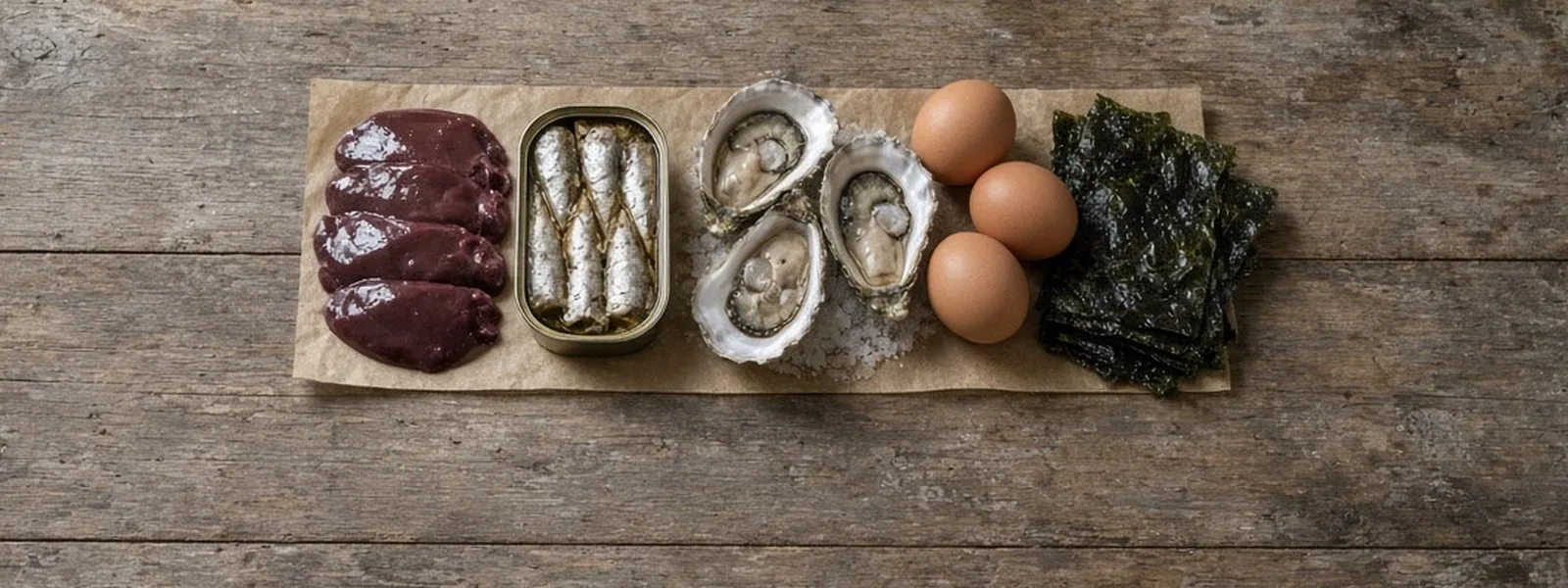
Lesson 15
Supporting Metabolism Through Nutrition
When we stop looking at food merely as a source of energy and start viewing it as a set of biological instructions, the way we structure our daily nutrition shifts dramatically. Supporting your metabolism is not about restriction; it is about providing the right instructions at the right times.
First, Find Out What You're Actually Doing
Before you pick a window, here's something worth knowing.
When researchers actually tracked when people ate — using a phone app rather than asking them to remember — they found that about half of people eat across a window longer than fifteen hours. Only one in ten eats within twelve hours or less.
Read that again, because it reframes the whole conversation. Most people aren't choosing between an eight-hour window and a ten-hour window. They're eating from 6:30 in the morning until 10 at night, and they would have told you they eat three meals a day.
Coffee with cream at 6:45. A bite of something while making dinner. A few crackers in front of the TV. None of it registers as a meal, and all of it counts.
So the First Move Isn't Optimization. It's Finding Out.
Log every time anything with calories goes in your mouth for three days — including the bite standing at the counter. Most people are genuinely startled.
Then narrow to twelve hours. For the majority of people that alone is a real change, and it doesn't require calculating anything.
And a Word About Precision
You'll see a great deal sold on the claim that there's a precise eating window calculated for your particular hormones, and that being ninety minutes off will stall you. That isn't supported by anything.
Here's why, in one sentence: your daily hormone rhythms are set primarily by light and sleep, not by food. Your body's master clock takes its cue from when it gets dark and when you wake. Meal timing influences plenty downstream of that — the next section is about exactly how — but it doesn't move the master clock, and no questionnaire can calculate a personal window to the half hour.
Which is good news. You don't need to get it exactly right. You need to stop eating across fifteen hours, push more of your food earlier, and stay consistent. That's achievable, and it's where the actual effect is.
The Power of Time-Restricted Eating

An eating window gives your body a long stretch of low insulin
One of the most effective ways to lower insulin and restore metabolic flexibility is to simply change when you eat. This is often referred to as time-restricted eating or intermittent fasting.
Remember, every time you eat, especially if the meal contains carbohydrates or significant amounts of protein, insulin rises. If you are eating from the moment you wake up until the moment you go to bed, your body is continuously locked in a storage state. By condensing your meals into a specific window—such as eight to ten hours a day—and fasting for the remaining fourteen to sixteen hours, you provide your body with a crucial period of low insulin.
During this fasting window, your body finally has the opportunity to shift gears. With no incoming food to process, insulin drops to baseline. The liver begins to release stored glycogen. Once that is depleted, the body seamlessly transitions into breaking down stored fat for fuel and producing ketones. Fasting is not about starving; it is about allowing your body to access the internal energy it has already stored.
Meal Timing for Metabolic Safety
While intermittent fasting is fantastic for a healthy body, it can be a massive stressor for those with chronic fatigue, autoimmune illness, or a history of severe dieting. If your body is in a state of cellular exhaustion, fasting simply registers as starvation.
And Here's Why Fasting Backfires for Some People
There's a specific reason fasting can make things worse rather than better, and it's worth understanding rather than just being told.
Fasting raises cortisol. This is well established, and it isn't a malfunction — cortisol's job during a food shortage is to tell your liver to release glucose so your blood sugar doesn't drop. The more severe the restriction, the bigger the response. Milder restriction doesn't do it.
So if you're already running on high cortisol — chronic stress, poor sleep, years of dieting, autoimmune illness — fasting adds another load to a system that's already carrying too much. Your body doesn't experience it as a beneficial stress. It experiences it as more evidence of famine.
There's also a sex difference worth knowing. In one study of a single day of fasting, the women's cortisol rhythm shifted measurably — running higher and peaking earlier. In the men, nothing moved at all.
One study, and it needs replicating. But it points the same direction as everything else in this book: women appear more sensitive to the stress of restriction, and most fasting protocols were built on research in men.
Which is exactly why the Rule of 3s exists. Three consistent meals, no snacking, enough food at each one. You still get the low-insulin windows between meals. You just don't add a famine signal to a body that already believes it's in one.
If you're not sure which camp you're in: try the Rule of 3s first. You can always narrow the window later. Going the other direction — recovering from months of fasting that made everything worse — takes considerably longer.
For these highly stressed bodies, the best strategy is a consistent feeding window restricted to exactly 3 meals a day. The "Rule of 3s" is highly effective here: eat three balanced meals a day (roughly 1/3 high-quality protein, 1/3 safe starches, and 1/3 non-starchy vegetables) and absolutely eliminate snacking. Snacking causes too many continuous insulin spikes, locking you out of fat burning. Eating 3 consistent meals prevents the blood sugar dips that trigger a "fight-or-flight" cortisol response, giving the metabolism the stable safety signals it needs to finally heal.
Angiotensin II — one of the two hormones in that salt-retention system — has been shown to block the formation of new fat cells.
Timing Your Meals With Your Body's Natural Rhythm
Your metabolism does not operate at the same rate all day — it follows a daily biological rhythm. In the morning, your body handles blood sugar best and is most metabolically active. It handles carbohydrates, larger quantities of food, and nutrients more efficiently earlier in the day. Eating a substantial meal in the morning supports stable blood sugar, better energy, and smoother digestion throughout the day.
Late at night, the opposite is true. Your metabolism naturally slows as your body prepares for rest. Digestion becomes less efficient, blood sugar spikes more easily from the same foods that would have been handled easily at breakfast, and the calories you consume are far more likely to be stored rather than burned.1 Eating late also disrupts sleep by keeping your digestive system active when it should be winding down — which then disrupts the very hormones that regulate hunger and fat burning the next day.
How strong is that evidence? When people ate the identical meals four hours later, their fat tissue switched on more of the genes that store fat, and they burned fewer calories while awake.1 Over 12 to 20 weeks, people who ate earlier lost more weight on the same calories, and in the larger of those studies, how much they ate, how much they moved, and their appetite hormones were all about the same.2,3 A shorter, 4-week trial with all food provided found no difference in weight loss,4 so researchers still disagree about how large the effect is.
The bloodwork points the same way. In the trials where earlier eating led to more weight loss on the same calories, insulin markers improved more too. In the 12-week big-breakfast study, fasting insulin and insulin resistance fell significantly more in the big-breakfast group, and their triglycerides fell by about a third, while the big-dinner group's rose by about 15%.2 In another 12-week trial, 80 women followed the same weight-loss program, eating their main meal at either lunch or dinner. The lunch group lost more weight (about 5.9 kg vs 4.4 kg) and saw bigger drops in fasting insulin and insulin resistance.5
A 2023 review that pooled nine of these trials found lower insulin resistance with earlier eating, and the authors concluded that these metabolic improvements help explain some of the link between when people eat and how their weight changes.6 The same food is also simply handled worse later in the day. When young women ate identical meals with lunch at 4:30 PM instead of 1 PM, their bodies handled sugar less well and they burned fewer calories at rest.7
🌅
Morning (AM)Handles blood sugar best. Eat your larger meals here. Your body is primed to use nutrients efficiently, burn fuel actively, and handle carbohydrates best.
🌙
Evening (PM)Metabolism slows. Keep meals lighter. Finish eating at least 2–3 hours before bed to let insulin drop before rising melatonin signals the body into overnight repair mode.
Shifting the majority of your food intake earlier in the day — even within the same eating window — helps your body work with its natural rhythm rather than against it, making fat loss easier2,3 and sleep deeper.
Timing Matters: Not Just What You Eat, But When
In one study, two groups of women ate the same number of calories each day. The only difference was timing: one group ate their biggest meal at breakfast, the other at dinner. After 12 weeks, the big-breakfast group had lost more weight and reported feeling less hungry. A later, more tightly controlled study didn't find the extra weight loss, but it did confirm the hunger effect: a big breakfast kept people less hungry all day. Other research has found that the same meal eaten four hours later leaves people hungrier and lowers leptin, a hormone that helps signal you've had enough.
What you eat in the morning matters too. In another study, adults on a reduced-calorie diet ate either two eggs or a bagel for breakfast, with the same calories and the same weight of food. The egg group lost about twice as much weight and reported feeling more energetic. The researchers believed the eggs kept people fuller, which made the diet easier to stick with. Other studies found that a high-protein breakfast led to less evening snacking and smaller lunches.
The most consistent finding across all of this research is that eating more of your food earlier in the day, and starting it with protein, makes you less hungry later, which makes everything else easier.
The Hidden Clocks Inside Your Cells
Why exactly are mornings different? The answer is more literal than most people realize. Your body doesn't have just one internal clock in your brain — it has a master clock, plus separate mini-clocks built directly into your liver, muscle, fat, and pancreas cells.8 These aren't a figure of speech. They're actual genetic switches that turn on and off in a daily rhythm, and part of what they control is how sensitive each of those tissues is to insulin at any given moment.9
Your pancreas's insulin release, your liver's sugar output, and your muscle's ability to pull glucose out of your bloodstream are all under the direct influence of these local clocks, not just your sleep schedule in general.10 One recent study found that in people with type 2 diabetes, this muscle-level clock rhythm is measurably disrupted, and that disruption is tied to reduced mitochondrial function.11
Key Insight
Your liver's internal clock is especially sensitive to feeding — meaning when you eat is actively training that clock, for better or worse, every single day.12
This is also why irregular eating patterns, shift work, and inconsistent sleep independently worsen insulin resistance, separate from what you're actually eating.13 It isn't just about calories or carbs. It's about whether your daily rhythm of eating lines up with the rhythm your cells are already running on.
And it isn't just about appetite. The same meal raises your blood sugar more in the evening than in the morning. In one tightly controlled 8-day lab study, researchers held sleep, activity, and the previous meal constant, so the only thing left to differ was the body clock itself. Blood sugar after the meal was about 17% higher at 8 PM than at 8 AM.14
Three things shift across the day. In the morning, your pancreas releases insulin faster in the first minutes after a meal. In that study, this early burst of insulin was 27% lower in the evening.14 Your liver also shuts down its own sugar production more completely in the morning, so less extra glucose gets added on top of your meal. And your cells respond to insulin a little better.15 The insulin timing and the liver do most of the work; the sensitivity difference is the smaller piece. The net effect is that the same food clears from your bloodstream faster in the morning.
Eating earlier can help even when you don't eat less. In one trial, men with prediabetes spent five weeks on each of two schedules, eating the same food: packed into an early 6-hour window, with dinner finished before 3 PM, or spread across 12 hours. On the early schedule, their insulin sensitivity and their pancreas's insulin response both improved, with no weight loss.16 It was a small study, and only in men, but it shows that timing on its own can change how your body handles food.
An honest caveat. This morning advantage is clearest in people who are metabolically healthy. In obesity, insulin resistance, and type 2 diabetes, the daily rhythm is often blunted, shifted later, or missing altogether. Many people with type 2 diabetes actually see their highest blood sugar after breakfast, partly because of the dawn phenomenon, an early-morning rise in blood sugar driven by overnight hormones.
Fewer Meals Win — Just Not for the Reason You've Heard
You may have seen claims that eating one large meal burns dramatically more energy than spreading the same food out. That one doesn't hold up. When researchers measure across a full day in a sealed chamber, the difference disappears. The energy cost of digestion tracks the food, not the schedule.
But fewer meals genuinely do win — on something that matters more.
In controlled comparisons, people eating six small meals a day reported noticeably more hunger and more desire to eat than people eating the same food in fewer meals.
That's the real case against grazing. Every meal you add is another scheduled hunger signal you're teaching your body to produce — which is exactly what Lesson 7 explained about ghrelin.
And there's a timing effect that is well supported: the identical meal produces a larger thermic response in the morning than in the evening.17 So when you eat genuinely does change how much energy processing it costs you. One 4-week trial did find no difference in the total calories people burned across the whole day.4
Fewer meals, earlier in the day. That's the version that holds up.
While this level of compression is not right for everyone — particularly those with adrenal stress or blood sugar instability — it illustrates a powerful principle: fewer, more substantial meals tend to create a greater metabolic stimulus than constant grazing.
The Surprising Truth About Salt (And Fat Cell Growth)
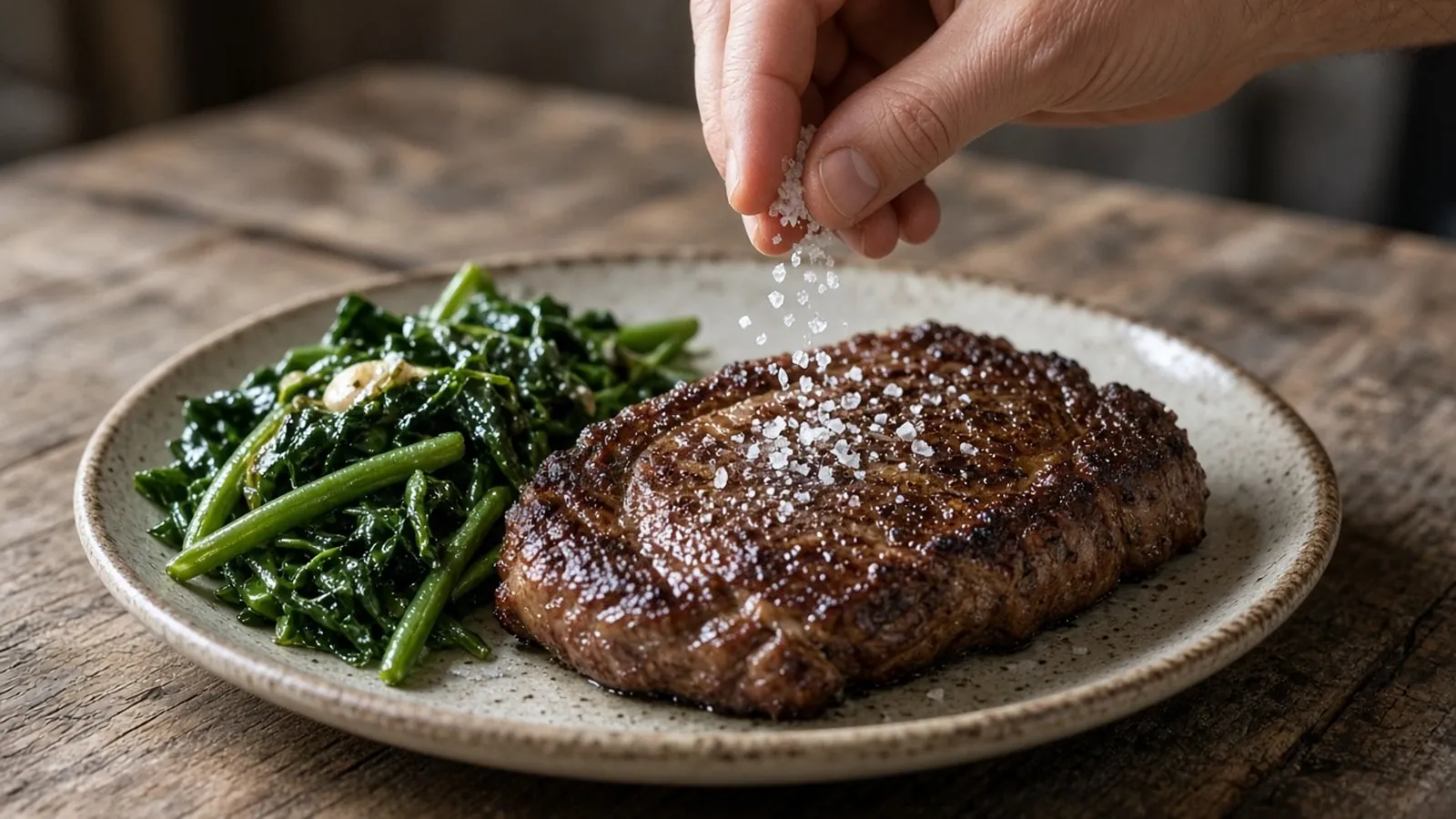
Don't fear salt, especially when eating low-carb
When you begin to lower your insulin levels through a whole-food diet and fasting, your body undergoes a major physiological shift regarding hydration and electrolytes.
As advanced metabolic research extensively shows, insulin causes the kidneys to retain sodium. When you have high insulin, your body holds onto excess salt and fluid, which can lead to high blood pressure. However, when you lower your insulin, your kidneys release this sodium. You will rapidly flush out excess water and salt.
This is where many people make a critical mistake. We have been taught for decades to restrict our salt intake. But if your insulin is low and you are rapidly excreting sodium, restricting your salt will lead to fatigue, headaches, and muscle cramps—often referred to as the "keto flu."
Even worse, if your body senses that its sodium levels are dropping too low, it triggers a powerful hormonal survival mechanism called the renin-angiotensin-aldosterone system (RAAS). It activates two specific hormones—Angiotensin II and Aldosterone—to aggressively hold onto whatever salt remains. To help retain that salt, your body will actually raise your insulin levels to stop the kidneys from excreting sodium.
But the metabolic cost doesn't stop at fatigue.
Remember the difference between healthy and sick fat storage from Lesson 9 — new small fat cells versus existing cells inflating like balloons?
The hormones your body deploys to hold onto salt appear to push you toward the second kind.
Angiotensin II — one of the two hormones in that salt-retention system — has been shown to block the formation of new fat cells. When your body can't make new small cells, the energy has to go into the ones you already have. They inflate, become inflamed, and turn insulin resistant. Its partner, aldosterone, acts directly on fat tissue to drive expansion and inflammation.
Studies restricting sodium have found exactly what you'd predict: worse insulin sensitivity, higher triglycerides, more inflammation, and more visceral fat.
A note on how confident to be here. The direct sodium-to-body-fat findings come largely from animal studies, and the hormone-to-fat-cell mechanism has been worked out mostly in cells and animals. What's solid is that restricting sodium on a low-insulin diet activates this system and worsens insulin sensitivity. The fat cell consequence is a well-supported inference rather than a proven human outcome.
Do not fear salt. Salt your food to taste, particularly on a clean low-carbohydrate diet.
One Exception Worth Naming
Everything above applies to a woman with healthy blood pressure and healthy kidneys eating a clean, low-carbohydrate diet. For her, salting to taste is correct and the fear of salt has done real harm.
If you have high blood pressure, kidney disease, or heart failure — or if you take blood pressure medication — talk to your doctor before significantly increasing your salt. Not because the physiology above is wrong, but because your situation has an additional variable in it, and that's a conversation worth five minutes.
And here's the part that catches people: eating this way lowers blood pressure on its own, which is good — and it means your medication dose may become too strong. If you start feeling lightheaded when you stand up, that's usually not a reason to abandon the diet. It's a reason to get your dose reviewed.
Tell your doctor you've changed how you eat. She can't adjust for what she doesn't know about.
Key Insight
The identical meal produces a greater thermic response eaten in the morning than eaten in the evening — when you eat changes what the food costs you to process.
Cut the Snacks: Why Your Mitochondria Need Breaks
Every time you eat — even a small snack — your body releases insulin to manage the incoming energy. If you eat frequently throughout the day, insulin stays continuously elevated and your body never gets the window it needs to shift into fat-burning mode. It remains locked in storage mode, which over time deepens insulin resistance and makes fat loss progressively harder.
But the case against constant snacking goes deeper than insulin. Your mitochondria — the tiny energy factories inside your cells — also require breaks between meals. When you eat constantly, your mitochondria are perpetually busy processing and converting incoming food. This leaves little time for the critical cellular maintenance, repair, and cleanup that can only happen during periods of low energy intake. Giving your mitochondria that breathing room between meals allows them to recharge, repair their own structures, clear out damaged components, and become more efficient at burning stored fat for fuel. This is one of the reasons why simply eliminating snacking — without changing anything else about what you eat — can meaningfully improve metabolic health over time.
The Process Has a Name
That cellular maintenance has a name: autophagy. It means self-eating, and it's exactly what it sounds like.
Your cells have a system for identifying damaged components — worn-out mitochondria, misfolded proteins, cellular debris — dismantling them, and recycling the parts. Nutrient scarcity turns it up. Incoming food turns it down. The science behind it won a Nobel Prize in 2016.
This is genuine cellular housekeeping, and it's one of the better arguments for not eating around the clock.
Where It Gets Oversold
You'll see confident claims that autophagy "switches on" at sixteen hours of fasting. Or eighteen. Or twenty-four.
Those numbers weren't measured in humans. There's no routine test for autophagy, and the figures circulating online came from animal studies or from indirect markers. The process is real. The precise threshold is invented.
Most of the dramatic findings — longer life, disease reversal, cellular rejuvenation — come from yeast, worms, flies, and mice. Those organisms live weeks to months. Extrapolating a lifespan effect from a mouse to a human is a much larger leap than it sounds.
So here's the honest version: autophagy is real, not eating does increase it, and that's a good additional reason for regular breaks from food.
It is not a reason to push into longer and longer fasts chasing a number nobody can actually measure — especially given what the next section says about fasting and stress hormones.
The Problem With "You're Not Deficient"
Before we talk about which foods, there's something about the whole framework of nutrient requirements that you need to know.
Nutrient shortfalls take years to show up.
Your body is extraordinarily good at maintaining function. When something runs short, it doesn't announce it. It adjusts. It reallocates. It borrows from somewhere it judges less urgent and keeps everything critical running as though nothing were wrong.
You feel fine. Your labs look fine. Something is quietly being neglected.
A scientist named Bruce Ames gave this a name, and the name is triage.
When a vitamin or mineral runs short, your body prioritizes immediate survival over long-term maintenance. Survival wins every time — a body that doesn't make it through today has no use for repairs.
Now apply that to your metabolism.
Your cells need specific vitamins and minerals to turn food into energy — Lesson 4 covered exactly which ones and what each does. When those run short, your body doesn't stop making energy. It can't. So it protects energy production today and shortchanges the things that keep energy production working for the next thirty years.
Building new mitochondria. Repairing damaged ones. Clearing out the worn-out. Maintaining the enzymes that burn fat.
All of that is optional in a shortage. And none of it produces a symptom you'd notice this year.
What you notice is that you're a little more tired than you used to be. That workouts take more out of you. That you need coffee to start rather than to enjoy. That the diet that worked at 35 does nothing at 48.
Nothing looks wrong. And your metabolism has been running on a smaller, older, less-maintained engine for years.
This is the same triage from Lesson 3, one level deeper. Your body cuts the optional things first — and in a shortage, long-term repair is optional.
So "Not Deficient" and "Enough" Are Different Statements
The recommended amounts you've seen were set to prevent the classic deficiency diseases. Scurvy. Beriberi. Pellagra. Rickets. Visible, dramatic, unmistakable illness.
They were not set to keep your mitochondria building, your thyroid converting, and your cells responding to insulin.
You can live for twenty years in the gap between "not deficient" and "enough" — feeling progressively less well, with every test coming back normal.
If you've been told your labs are fine and you know something isn't right, you are very likely in that gap. And you are not imagining it.
Your Grandmother's Spinach Was Not Your Spinach
There's a second problem stacked on top of the first, and almost nobody accounts for it.
The food itself contains less than it used to.
In 2004, researchers at the University of Texas compared the USDA's own nutrient data for 43 garden crops — vegetables, melons, strawberries — between 1950 and 1999.
Six nutrients showed reliable declines. Look at what they were:
| Nutrient | Decline | What it does for your metabolism |
|---|---|---|
| Riboflavin (B2) | 38% | Required to break down fat |
| Calcium | 16% | Muscle contraction, cell signalling |
| Iron | 15% | Energy chain, thyroid hormone production |
| Vitamin C | declined | Needed to make carnitine — fat's carrier into the cell |
| Phosphorus | declined | Part of ATP itself |
| Protein | 6% | Muscle, enzymes, everything |
The nutrient that declined most is the one required to burn fat. The one that declined next is required to make the hormone that sets your metabolic rate. Lesson 4 explains both.
And now the detail that should stop you. The lead researcher pointed out what they couldn't measure — because those nutrients weren't tracked in 1950:
Magnesium. Zinc. Vitamin B6. Vitamin E. Fiber. And every phytochemical.
Magnesium — the one your cellular energy currency cannot function without. Zinc — the one your insulin is stored with. Nobody knows what happened to those, because nobody was counting.
Why It Happened
The researchers' own explanation was the dilution effect, and it isn't what most people assume.
For seventy years, crops have been bred for yield, size, appearance, shelf life, and shipping durability. Never for nutrient content, because nobody was measuring nutrient content.
The result is plants that grow bigger and faster — but the minerals get spread thinner through more plant matter. A larger tomato containing the same magnesium is a less nutritious tomato per bite.
And the soil is the other half.
Modern fertilizer is built around three things: nitrogen, phosphorus, potassium. NPK. The nitrogen is manufactured from fossil fuel.
Those three grow a large, green, beautiful plant. They are also the only three we put back.
Magnesium, zinc, selenium, copper, manganese, boron — every harvest removes them from the soil, and conventional fertilizer doesn't replace them. Seventy years of taking and not returning produces exactly what you'd expect.
A plant cannot put into your food what isn't in the ground. It can look perfect and be hollow.
One honest note. The researchers attributed most of the decline to breeding changes rather than soil, and the analysis has critics — measurement methods changed across fifty years, and a few nutrients actually rose. But similar declines have since been documented in the UK, Australia, and Finland, which is hard to explain as measurement error. The direction isn't seriously disputed.
What This Means for You
Three things are true at once, and stacked they explain a great deal:
The amounts you were told to aim for are minimums, set to prevent visible disease — not to run a metabolism.
Falling short is invisible for years, because your body protects energy production today by shortchanging the repair that keeps it working tomorrow.
And the food delivers less per bite than the same food delivered for your grandmother — including, specifically, the nutrients your cells need to burn fat and make thyroid hormone.
This is why "eat less and move more" fails so reliably in women over 40. Eating less of food that already contains less of the things required to burn fat, while asking the machinery to work harder.
You weren't failing at the plan. The plan was starving the machinery.
Which is why the rest of this section matters more than it looks like it should. Stop treating the recommended amount as your target. It was the floor. Aim above it.
Prioritizing Nutrient Density

Liver, sardines, oysters, eggs and seaweed: nutrient-dense staples
A healthy metabolism requires a massive amount of micronutrients to function. If you are eating a diet composed of highly processed foods, you may be consuming excess energy, but you are effectively starving at a cellular level.
To support your metabolism, focus on the most nutrient-dense foods available. Ruminant meats (like beef and lamb), eggs, fatty fish, and organ meats provide the highest concentration of bioavailable vitamins, minerals, and essential amino acids. Pair these with fibrous, above-ground vegetables that feed your gut microbiome. When you prioritize foods that provide maximal cellular nutrition with minimal insulin spikes, your body's constant craving for more food naturally disappears.
Food Quality: Why Sourcing Matters as Much as What You Eat
Nutrient density is not only about which foods you choose — it is about the quality and sourcing of those foods. Poor-quality meats and conventionally grown produce can be dramatically lower in nutrients than their properly raised or grown counterparts, meaning your efforts will not deliver their full metabolic benefit even if you are eating the right foods on paper.
Research illustrates this gap clearly: in one study, pasture-raised beef contained up to six times more key nutrients than conventionally raised beef. The principle is straightforward — the more nutrient-dense the soil and the more natural the animal's living conditions, the more nutrient-dense the food on your plate. Organic is a good starting point; home-grown or regenerative and conservation farm sources are even better.
What to Look for When Sourcing Your Food
- Meats: Organic and 100% grass-fed and grass-finished. The "finished" distinction matters — many animals are grass-fed but grain-finished, which changes their fatty acid and nutrient profile.
- Poultry & Eggs: Organic and preferably pasture-raised. Pasture-raised eggs contain significantly more omega-3s and fat-soluble vitamins than conventional eggs.
- Fish: Wild-caught whenever possible. For canned tuna specifically, two brands that test consistently low in mercury are Safe Catch and Wild Planet.
- Fruits & Vegetables: Organic especially for any produce where you eat the skin. Pesticide residues concentrate most heavily in the outer layers.
- Water: Clean filtered water. Avoid drinking water stored in plastic bottles — both the plastics and the potential bacterial load in warm-stored bottles add unnecessary toxin burden to your system.
- Natural Sugars: Keep even natural sugars to a minimum. Fruit is healthy but should be eaten in smaller quantities and preferably earlier in the day.
✨
Your Personalized Nutrition Protocol Awaits
Your AI Metabolic Coach will take everything you have learned in these lessons and combine it with your personal health history to build a supplement and nutrition strategy made just for you.
Sources
- Cell Metabolism, "Late isocaloric eating increases hunger, decreases energy expenditure, and modifies metabolic pathways in adults with overweight and obesity"
- Obesity, "High caloric intake at breakfast vs. dinner differentially influences weight loss of overweight and obese women"
- International Journal of Obesity, "Timing of food intake predicts weight loss effectiveness"
- Cell Metabolism, "Timing of daily calorie loading affects appetite and hunger responses without changes in energy metabolism in healthy subjects with obesity"
- American Journal of Clinical Nutrition, "Beneficial effect of high energy intake at lunch rather than dinner on weight loss in healthy obese women in a weight-loss program: a randomized clinical trial"
- Obesity Reviews, "Distribution of energy intake across the day and weight loss: A systematic review and meta-analysis"
- International Journal of Obesity, "Meal timing affects glucose tolerance, substrate oxidation and circadian-related variables: A randomized, crossover trial"
- Nature Reviews Endocrinology, "Circadian clocks and insulin resistance"
- Biological Rhythm Research, "Biological connection of circadian rhythm and insulin resistance: a review"
- Frontiers in Endocrinology, "Circadian rhythms and pancreas physiology: A review"
- bioRxiv, "Live cell GLUT4 translocation assay reveals Per3 as a novel regulator of circadian insulin sensitivity in skeletal muscle cells"
- bioRxiv, "The hepatocyte insulin receptor is required to program rhythmic gene expression and the liver clock"
- Nature Reviews Endocrinology, "Circadian clocks and insulin resistance"
- PNAS, "Endogenous circadian system and circadian misalignment impact glucose tolerance via separate mechanisms in humans"
- Diabetes, "Diurnal pattern to insulin secretion and insulin action in healthy individuals"
- Cell Metabolism, "Early time-restricted feeding improves insulin sensitivity, blood pressure, and oxidative stress even without weight loss in men with prediabetes"
- Metabolism, "Constant-routine protocol reveals an endogenous circadian rhythm in diet-induced thermogenesis with a peak in the biological morning"
How Your Body Burns
Lesson 16 of 18

Lesson 16
Lifestyle Strategies That Improve Metabolism
Metabolism does not operate in a vacuum. It is deeply connected to your environment, your daily habits, and your natural biological rhythms. You cannot optimize your physical health if you are neglecting the environmental signals your body relies on.
Melatonin binds to the beta cells in your pancreas and signals them to stop producing insulin — meaning your body is naturally designed to have its lowest insulin levels while you are sleeping.
The Thing That Matters More Than Eight Hours
Everyone tells you to get seven to nine hours. That's reasonable advice and it's genuinely hard to follow, and it turns out it may not even be the most important thing.
Researchers analyzed more than ten million hours of sleep data from 60,977 people wearing accelerometers — average age 63, more than half of them women. They compared two things: how much people slept, and how consistently they slept at the same times.
Consistency won.
The people with the most regular sleep-wake timing had 20 to 48% lower risk of death from any cause than the least regular — and 22 to 57% lower risk of death from cardiometabolic causes specifically. Adjusted for age, sex, lifestyle, and health status.
And regularity predicted mortality better than duration did.
Why This Should Be a Relief
If you've been lying awake doing arithmetic about whether you'll hit seven hours, this is much better news than it sounds.
Going to bed and getting up at roughly the same times — including weekends — appears to matter more than the exact number of hours. And consistency is something you can actually control. You cannot force yourself to fall asleep. You can decide when you get up.
This is also why your body has clocks rather than a timer. Lesson 15 covered the clocks in your liver, muscle, fat, and pancreas. Clocks need a predictable signal to stay set. An irregular schedule doesn't just leave you tired — it leaves every one of those tissue clocks guessing about what time it is.
So if you change one thing about your sleep: pick a wake-up time and keep it. Even on Saturday. Especially on Saturday.
The Melatonin and Insulin Connection
Sleep is the most underappreciated pillar of metabolic health. You already know poor sleep raises cortisol and hunger hormones. But there's a deeper connection, and most people — including most doctors — have never heard it.
Your pancreas has melatonin receptors on it.
Not metaphorically. The beta cells that produce your insulin carry receptors for melatonin, and researchers have confirmed this in human pancreatic tissue. When melatonin binds to them, it tells those cells to reduce insulin production.
Which means your body is deliberately designed to have its lowest insulin levels while you sleep — allowing deep cellular repair and overnight fat burning. Melatonin isn't just a sleep hormone. It's part of how your body clears insulin out of the way overnight.
Which Creates a Problem If You Eat Late
Now picture eating a carbohydrate-heavy meal or a sugary snack right before bed.
Your blood sugar rises, demanding insulin. And your rising melatonin is simultaneously telling your pancreas to make less of it.
Two systems working against each other. The result is worse blood sugar control and disrupted sleep architecture — you get the metabolic cost and the poor sleep together.
This is why the same meal is handled differently at 8 a.m. and 9 p.m. It isn't in your head. The hormonal conditions are genuinely different.
Aim to finish your last meal at least two to three hours before bed, letting insulin fall before melatonin rises.
And Here's Why Some People Get Away With It
This is the part that explains a great deal, and it's why comparing yourself to other people is a waste of time.
There's a common variation in the gene for one of those melatonin receptors. People who carry it produce more of the receptor on their beta cells — which means melatonin suppresses their insulin more strongly.
This isn't a rare mutation. Roughly half of people of European ancestry carry it. About seventy percent of East Asians.
And it matters. That variant is the single strongest known genetic link to elevated fasting blood sugar and impaired insulin release — it turned up in large-scale genetic studies as one of the most robust findings connected to type 2 diabetes.
Researchers tested it directly. They gave people melatonin and measured how well they handled glucose afterward. The impairment showed up only in the carriers. In non-carriers, nothing.
So when your friend eats dessert at 10 p.m. and seems fine — she might genuinely be fine. And you might genuinely not be. Roughly half of the women reading this are in the more sensitive group, and none of you know which.
Which is why I'd default to the earlier eating window rather than testing it. If you're in the sensitive half, late meals cost you more than they cost other people. And if you're not, eating earlier costs you nothing.
A Word About Melatonin Supplements
This is also why I'd be careful with melatonin as a supplement, and it's the opposite of what you'll hear.
Melatonin use has increased roughly fivefold in recent decades, mostly for sleep. But read the mechanism above again: melatonin suppresses insulin secretion.
A study published this year gave healthy people supplemental melatonin and measured their glucose handling. In carriers of that gene variant, it impaired both glucose tolerance and beta-cell function. In non-carriers, it didn't. The researchers concluded that melatonin's metabolic effects need to be taken seriously and that a personalized approach may be warranted.
And the doses in commercial products are frequently far higher than what your body actually produces.
I'm not telling you never to take it. If you use it occasionally for travel or a disrupted night, that's a reasonable decision to make with your doctor — particularly if your blood sugar is already an issue.
What I'd rather you do is raise your own. Morning light. Genuinely dim evenings. A consistent wake time. Those produce melatonin at the right time in the right amount, rather than adding an arbitrary dose at an arbitrary hour — and they're free.
Your Afternoon Coffee Is Still Working at Bedtime
This one is simple and almost nobody gets it right.
Caffeine has a half-life of roughly five to six hours. Which means that after five or six hours, half of it is still in you.
So a 3 p.m. coffee means half that dose is still circulating at 9 p.m., and a quarter of it at 3 a.m.
And Here's the Part That Fools People
You can fall asleep fine and still have your sleep degraded.
Caffeine reduces deep sleep specifically — the stage where most of the repair happens. So you sleep the hours, wake up unrefreshed, and conclude you need more coffee. Which is a loop.
It also varies enormously between people, largely genetic. Some people clear it in three hours and some take nine. If you're a slow clearer, an afternoon coffee is a genuine problem and you may have no idea — because you can still fall asleep.
Cut it off by early afternoon. Noon if you're sensitive, 2 p.m. as a general rule.
And if you're convinced caffeine doesn't affect your sleep — test it for two weeks rather than assuming. People who are certain it doesn't affect them are frequently the ones it affects most, because they've never known anything different.
Cool Room, Warm Hands
One more physical lever, and it's easy.
Falling asleep requires your core temperature to drop. That drop is part of the signal. Which is why a warm room makes sleep harder and why you sleep badly in a heatwave.
Keep the room cool — most people do best somewhere in the mid-60s Fahrenheit, cooler than feels intuitive.
And here's the trick that seems backwards: a warm bath or shower an hour or two before bed helps you fall asleep faster. Not because it warms you, but because warming your skin sends blood to the surface, and you then shed heat rapidly — producing exactly the core temperature drop that initiates sleep.
Warm the outside to cool the inside. Then a cool room to keep it there.
The Impact of Light Exposure

Morning sunlight within 30 minutes of waking sets your body clock
Your circadian rhythm—the internal clock that dictates your sleep, hormone production, and energy metabolism—is primarily regulated by light. In the modern world, we spend our days indoors under artificial lights and our evenings staring at bright screens. This constant, unnatural light exposure confuses the brain, suppressing melatonin production and keeping the nervous system in a state of low-grade alertness.
To support your metabolism, you must anchor your circadian rhythm. View natural sunlight outside within the first thirty minutes of waking up. This signals to your brain that the day has begun, triggering a healthy, natural rise in cortisol that gives you daytime energy and sets a timer for melatonin release later that night. In the evening, dim your artificial lights and limit screen time to signal to your body that it is time to transition into repair and recovery mode.
Why You Have to Go Outside
When I say get natural light in the morning, I mean outside. Not by a window. And there's a number that explains why.
Light is measured in lux. A well-lit indoor room: 100 to 500 lux. Sitting right next to a bright window: maybe 1,000. Outside on a completely overcast day: around 10,000. Outside in direct sun: up to 100,000.
Read those again. A grey, miserable, rainy morning outdoors delivers ten to a hundred times more light than your brightest indoor room.
Your brain's master clock was built to read the difference between outdoors and indoors, sun and shade, day and night. Indoor lighting is, to your circadian system, essentially darkness. It's bright enough to see by and nowhere near bright enough to set a clock.
Which is why "I get plenty of light, I sit by the window" doesn't work. And it's why the dullest possible overcast morning still does.
Ten to twenty minutes outside, within the first half hour of waking. No sunglasses. You don't need to look at the sun — the light reaching your eyes from the sky is the point. On a grey day, give it fifteen or twenty. You still get far more than you would indoors.
Drink your coffee on the step. Walk to the end of the street and back. Stand in the doorway while the dog sniffs around. It doesn't have to be a practice. It has to be outside.
And the Same Number Explains the Evening Problem
Now run it in reverse. Your evening light is far brighter than your body expects.
For most of human history, the light after sunset was firelight — a handful of lux. Now it's 100 to 300 in an ordinary lit room, plus a screen at arm's length.
So it isn't only that screens are bad. It's that your entire evening looks, to your brain, like late afternoon. Which is why melatonin arrives late and you don't feel tired until midnight.

Dim evenings let melatonin rise on time
Dim the overheads. Use lamps rather than ceiling lights. Let the last hour be genuinely dim. You're not trying to sit in the dark — you're trying to make your evening look like evening.
One Night With a Light On
Here's a study that will make you get up and close your blinds.
Researchers had healthy adults sleep for one night in a dimly lit room — under 3 lux, essentially dark. Another group slept in moderate room light, 100 lux. Not bright. Roughly a lamp left on in the corner, or the light coming in from a hallway.
One night.
In the room-light group, heart rate rose overnight, heart rate variability dropped — meaning their nervous system shifted toward stress mode while they slept — and their insulin resistance was measurably higher the next morning.
From a single night. With a lamp on.
Here's the detail that makes this interesting. Their melatonin didn't change. So this wasn't melatonin suppression. It was their nervous system. The light kept their sympathetic — fight-or-flight — system partly activated all night, and the researchers found that the more sympathetic activation someone had overnight, the higher her insulin the next morning.
Which connects straight to Lesson 12. Your body is supposed to spend the night in repair mode, with the parasympathetic side in charge. A light in the room prevents that from happening fully — and you have no idea it's happening, because you're asleep.
Make your room actually dark. Not dim. Dark. Blackout curtains if streetlight comes in. Cover or remove the glowing electronics. Move the charging phone out of the room. If you get up at night, use the dimmest light that lets you see — not the overhead.
And if you can't control the light, use a sleep mask. It costs almost nothing and it solves the problem completely. This is one of the cheapest interventions in this entire book. A single night in a lit room measurably changed how these people handled glucose. Multiply that by every night for twenty years.
Key Insight
Getting natural sunlight in your eyes within 30 minutes of waking regulates your circadian rhythm, triggering the healthy cortisol rise that programs proper melatonin release 14 to 16 hours later.
Light Exposure
Sunlight and its different wavelengths—ranging from visible light to near infrared (NIR) and red light—play a surprisingly powerful role in metabolism, mitochondrial function, and overall health.
Mitochondria, the energy-producing organelles in our cells, are sensitive to light, especially red (around 630–680 nm) and near-infrared (800–850 nm) wavelengths. These wavelengths stimulate cytochrome c oxidase in the mitochondrial electron transport chain, increasing ATP production, reducing oxidative stress, and improving cellular energy efficiency. Improved mitochondrial function supports metabolism, fat oxidation, and insulin sensitivity, helping regulate blood sugar and body weight.
In addition, sunlight exposure influences circadian rhythms via blue light in the morning, which helps regulate cortisol, insulin signaling, and digestive enzyme release, indirectly supporting metabolic health.
Research has shown that red and near-infrared light therapy can improve glucose metabolism, enhance fat burning, and reduce inflammation. Animal studies and small human trials indicate that these wavelengths can improve insulin sensitivity, increase energy expenditure, and even modulate gut microbiome activity, which is closely tied to digestion and nutrient absorption.
Infrared saunas, full-spectrum light therapy, and even natural sun exposure can provide these benefits, with red and NIR light penetrating deeper tissues than visible light, stimulating mitochondria in muscle, liver, and fat tissue.
For practical benefits, moderate daily sun exposure—about 10–20 minutes of morning sunlight on face and arms—is sufficient to support circadian and metabolic signaling, with longer sessions (20–40 minutes) in safe, non-burning conditions offering additional red/NIR benefits. Red and near-infrared light therapy devices, often used for 10–20 minutes per area several times per week, can provide targeted mitochondrial stimulation even indoors.
Overall, integrating natural sunlight with safe red/NIR light exposure can enhance mitochondrial energy production, improve fat metabolism, stabilize blood sugar, and support insulin sensitivity, all of which are critical for weight management and metabolic health.
Active Stress Management
You will never completely eliminate stress from your life, but you can change how your body responds to it. If your nervous system is constantly stuck in a fight-or-flight state, your body will prioritize survival by storing energy and breaking down muscle tissue.
Active stress management is not a luxury; it is a metabolic necessity. This means intentionally carving out time to signal safety to your nervous system and manually shift your body out of the "fight-or-flight" response. Profound metabolic interventions include:
- Meditation and Yoga: These practices are not just for mental relaxation—they actively lower cortisol, reduce blood pressure, and improve insulin sensitivity by keeping your mind and body anchored in the present moment.
- Vagus Nerve Stimulation: Your vagus nerve is the biological brake pedal for stress — and as Lesson 12 explained, it does more than help you relax. It directly suppresses inflammation, which makes it one of the more consequential levers in this book. You reach it through deep breathing — with a long exhale specifically, since that's when the brake engages — and also through humming, singing, or cold exposure. Lesson 12 has the pre-meal version. Here, the point is that this works any time, not just before eating.
- Somatic Work: Tuning into your body's physical sensations and actively releasing stored physical tension helps discharge trapped survival energy, signaling profound safety to your brain.
When you actively engage these parasympathetic pathways, you lower your baseline chronic stress. This naturally drops your cortisol, which in turn lowers your insulin, allowing your body to finally release protective weight.
Every lifestyle strategy your AI Coach recommends will be tailored to your unique stress and sleep patterns.
How Your Body Burns
Lesson 17 of 18

Lesson 17
Exercise and Movement
For decades, the fitness and diet industries have promoted exercise primarily as a way to "burn off" the food you ate.
"We have been taught to view our bodies like a math equation: if you eat a 300-calorie donut, you need to spend 45 minutes on a treadmill to erase it."
By now, you understand that this model is fundamentally flawed. Exercise is not simply a tool to maximize energy expenditure; it is one of the most powerful metabolic signals you can send to your body. When you move, you are instructing your cells to build more mitochondria, improve insulin sensitivity, and alter your hormone production. How you choose to move matters. Different types of exercise send completely different biological signals.
One Note Before Any of This
Everything in this chapter assumes you have the capacity to recover from it.
Exercise is a stress. It's a good stress — that's the entire point, and the adaptation is where the benefit lives. But adaptation requires the resources to rebuild afterward.
If you're dealing with significant chronic fatigue, chronic illness, or you're coming out of a long period of severe under-eating, intense exercise of any kind can make things worse rather than better. Not because exercise is bad for you, but because you're asking a depleted system to spend energy it doesn't have.
In that situation, start here instead:
Walking. Gentle, unhurried, outdoors if possible — which also gets you the light from Lesson 16.
Yoga or stretching, particularly the slower forms. This signals safety to your nervous system rather than demand.
Light weights, well short of failure. You still get a building signal without the recovery cost.
And how you feel afterward is the instruction. Energized within an hour or two, or pleasantly tired — good. Wrecked for the rest of the day, or worse the next morning — that was too much, and backing off isn't failure. It's information.
Build capacity first. Then build strength. Trying to do it in the other order is how people end up worse off for having tried.
Weight Lifting: Building the Metabolic Engine

Muscle is your metabolic engine
If there is one non-negotiable form of exercise for long-term fat loss and metabolic health, it is resistance training.
Muscle is the largest tissue you can actually change, and carrying more of it does raise your resting energy needs — your body spends energy maintaining it around the clock.
But the bigger reason is where your blood sugar goes.
When insulin does its job, skeletal muscle is the primary destination for glucose. It's the largest container you have. Well-developed muscle means your body has somewhere to put the carbohydrate you eat without pumping out large amounts of insulin to force it there.
Which cuts both ways. Lose muscle and you shrink the container. The same meal now requires more insulin, because there's less room. You come out of a weight-loss attempt more insulin resistant than you went in — which is exactly why each round feels harder than the last, as Lesson 13 explains.
Strength training directly and profoundly improves your insulin sensitivity. That's the real case for it, and it's far more consequential than the calories.
More importantly, muscle acts as a "sink" for glucose. When you have well-developed muscle mass, your body has a place to rapidly store the carbohydrates you eat without needing to pump out massive amounts of insulin. Strength training directly and profoundly improves your insulin sensitivity.
Unlike chronic, long-duration cardio—which can sometimes elevate cortisol and signal the body to break down muscle tissue for quick fuel—weight lifting actively preserves and builds muscle while you lose fat. This ensures your metabolism does not slow down during your weight loss journey, making fat loss easier, more stable, and vastly more sustainable.
Beyond just aesthetics, lifting weights strengthens bones, joints, and connective tissue, drastically reducing your risk of injury and keeping you mobile as you age. It balances hormones, improves mood, supports mitochondrial function, and lowers systemic inflammation. The data on this is incredibly clear: people with more strength and muscle mass live longer, healthier lives. Weight training is not just about looking toned; it is one of the most powerful things you can do to keep your body resilient for long term health and vitality.
We have been taught to view our bodies like a math equation — that a 300-calorie donut requires 45 minutes on a treadmill to erase. This model is not only wrong, it is actively harmful.
What "Lifting" Actually Means Here
This isn't a training manual, and I'd rather point you at someone who can watch your form than try to teach it in a chapter. But a few principles matter.
Heavier weight, fewer repetitions, fewer sets. You're not looking to burn calories or feel exhausted — you're looking to create enough demand that your body decides it needs to build. That signal comes from load, not from volume. A handful of hard sets does more than thirty easy ones.
And give each muscle group real recovery before you work it again. The building happens during the rest, not during the session. Depending on how hard you went, that can be several days — and for genuinely heavy work, up to a week. More is not better here. More is just more.
This is why lifting is achievable for a busy woman. You don't need ninety minutes five days a week. Two or three short, hard sessions with real recovery between them will do more than daily exhaustion.
Please Get Help With Form
One thing I'd genuinely urge: work with someone who knows what they're doing, at least at the start.
A few sessions with a trainer, or a class with a coach who actually watches you, is worth far more than months of guessing. Not to be pushed harder — to learn how to move so you don't get hurt. An injury is the fastest way to lose everything you've built, and the things that cause them are usually small and easily corrected by someone who can see you.
This is the one place in this book where I'd tell you to spend money on a person rather than a product.
If You're in Perimenopause or Past It
The case for lifting gets stronger with every year, and it becomes urgent around this transition.
Estradiol was protecting your muscle. As it declines, muscle loss accelerates — which matters enormously, because muscle is where your blood sugar goes. So you're losing the container at exactly the moment insulin resistance is rising. Lesson 8 covers why.
And it was protecting your bones. Bone loss accelerates sharply through the menopausal transition, and loading your skeleton is the most effective non-pharmaceutical way to slow it. Bone responds to force. Nothing else you can do produces that signal.
So if you take one thing from this chapter: this is the decade to start lifting, not the decade to be careful.
I understand that sounds backwards. But the alternative — losing muscle and bone through your fifties and sixties without resisting it — is the outcome that actually limits people later. Not an injury from a squat rack. A hip fracture at 75, or not being able to get up off the floor.
Start lighter than you think you should, get someone to watch your form, and build slowly. But start.
It Was Never About the Calories You Burn
Here's what exercise actually does, and it has almost nothing to do with the number on the treadmill.
Researchers took previously sedentary, overweight, insulin-resistant older adults — not athletes, people who had never trained — and put them through moderate exercise training.
Three things went up at the same time: the amount of fat stored inside their muscles, their muscles' capacity to burn fat, and their insulin sensitivity.
More fat in the muscle and better blood sugar. Those aren't supposed to go together.
The Puzzle Behind That Finding
For years it was assumed that fat stored inside muscle cells caused insulin resistance. The correlation is strong: in sedentary people, more fat in the muscle means worse blood sugar.
Then somebody measured endurance athletes.
Athletes have as much fat inside their muscles as people with type 2 diabetes. And they're among the most insulin-sensitive people you can find.
It became known as the athlete's paradox, and it took a decade to resolve. When the answer came, it was ceramides — the insulin-blocking molecules from Lesson 10.
Trained muscle contains fewer ceramides despite holding more fat.
The stored fat was never the problem. What matters is whether a fatty acid gets safely parked as fuel or converted into something that blocks insulin. And researchers found that the faster someone's muscle packed fat away into storage, the fewer ceramides she had and the better her insulin worked.
Safe storage and ceramide production compete for the same fatty acid.
Which Is Why Exercise Works
Trained muscle handles fat differently. It stores it properly as fuel, burns through it, and refills — instead of letting it accumulate and be converted into roadblocks.
So exercise doesn't lower ceramides by burning fat off. It lowers them by giving fat somewhere better to go.
What You're Actually Buying
The calories burned in a workout are small, and you know it. That was never the point.
What you're building is capacity. More mitochondria to burn fat. Better machinery to store it safely. More muscle for glucose to go into. Fewer of the compounds that cause insulin resistance in the first place.
A trained woman isn't metabolically healthier because she burned 200 calories on Tuesday. She's healthier because her body handles fuel better every hour of every day — including while she's asleep.
Which is why consistency beats intensity, and why "I only have twenty minutes" is never a reason to skip it.
You're not burning off a meal. You're building the thing that handles every meal after this one.
High-Intensity Interval Training (HIIT)

Short, all-out bursts with full recovery
If you want to maximize your fat-burning potential and mitochondrial health in a very short amount of time, High-Intensity Interval Training (HIIT) is an incredible tool.
HIIT involves alternating between short bursts of all-out, intense effort and periods of low-intensity recovery. When you push your body to its absolute limit for a brief moment, you create a massive demand for cellular energy. This triggers a biological phenomenon known as Excess Post-Exercise Oxygen Consumption (EPOC)—often referred to as the "afterburn effect."
Because the demand was so intense, your metabolism stays elevated after the workout ends. It's real, and I'd be honest that it's a modest bonus rather than the main event. A hard session buys you a small amount of extra energy expenditure afterward, not hundreds of calories.
The reason HIIT is worth doing is what it builds. It's one of the most potent stimuli for mitochondrial biogenesis there is — Lesson 4's construction, not maintenance. It improves cardiovascular capacity, enhances brain health through growth factors, and does it in fifteen to twenty minutes.
You're buying capacity, not afterburn. Same as everything else in this chapter.
Furthermore, HIIT directly improves mitochondrial function, increases cardiovascular endurance, and enhances brain health by stimulating the release of growth factors that support cognition and mood. One very short workout is packed with massive systemic benefits.
A Classic HIIT Session
-
1Sprint: 30 to 120 seconds of sprinting, fast cycling, or rowing at maximum effort.
-
2Recover: 30 to 120 seconds of rest or very slow movement until your breathing normalizes.
-
3Repeat: Complete 4 to 8 rounds (The total workout should only take 15 to 20 minutes).
Zone 2 Exercise: The Foundation of Fat-Burning
While research often highlights strength training and high-intensity interval training (HIIT) as highly effective for weight loss—largely due to their impact on muscle mass and metabolism—Zone 2 exercise plays a crucial supporting role that shouldn’t be overlooked.
Zone 2 exercise is a form of low-to-moderate intensity cardio performed at a pace where you can still hold a conversation but feel slightly challenged—often around 60–70% of your maximum heart rate. At this level, your body relies primarily on fat for fuel and operates just below the point where lactate begins to accumulate. This makes it especially effective for building aerobic capacity, improving mitochondrial function, and enhancing your body’s ability to produce steady, sustainable energy.
Activities like brisk walking, light cycling, or easy jogging typically fall into this range and can be sustained for longer periods without excessive strain on the body. It helps develop the metabolic foundation that allows your body to burn fat more efficiently, improves recovery between higher-intensity sessions, and supports long-term cardiovascular and nervous system health. Rather than replacing HIIT or weights, Zone 2 complements them, creating a more balanced and sustainable approach to fitness that supports both performance and overall well-being.
Key Insight
Muscle acts as a powerful "glucose sink" — well-developed muscle mass allows the body to store carbohydrates without requiring the massive insulin spikes that trigger fat storage.
The Power of Post-Meal Movement

A short walk after dinner pulls glucose straight into your muscles
You do not need to be in a gym sweating profusely to positively influence your metabolism. One of the most effective, accessible strategies you can implement is simply moving your body immediately after a meal. When you activate your muscles after eating, they act like a sponge, pulling the glucose from your meal directly out of your bloodstream without requiring the pancreas to release high amounts of insulin. This simple habit completely blunts the post-meal blood sugar spike and helps your body transition back into a fat-burning state much faster.
Why This Works — The Same Lock, From the Other Side
In Lesson 8 you learned that fat has to be carried through a specific doorway to be burned, and that insulin locks that door.
Here's what makes movement remarkable: muscle contraction unlocks the same door, from the other side.
Not indirectly. Not eventually. Contracting your muscles activates a switch that clears the exact blockage insulin creates. Same lock, opposite key.
And there's a second effect that matters just as much after a meal. Contracting muscle pulls glucose out of your bloodstream without needing insulin at all. Your muscles open a separate door for glucose — one that doesn't require the hormone.
Even one to two minutes of muscle contraction starts this. That's not a figure of speech; it's how fast the signalling works.
Which is why a ten-minute walk after dinner does far more than it looks like it should. You're not burning off the meal. You're giving the glucose somewhere to go without asking your pancreas to force it there.
A ten-to-fifteen-minute post-meal walk is excellent. But there's something worth knowing that makes this far more practical for anyone stuck at a desk.
Frequent short bouts of movement beat one longer session for post-meal blood sugar.
In one study, people who interrupted their sitting with brief walks or bodyweight squats did better than people who took a single thirty-minute walk. And the improvement tracked with how much muscle activity they generated — particularly in the quadriceps and glutes, the largest muscles you have.
Which is why squats are such an efficient tool. You don't need to go anywhere. Fifteen or twenty bodyweight squats takes under a minute, requires nothing, and forces your largest muscles to contract hard — creating immediate demand for fuel and pulling glucose out of your bloodstream without insulin.
The research dose is more frequent than most people assume: two to five minutes of movement roughly every half hour during long periods of sitting. That sounds like a lot until you realize it's one set of squats an hour.
So if you have a desk job, this may be the single highest-value habit in this chapter. Not one workout — a dozen thirty-second interruptions.
One bonus finding: the same brief squat and walking breaks also improved how well participants' muscles used the protein from their meals. So you're not only managing blood sugar — you're getting more out of the protein from Lesson 9.
🧠
Movement That Works For Your Metabolism
Once you complete the Master Class your AI Coach will factor in your stress levels, sleep, and metabolic type to recommend the exact style of movement your body needs right now.
How Your Body Burns
Lesson 18 of 18

Lesson 18
Emotional Sabotage and Emotional Eating

Healing your relationship with food is where change begins
Even armed with all the metabolic science in the world, many people find themselves stuck in a frustrating cycle of self-sabotage. You know exactly what you should be doing, yet you find yourself standing in the pantry late at night desperate for a snack, or stuffing your face despite being uncomfortably full.
Everything in this book so far has been the physiology — and it was real. Your hormones, your inflammation, your thyroid, your sleep. None of that was in your head.
This chapter is about what's left once you've fixed that and still find yourself doing the thing you didn't plan to do. For that part, the obstacle often isn't metabolic. It's what you believe about yourself.
If you subconsciously believe you are unworthy of health, your mind will actively find ways to keep you stuck — making self-compassion the most powerful metabolic tool you possess.
The Root of Self-Sabotage
Emotional sabotage often stems from deeply ingrained beliefs about ourselves, our bodies, our self-image, and our worth. If you subconsciously believe you are unworthy of health, or if you hold a belief that weight loss is inherently punishing and difficult, your mind will actively find ways to keep you stuck in your current reality.
Food is highly effective at temporarily numbing uncomfortable feelings. Emotional eating is a very real, highly prevalent issue that must be addressed with compassion, not guilt. If you find yourself eating even though you are physically full, or turning to food specifically when you feel overwhelmed, it is crucial to recognize that the food is a coping mechanism, not a biological need.
And This Isn't Just a Nice Idea
When I say self-compassion is the most powerful tool you have here, that's not a sentiment. Researchers tested it.
They took women who were restrained eaters — dieters — and had them eat a doughnut while watching television, deliberately simulating the experience of breaking a diet.
Then some of them received brief instruction in responding to it self-compassionately. The others didn't.
The women given the self-compassion instruction experienced less distress — and were less likely to overeat afterward.
Not more likely. Less.
Which Answers the Objection You're Probably Having
Most women's instinct here is that being kind to yourself about eating is just permission to give up. The researchers addressed that directly.
What self-compassion does is let you forgive yourself for one instance of breaking a diet without losing sight of what you were doing. That's the whole mechanism. It isn't permission. It's the thing that stops one doughnut from becoming a three-week collapse.
The self-criticism is what does the damage. You eat something you didn't plan to, you feel terrible about yourself, the feeling is unbearable, and food is what you use to make unbearable feelings go away. The guilt is the second half of the binge, not the brake on it.
And this shows up consistently in the broader research: people higher in self-compassion have less binge eating, less body dissatisfaction, and less drive for thinness — in both clinical and non-clinical groups.
So when I say give yourself grace, I'm not being soft. I'm telling you the harsh version has been measured and it makes things worse.
How You Hold the Rules Matters More Than the Rules
There's a distinction in this research that I want you to have, because it explains why the same plan works beautifully for one woman and falls apart for another.
Researchers separate two ways of controlling what you eat.
Rigid control is all-or-nothing. Foods are forbidden. Eating one produces guilt. The plan is either being followed perfectly or it's been ruined.
Flexible control is paying real attention to what you eat without the all-or-nothing frame. Some foods are usually avoided and occasionally eaten, in limited amounts, without it meaning anything about you.
Rigid control is associated with a substantially higher tendency toward losing control of eating than flexible control is.
Read that carefully, because it's not what you'd expect. It isn't the discipline that predicts the collapse. It's the rigidity.
Which Matters for Everything in This Book
I've given you a lot of specifics. Lower your carbohydrates. Remove seed oils. Hit your protein. Stop snacking. All of it is good advice and I stand behind it.
And if you hold it rigidly, it can produce exactly the problem this chapter is about.
The woman who eats a cracker at a party, decides the week is ruined, and finishes the bowl — her problem was never the cracker. It was the framework that made one cracker mean something.
So hold this book firmly and loosely at the same time. These are directions, not a test you can fail. A meal that doesn't match the plan is information, not a verdict.
And if you notice yourself treating food as forbidden rather than as a choice — that's worth more attention than another round of discipline.
Key Insight
Emotional eating is a real, neurologically driven coping mechanism that must be addressed with compassion rather than guilt — food genuinely and temporarily numbs uncomfortable feelings in the nervous system.
Before You Ask What You're Feeling, Ask These
Your trigger list is the right place to look — and there are a few physical questions that come first, because you've spent seventeen chapters learning why.
If you're standing in the kitchen at 10 p.m. and you can't work out why, run this before you reach for the emotional explanation:
Did you actually eat enough today? This is the most common answer and almost nobody checks it. Under-eating during the day is the single biggest driver of losing control at night. And it's particularly easy on this way of eating, because low-carb suppresses appetite — so you genuinely weren't hungry at lunch, and now it's 10 p.m. and your body is collecting. That isn't emotional eating. That's your body doing arithmetic.
Did you get enough protein? Same question, more specific. Lesson 9's number. Protein is the signal that shuts appetite down for hours, and it's the easiest thing to fall short on when you're not hungry.
How did you sleep? One bad night raises ghrelin and lowers leptin — Lesson 7. Your brain is being told to eat and simultaneously not being told to stop. The cravings for something sweet at 10 p.m. after four hours' sleep are hormonal, not emotional.
Is this the same time it always happens? Lesson 7 again. Ghrelin is trained. If you've eaten at 10 p.m. for six months, your body now produces a hunger signal at 9:45 in anticipation. It's a habit with a hormone attached — and the good news is that it fades within days of removing the cue.
Have you lost weight recently? If so, you may be genuinely, measurably hungrier than before you started. Lesson 13 covers the study — leptin down, ghrelin up, still shifted a full year later. That's not weakness returning. That's a physiological headwind.
Did you drink alcohol? It reliably lowers restraint around food, usually at night, when the pull is already strongest. Lesson 9.
Why the Order Matters
Because if it's one of those, no amount of emotional work will fix it — and you'll conclude you failed at the emotional work too.
A woman who ate 700 calories and 40 grams of protein and slept five hours is not standing in the pantry because of her beliefs about her worth. She's standing there because she's hungry, and telling her it's emotional adds a layer of shame to something that was physical.
So: food first, sleep second, patterns third. Then the emotional questions below — which are real, and which matter enormously once the physical ones are ruled out.
Common Emotional Triggers
Before reaching for food, pause and ask yourself if you are truly physically hungry, or if you are actually experiencing one of these common emotional triggers:
-
Stress and Anxiety: Seeking comfort or "grounding" when feeling overwhelmed by life demands.
-
Boredom and Procrastination: Eating because food provides a temporary distraction — and because of something specific about how wanting works. The pull you feel toward food is not the same system as enjoying it. Those come apart constantly, which is why you can want something intensely and then find, halfway through, that it isn't even good. The wanting did its job. It was never about the pleasure. Which is genuinely useful to know in the moment. If you can ask "am I going to enjoy this, or do I just want it?" you've already interrupted something.
-
Loneliness or Sadness: Using food to fill a void or simulate connection.
-
Exhaustion: Reaching for food (especially sugar) in a desperate attempt to gain energy when you actually just need rest.
-
Reward and Celebration: The ingrained belief that you "deserve" a specific treat after a long day or a hard task.
Here are some tips to get started with emotional eating: 1. Notice when it is happening. 2. Give yourself grace, and realize food is just a coping mechanism. 3. Find a substitute to cope like taking a short walk or calling a friend. 4. Put time between the urge and the food. Not forever. Ten minutes. Urges are not flat; they rise and fall. Most of them peak and start receding within about twenty minutes if you don't act on them. You're not resisting indefinitely — you're waiting for a wave to pass, and it does. Set a timer if it helps. 5. Change the cue, not just the response. If it happens in the same chair, at the same time, watching the same programme, the chair and the time and the programme are part of it. Lesson 7 explained that your hunger hormone learns your patterns. So don't only substitute the behaviour — interrupt the setup. Sit somewhere else. Brush your teeth after dinner. Go outside for five minutes at the hour it usually happens. It feels absurdly small and it works better than willpower does, because you're removing the trigger rather than fighting the response. If these triggers are consistently derailing your metabolic health, working with a professional to navigate and heal these emotional blockages is key. When you address the emotional root, the physical habits become significantly easier to manage.
When It's Something More Than Emotional Eating
I want to draw a line here, carefully, because these get lumped together and they're not the same thing.
Emotional eating is reaching for food to manage a feeling. Uncomfortable, frustrating, and very common. Everything above applies.
But there's something different, and it deserves to be named.
If you find yourself eating an amount you'd be embarrassed for anyone to see. If it happens fast, and you feel like you cannot stop once it starts. If it's followed by real shame, and you hide it. If it happens with a kind of regularity you could almost predict.
That's binge eating, and it's a recognized condition — the most common eating disorder there is.
It is also genuinely treatable. There are specific therapies with strong evidence behind them, and people recover. Not "manage" — recover.
What I want you to know is that it isn't a willpower problem and it isn't a belief problem. It's a condition, and the treatments that work for it aren't the ones in this chapter. Reading a metabolism course harder is not going to touch it.
And One Honest Thing
If that's where you are, this course may not be the right thing for you right now — and I'd rather tell you that than take your money and leave you working the wrong problem.
A structured eating plan with rules about what to avoid can make binge eating considerably worse, for exactly the reason in the section above. The restriction and the loss of control feed each other.
Please talk to someone who specializes in it. A doctor, or a therapist who works specifically with eating disorders. In the US, the National Alliance for Eating Disorders has a helpline staffed by clinicians.
Everything in this book will still be here afterward. And it'll work far better once this part is handled.
Progress Takes Time
Give this process the time it deserves. You are not just trying to lose weight — you are working to undo years of ingrained habits and, in many cases, real physiological damage to your metabolism. That is meaningful work, and it does not happen overnight.
It is all about progress over perfection. If you fall off the wagon, do not spiral. Instead, look back at how much better you ate last week compared to before you started. Feel genuinely proud of the times you made a good choice. Then get back to work. It is going to take time to learn new routines and build new habits. That is completely normal and expected.
"Every time you make a good choice is a win worth celebrating. Acknowledge it, feel it, and let it build momentum for the next one."
Conclusion: Putting It All Together
If you have struggled with your weight, energy, or health for years, it is incredibly easy to feel betrayed by your own body. It is easy to feel like your metabolism is uniquely broken.
But as we have uncovered throughout this guide, your metabolism is not broken. It has simply been doing exactly what it was biologically programmed to do: it was trying to survive in an environment that was sending it the wrong signals.
When you feed your body a constant stream of highly processed carbohydrates, sugar, and industrial seed oils, you force your insulin levels to remain chronically elevated. This master switch locks your fat cells in a state of permanent storage, blocking your ability to burn your own energy. When you restrict your calories to the point of starvation while your insulin is high, your body panics. It slows down your thyroid, cannibalizes your muscle tissue, and ramps up your hunger hormones (Ghrelin) while silencing your satiety signals (Leptin and GLP-1).
This is why focusing on one piece of the puzzle in total isolation rarely works long-term. Lowering energy intake without addressing hormones, stress, or nutrient deficiencies only leads to adaptation and metabolic slowdown. Exercising more without supporting recovery or building muscle creates chronic stress.
The true goal is not to force weight loss through sheer willpower and starvation. The goal is to create an internal environment where the body feels safe enough to voluntarily let go of excess energy.
-
By prioritizing high-quality protein and healthy, ancestral fats, you naturally stimulate GLP-1 to feel full while keeping your insulin remarkably low.
-
By managing your carbohydrates, you open the gates of your fat cells, allowing your liver to produce clean-burning ketones for steady, crash-free energy.
-
By healing your gut, supporting your liver, and managing your stress and sleep, you quiet the systemic inflammation that drives metabolic disease.
-
And by lifting weights and moving your body, you build a powerful, resilient metabolic engine that burns energy effortlessly.
All of these pieces work together. No single strategy completely replaces the others. But when they are combined, the entire system begins to shift. Fat loss stops feeling like an exhausting, uphill battle. It becomes the natural, effortless outcome of a body that is finally functioning exactly the way it was brilliantly designed to.
That is the difference between forcing results and creating them. You now have the knowledge, the science, and the tools to take back control of your signaling system. Your metabolic healing starts with your very next meal.
Your emotional relationship with food matters. Your AI Coach is trained to address it with compassion.
Body Burn Basics
Your Quick Reference Guide
Use this quick reference guide to review the core principles of metabolic health when setting your daily goals and building your routine.
Dietary Non-Negotiables
- Lower Insulin: It is the master switch. You are physically incapable of burning fat when insulin is high.
- The "Fiber First" Rule: Eat fiber and protein before carbohydrates to physically blunt blood sugar and insulin spikes.
- Prioritize Protein & Ancestral Fats: Make protein the foundation to preserve muscle and naturally stimulate GLP-1. Fuel with stable fats (butter, tallow, olive oil).
- Avoid the Traffic Jam (Randle Cycle): Never combine heavy, refined carbohydrates with heavy fats in the exact same meal.
- Eliminate Seed Oils & Fructose: Industrial seed oils drive fat-cell hypertrophy (sick, inflamed storage). Liquid fructose goes straight to the liver, driving severe insulin resistance.
- TRE vs. The Rule of 3s: Healthy bodies thrive on Time-Restricted Eating (14-16 hours fasting). Stressed, chronically ill, or historically restricted bodies need exactly 3 balanced meals a day with zero snacking to signal absolute safety.
- Don't Fear Salt: When lowering insulin, your kidneys flush sodium. Liberally salt your food to prevent fatigue and stop the hormonal stress response that actually grows fat cells.
Lifestyle & Movement
- Build the Engine (Lift Weights): Muscle acts as a "glucose sink" and requires massive daily energy to maintain. Resistance training is non-negotiable for long-term fat loss.
- Post-Meal "Squat Snacks": Do 15 bodyweight squats or take a 10-15 minute walk immediately after eating to force your large leg muscles to rapidly soak up glucose directly from the bloodstream.
- Anchor Your Circadian Rhythm: Get natural sunlight in your eyes within 30 minutes of waking to regulate cortisol and set your sleep-wake hormones.
- Protect Melatonin: Dim artificial lights at night, and finish eating 2-3 hours before bed. Eating carbs late at night spikes blood sugar precisely when rising melatonin is trying to shut the pancreas down.
- Active Stress Management: You cannot out-diet a nervous system that thinks it's dying. Take 3 deep breaths before meals and chew thoroughly to shift into a parasympathetic (rest-and-digest) state.
- Cold Exposure: Finish showers with 30-60 seconds of cold water to activate "brown fat," a specialized tissue packed with mitochondria that burns energy to generate heat.
Hidden Hindrances
- Ceramides: Toxic lipid roadblocks inside your cells that make them "deaf" to insulin. They are created from fats, but the production is driven by systemic inflammation and toxins.
- Chronic Sleep Deprivation: Just one night of poor sleep crashes leptin (satiety), spikes ghrelin (hunger), and elevates cortisol, priming the body to store fat.
- Environmental Toxins (Obesogens): Chemicals in plastic bottles (BPA), synthetic fragrances, and pesticides mimic estrogen and disrupt natural thyroid and hormone signaling.
- A History of Chronic Dieting: Years of starvation diets cause cellular energy failure. The body intentionally downregulates thyroid output and metabolism. You must nourish the body to prove the "famine" is over before fat loss can occur.
What to Measure & Monitor
- Fasting Insulin: Ask your practitioner to test this, not just your A1C. A healthy, optimal fasting insulin level should ideally be below 3 to 5 uIU/mL.
- Triglyceride-to-HDL Ratio: Look at this specific ratio rather than just total LDL cholesterol. It is a much more accurate predictor of metabolic health and cardiovascular risk.
- Check for Deficiencies: Ensure adequate levels of Magnesium, Vitamin D, Iodine, Zinc, and Selenium (essential for thyroid hormone conversion and ATP production).
- Thyroid Conversion: Have your practitioner check your free T3 and T4 levels to ensure your body is actively converting inactive thyroid hormone into its active form.
- Medication Interference: Discuss your current prescriptions with your doctor, as some medications (beta-blockers, corticosteroids, antidepressants) can actively slow your resting metabolic rate or promote insulin resistance.
When to Dig Deeper: Seeking a Practitioner
If you are consistently applying these metabolic basics but your progress remains completely stalled, do not restrict your diet further. You may have underlying interferences that require a professional eye to unravel. It is time to seek out a functional medicine practitioner or qualified health professional if you suspect or experience:
- ▪ Severe Digestive Issues: Chronic bloating, signs of a "leaky gut," or intense, immediate immune reactions to specific plant compounds (oxalates, histamines, lectins) that point to deep gut barrier dysregulation.
- ▪ Hormone Problems: Severe menopausal symptoms, PCOS, disrupted menstrual cycles, or persistent thyroid dysfunction (especially poor T4 to T3 conversion).
- ▪ Significant Fatigue: Waking up exhausted despite adequate sleep, heavy reliance on caffeine, or a constant "wired but tired" feeling indicating nervous system burnout or cellular energy failure.
- ▪ Autoimmune & Inflammatory Conditions: Unexplained joint pain, persistent skin conditions (psoriasis, eczema), Hashimoto's, or any state where your immune system is locked in a hyper-reactive stress response.
Finding Your Food: A Guide to the Diets That Actually Heal
By Jaime Jenkins, Naturopathic Practitioner | Functional Nutritionist | Brain MD Coach
Dietary Frameworks
You've tried eating clean. You've googled your symptoms. You've done the research — and somehow you're more confused than when you started.
That's not your fault. That's the internet.
Every day you're hit with a new headline: Keto cured my autoimmune disease. Carnivore fixed my gut. Plant-based reversed my cancer. All of them have testimonials. All of them contradict each other. And none of them explain why they work — which means you have no idea which one is right for you.
This section fixes that.
Here's what almost no one tells you: the reason these diets all show results has almost nothing to do with what makes them different from each other. It's what they all have in common — they cut out highly processed, artificial foods and return you to whole, single-ingredient nutrition. If you've been eating the Standard American Diet, that one shift alone will change everything.
But if you're dealing with something deeper — thyroid dysfunction, chronic gut distress, autoimmune flare-ups, or a body that just won't respond — a general clean diet won't be enough. You need a foundation. And that foundation is the elimination diet.
Once that's in place, every other framework you've heard about starts to make sense. Not as a trend to follow — but as a tool with a specific job.
Read this section once and you'll never need to "research diets" again.
Where to Start
If healthy eating feels completely foreign to you — if you've never really cooked your own food or paid attention to what you put in your body — I want you to hear this: you don't need to overhaul everything overnight.
Start with one move: cut out the processed, packaged stuff and replace it with real, single-ingredient food. That's it. Call it Paleo if you want a label. Call it Mediterranean. Call it "I just stopped eating things that come in a box." The name doesn't matter — the principle does.
Then stack just 1 to 3 small habits from this guide on top of that foundation. Cut out snacking between meals. Take a short walk or do a few squats right after you eat. These aren't tricks — they're metabolic levers, and they work fast. Most people are genuinely shocked by how quickly their body responds when they stop fighting it.
Once that foundation feels solid, then you start dialing in. That's when the specific dietary frameworks below become useful — not as rules to follow blindly, but as tools designed for specific biological problems.
Here's how the most popular ones actually work, and when to use each.
There is no single "perfect diet" for every human body.
What there is — is the right diet for your body, at this stage of your healing. The difference between a diet that transforms your health and one that leaves you frustrated, inflamed, and blaming yourself for failing? It is not willpower. It is not discipline. It is not even the specific foods on the list.
It is context.
The following five dietary frameworks are the ones I return to most often in my practice — each one designed for a specific metabolic situation, a specific level of gut health, a specific set of symptoms. Read through all of them. Notice which one feels like it is describing you.
The Paleo Diet
The Goal: Ancestral eating to lower systemic inflammation and remove modern agricultural triggers.
How it Works: The Paleo framework operates on the evolutionary biology premise that human genetics have not fully adapted to the foods introduced during the agricultural revolution. It focuses exclusively on foods our hunter-gatherer ancestors had access to: high-quality meat, fish, eggs, vegetables, fruits, nuts, and seeds. It strictly eliminates modern grains (especially hybridized wheat), conventional dairy, legumes, industrial seed oils, and refined sugars.
Metabolic Benefit: Because it naturally removes the most common dietary allergens (gluten and dairy) and entirely eliminates hyper-processed foods, the Paleo diet is incredibly effective for cooling systemic inflammation and healing a "leaky gut." By removing refined carbohydrates, it naturally lowers the daily insulin burden.
Best For: Individuals transitioning away from a standard American diet who want a sustainable, long-term lifestyle. It is excellent for those with general inflammation, mild to moderate insulin resistance, or those looking to naturally manage autoimmune symptoms without needing to track every single carbohydrate.
The Mediterranean Diet
The Goal: Heart health, cellular longevity, and antioxidant support.
How it Works: The true Mediterranean diet—not the Americanized version heavily reliant on massive plates of pasta—is built around an abundance of monounsaturated fats (like high-quality, cold-pressed olive oil), fatty fish (like sardines and wild salmon), fresh vegetables, herbs, and moderate amounts of nuts and seeds, while limiting red meat and highly processed foods.
Metabolic Benefit: The metabolic power of this diet comes from its immense concentration of Omega-3 fatty acids and oleic acid. These specific fats are required by your mitochondria to build healthy, fluid cell membranes, allowing your cells to communicate and produce energy efficiently. It is also packed with polyphenols (antioxidants) from fresh herbs and olive oil, which actively neutralize the oxidative stress and free radicals that damage metabolism.
Best For \& How to Tweak It: Excellent for general longevity, cardiovascular health, and brain health. However, if your primary goal is weight loss and reversing severe insulin resistance, you must modify the traditional Mediterranean approach by keeping the "whole grains" and fruit portions very minimal so that you do not continue to spike your blood sugar.
Ketogenic (Keto) / Low-Carb
The Goal: Forcing metabolic flexibility and rapid fat adaptation.
How it Works: Restricts carbohydrates to a very low level (usually under 30-50g a day), forcing the liver to burn stored fat and produce ketones for energy.
When to Avoid \& What to Do Instead: However, for those who have very dysregulated nervous systems, are highly stressed, chronically tired and sick, have POTS, or those who have chronically restricted themselves and have significant weight loss resistance, this approach may be too stressful on their system. If their mitochondria are operating on low, they need to rebuild their cellular energy first before they can ever adapt well to fat metabolism in the keto or carnivore diet. Instead, these individuals need active nervous system regulation and a more moderate dietary approach. While they still need to monitor carbohydrate intake to prevent insulin spikes, they will do much better eating a consistent three meals a day to provide steady, safe energy signals to the body.
The Carnivore Diet
The Goal: The ultimate elimination protocol for deep gut healing and severe autoimmune management.
How it Works: Consists entirely of animal products: ruminant meats (beef, lamb), fish, eggs, bone broth, and animal fats (tallow, butter, ghee). It completely eliminates all plant foods, including vegetables, fruits, grains, nuts, and seeds.
Metabolic Benefit: While plants contain many beneficial nutrients, they also contain natural defense chemicals (like oxalates, lectins, and phytates). For a healthy person, these are harmless. But for someone with a severely damaged or hyper-permeable gut lining, these plant compounds can act as sandpaper, triggering constant, crippling immune responses. Carnivore removes 100% of these potential plant toxins and fiber, giving the digestive tract absolute rest. Because it is functionally a "zero-carb" diet, it keeps insulin incredibly low, forces deep ketosis, and provides the body with the most highly bioavailable forms of protein, zinc, iron, and B-vitamins to rebuild depleted cellular machinery.
Best For: This is a powerful therapeutic tool for individuals suffering from severe autoimmune conditions (like Rheumatoid Arthritis or severe psoriasis), crippling digestive disorders (like severe IBS or SIBO), profound mood and psychiatric disorders, or extreme insulin resistance that hasn't responded to standard low-carb diets. It is often used as a short-to-medium-term reset before slowly reintroducing safe plant foods.
The Truth About Food Sensitivities
Lectins, Oxalates, and Histamines — Why These Diets Help (And What They're Really Fixing)
You have likely heard of popular diets centered around eliminating specific plant compounds like lectins, oxalates, or histamines. While it is entirely true that we can be highly reactive to these compounds — and eliminating them can bring profound, immediate relief — it is critical to understand why these diets feel so helpful. The plants themselves are rarely the root enemy. The relief you feel centers on three fundamental issues:
-
1. Sheer Quantity and Evolutionary Mismatch
Defense chemicals like oxalates and lectins are naturally found in high amounts in foods like grains and legumes. Our ancient ancestors did not have constant, year-round access to these foods, nor did they consume them in massive quantities. Today, we eat substantially more of these compounds than our evolutionary biology can comprehend. The sheer volume simply overloads the system.
-
2. An Overactive Immune System
We are living in an environment that keeps our immune system in a constant state of hyper-reactivity. Being stuck in a chronic stress response, exposure to modern environmental toxins, and improper baseline nutrition all keep the immune system on high alert, causing it to aggressively attack compounds it might otherwise tolerate.
-
3. Gut Dysregulation (The Broken Barrier)
This is the ultimate root cause. Between 70% and 80% of your entire immune system resides in your gut. When your gut is damaged, it sends chaotic, improper messages to those immune cells. Furthermore, a broken gut barrier fails to properly digest food — instead of keeping molecules safely inside the digestive tract until they are fully broken down, a "leaky" gut allows large, undigested food particles and toxins to slip directly into your bloodstream, triggering a massive inflammatory attack.
When you eliminate lectins or oxalates, you feel better because you stop poking a gaping wound. But to truly heal, you must repair the gut lining and regulate the immune system so your body can once again tolerate the world around it. That is exactly what the Elimination Diet below is designed to do.
The Elimination Diet
The Foundation Beneath Every Other Diet
The Core Idea: If you are struggling with unresolved health issues, this is where you start — before anything else. Not because it is the most restrictive, but because it is the most revealing. It is the diagnostic tool that tells you exactly which foods are keeping your body in a state of war with itself.
How It Works: We temporarily remove the most common inflammatory triggers — gluten, dairy, soy, eggs, corn, and nightshades — not as a permanent restriction, but as a reset. When the body is no longer fighting a constant stream of triggers, inflammation cools, symptoms often dramatically improve, and we gain a clear baseline. Then we carefully reintroduce foods one at a time to identify your specific culprits.
The good news: many foods that trigger you today may be tolerated again after your body has had the chance to heal.
You May Need an Elimination Diet If You Are Experiencing:
- Mental Health Issues — Severe anxiety, depression, mood swings, or brain fog (often directly linked to neuroinflammation originating in the gut)
- Chronic Inflammation — Persistent joint pain, stiffness, or skin conditions like eczema, acne, or psoriasis
- Significant Fatigue — Waking exhausted, heavy reliance on caffeine, or severe afternoon energy crashes despite adequate sleep
- Autoimmune Conditions — Hashimoto's thyroiditis, Rheumatoid Arthritis, Celiac disease, or any condition where the immune system is attacking the body
You are not broken. Your body is not failing you randomly. There are real, tangible, findable reasons why you feel the way you do — and most of them can be addressed from your own home, with the right roadmap.
I know because I lived it.
✨ The DIY Elimination Diet Guidebook
Your Step-by-Step Roadmap to Uncovering What's Keeping You Sick
[PRICE PLACEHOLDER — $27]
Navigating an elimination diet without guidance is overwhelming. Knowing what to remove is just the beginning — understanding your body's signals during the reintroduction phase, identifying your specific triggers, and building a personalized protocol from your results is where most people get stuck and give up.
This guidebook walks you through every single step:
- ✅ Exactly which foods to remove and why
- ✅ A clear timeline so you know what to expect at each stage
- ✅ How to safely reintroduce foods and read your body's responses
- ✅ How to build your own customized anti-inflammatory protocol from your results
- ✅ My personal recommendations for healing the gut lining while you eliminate
- ✅ Simple meal ideas and practical strategies so you don't feel deprived
You do not need a doctor's appointment to start healing. You need a roadmap.
Still Feeling Stuck?
If you have tried adjusting your diet, managing your macros, and following the frameworks above, but your body is still stubbornly refusing to respond, there is likely a deeper root cause at play. Trauma, severe nervous system dysregulation, and hidden interferences require more than just a diet change.

The Metabolic Kitchen
Translating the science of metabolism directly to your plate. Use these snack guides and our AI Fridge-to-Meal tool to make fat-burning effortless.
The Easy Meal & Snack Guide
If You MUST Snack...
Ideally, you want to cut snacks to let insulin drop. But if you are in a pinch or transitioning, choose from these cleaner options:
Protein
- Grass-fed beef sticks
- Low sugar grass fed beef jerkey
Dairy
- Cottage cheese (plain, full-fat)
- Plain Greek yogurt
- Cheese cubes or slices (cheddar, gouda, pepper jack)
- String cheese
- Fresh mozzarella with a drizzle of olive oil
Nuts & seeds
- Almonds, walnuts, macadamia nuts, pecans (raw or roasted)
- Pumpkin seeds, sunflower seeds
- Pistachios (slightly higher carb, still fine in moderation)
Vegetables
- Cucumber slices or celery sticks with all-natural almond or peanut butter
- Carrot sticks
- Cherry tomatoes
- Bell pepper strips
- Avocado (half, with salt and lime)
- Olives
Fruit
- Berries — strawberries, raspberries, blackberries, plain or with coconut cream sweetened with stevia or allulose
- A few slices of green apple with all-natural peanut or almond butter
Sweets
- Extra dark chocolate (85%+ cacao keeps it low in sugar — a square or two goes a long way)
Super Simple Under 15-Minute Meal Ideas
Breakfast
- Scrambled eggs with cheese
- Fried eggs + avocado
- Veggie omelette (pre-chopped veggies)
- Cottage cheese with berries
- Greek yogurt with berries and nuts
- Avocado + hard-boiled egg (already boiled) with salt
- Bacon and eggs
- Grain-free granola with unsweetened coconut milk and strawberries
- Avocado Egg Bake
- Coconut Chia Pudding
- Fluffy Coconut Keto Pancakes
Lunch
- Egg salad lettuce wraps
- Tuna salad lettuce wraps
- Deli meat and cheese lettuce wraps
- Chicken salad lettuce wraps (rotisserie or pre-cooked chicken)
- BLT lettuce wraps
- Cobb salad (pre-cooked bacon and chicken) - Primal Kitchen Ranch or Greek dressing
- Antipasto plate (salami, cheese, olives, peppers - no cooking)
- Tuna salad over cucumber slices
Dinner
- Big Mac Bowl (ground beef, cheese, pickles, lettuce)
- Taco bowls or tacos on lettuce (ground beef or pre-cooked chicken) - Primal Kitchen Cilantro Lime Dressing, or Cholula/Tapatio/Frank's RedHot + clean-label refrigerated salsa
- Taco salad - Primal Kitchen Cilantro Lime Dressing for convenience
- Fajitas on lettuce (thin-sliced steak or chicken + peppers) - Primal Kitchen Cilantro Lime Dressing as a marinade, or Cholula/Tapatio/Frank's RedHot
- Sausage and cabbage skillet (pre-cooked sausage, sliced cabbage, olive oil, salt, pepper)
- Salmon and asparagus bake
Make Ahead Condiments
Print PDFThe "Perfect Plate" Formula
Don't overcomplicate your meals. Every dinner should look like this:
High-Quality Protein + Ancestral Fat + Fibrous Veggie
All Meal Ideas & Recipes
Salads, Veggies & Other Sides
- Cobb Salad
- Taco Salad
- Veggies and Greek Yogurt Ranch Dip
- Low Carb Hummus and Veggies
- Classic Deviled Eggs
- Roasted Summer Vegetables
- Roasted Garlic Parmesan Brussels Sprouts
- Traditional Guacamole with Veggies
- Thai Slaw with Peanut Dressing
- Greek Salad
Entrees
- Big Mac Bowl
- Chicken or Beef Fajitas
- Sausage and Cabbage Skillet
- Salmon and Asparagus Bake
- Shrimp Scampi with Zucchini Noodles
- Keto Chicken Cordon Bleu
- Cast Iron Ribeye with Garlic Mushrooms
- Authentic Panang Curry
- Italian Stuffed Bell Peppers
- Homemade Spaghetti Sauce with Spaghetti Squash
- Slow Cook White Chicken Chili
- Spicy Thai Basil Chicken (Pad Krapow Gai)
- Keto Chili
- Teriyaki Chicken
- Beef and Broccoli
- Chicken Kabobs
- Pork Tenderloin and Grilled Vegetables
- Keto Chicken Parmesan
Desserts
✨ Interactive Metabolic Coach
Answer a few quick questions and receive a fully personalized, science-backed metabolic action plan built around your unique biology and goals.
Quick Health History
This information is used solely to personalize your plan. It doesn’t replace medical advice — if you have a serious or urgent health concern, please discuss it with your primary care physician first.
Age and sex genuinely matter here — certain lab ranges, hormone patterns, and metabolic factors differ by age and sex, so this helps build a plan that fits your actual biology.
Physical Health
Lifestyle
Emotional Eating Triggers (check any that apply)
Please fill in your full name, age, and biological sex before continuing.
Have a look at your plan above. Have any concerns, questions, or want to add anything? Type it in the chat and I’ll adjust it. Once it feels achievable, confirm it below.
More Support
90 Day Deep Dive
Spots are extremely limited for this program. However if full, a waitlist is available for future openings.
For Those Who Are Done Settling for "Manage It" — and Ready to Actually Heal
I spent decades being told what I had — but never why I had it, and never how to get rid of it.
I sat in sterile offices with clipboard-wielding doctors who gave my suffering a name and sent me home. Chronic Fatigue Syndrome. Chronic pain. Brain fog. I was handed diagnoses like consolation prizes — here, at least now you know what to call it — but nothing changed.
So I went looking myself.
I have tried it all. I mean that literally. I spent tens of thousands of dollars — on naturopaths, on specialized detox practitioners, on experimental IV therapies, on protocols that sounded promising and protocols that sounded absolutely unhinged. I ran the gamut. The cleanses. The chelation. The ozone. The cutting-edge, the time-tested, and the deeply questionable. If it existed, I probably tried it.
And here is what that bought me — something no textbook could have given me: I now know exactly what helps, what is worth the cost, and what is an expensive waste of your time and hope. I learned it the hard way so you do not have to.
What I eventually discovered — through years of relentless searching, through study under the world's leading functional medicine doctors, through my own body's long and difficult journey back to health — is that the body does not break down randomly. There are reasons. There are root causes. And when you find them and address them properly, the body has a profound, almost miraculous capacity to heal.
That is what I want to help you do.
The Deep Healing Intensive is my most personal, most comprehensive offering — and I only take a handful of clients at a time. This is not a program. It is not a course. It is not a generic protocol handed to you in a PDF. It is me — fully present, fully invested — in your healing.
Here is what we work on together:
-
✓
Mindset and purpose work
Before we change a single thing about your diet, we uncover your why — the reason that keeps you moving forward when healing gets hard.
-
✓
Trauma and nervous system rewiring
Unresolved trauma and a dysregulated nervous system are major overlooked drivers of chronic symptoms. We address this directly.
-
✓
Personalized nutrition and diet protocol
Built for your body, your history, your labs, and your symptoms. Not a template. Yours.
-
✓
Targeted supplement protocol
Evidence-based supplementation to support detox pathways and address root-level dysfunction at the cellular level.
-
✓
Root Cause Approach
Getting to the root at the cellular and energetic level to really help the body heal itself naturally.
-
✓
Education
Teaching you throughout the process to give you understanding and tools you can take with you and use the rest of your life.
-
✓
Personalized meditation support
Custom meditation sessions when needed to help rewire survival-mode patterns and support deeper healing.
What this looks like:
- ✓Significant, direct access to me throughout your program
- ✓Deep personalization at every level — nothing generic
- ✓A three month program designed to take you through all the stages needed to put your body in a healing state.
- ✓Small, intentionally limited client roster — because this level of attention cannot be scaled without being diluted
This is for you if:
You have tried the diets. You have tried the supplements. You have seen the specialists. And you are still not well. You know something deeper is going on — in your body, in your nervous system, in the patterns you have been living — and you are ready to go there.
You are not looking for a quick fix. You are looking for someone who will actually see you, dig into the root of what is happening, and walk alongside you until things change. Someone who has been exactly where you are — and found the way through.
The first step is a conversation — and it's free.
Book a complimentary 30-minute Discovery Call with me. We'll talk about where you are, what you've already tried, and whether the Deep Healing Intensive is the right fit for you. No pressure. No pitch. Just an honest conversation about your health and what's possible. Spots are limited and calls fill quickly.
Schedule Your Free Discovery Call
Choose a time that works for you — no pressure, no pitch, just an honest conversation about your healing journey.
Book Your Free 30 Minute Call With JaimeSpots are extremely limited for this program. However if full, a waitlist is available for future openings.